Skinks represent a remarkably diverse group of lizards, captivating observers with their sleek forms and secretive habits. Often mistaken for snakes due to their smooth scales and sometimes legless bodies, skinks belong to the Scincidae family, boasting over 1,700 distinct species distributed across the globe. This comprehensive guide delves into the fascinating world of skinks, exploring their biology, behavior, ecological roles, and interactions with humans.
What Exactly is a Skink?
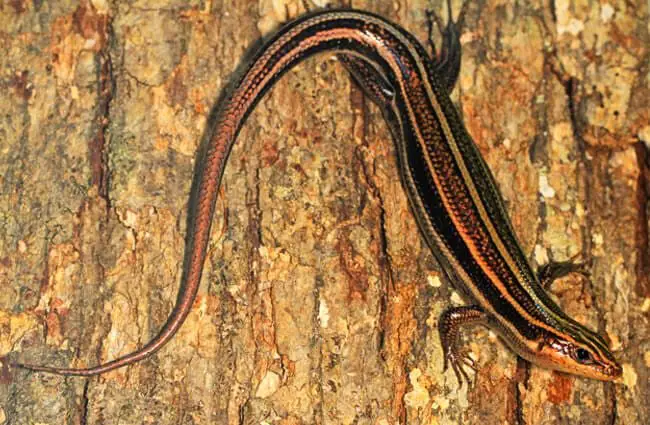
The term “skink” doesn’t denote a single species, but rather an entire family of lizards. They are characterized by several key features. The most notable is their smooth, overlapping scales, which give them a polished appearance and reduce friction as they move through vegetation and leaf litter. Many skinks have reduced limbs or lack them altogether, an adaptation to a fossorial lifestyle, meaning they spend much of their time burrowing. However, the majority retain well-developed legs, allowing for agile movement across various terrains. Skink sizes vary dramatically, from just a few centimeters to over 30 centimeters in length.
A Glimpse into Skink Evolution
Their earliest fossil record dates back to the early Cretaceous, around 100 million years ago. The origins are believed to lie in Eurasia, from where they dispersed to colonize most continents. The ability to adapt to diverse environments drove their remarkable diversification. The loss of limbs observed in some species represents a convergent evolutionary pathway, similar to that seen in snakes and legless salamanders. These changes occurred independently in multiple skink lineages, demonstrating the power of natural selection in shaping morphology to suit specific ecological niches.
Habitat and Distribution
Skinks are incredibly adaptable, inhabiting a wide range of environments. They can be found in tropical rainforests, arid deserts, grassy woodlands, and even temperate forests. Their distribution spans across continents including North and South America, Africa, Asia, Australia, and numerous islands. Different species have specialized to thrive in specific habitats. For instance, the Blue-Tongued Skink prefers arid and semi-arid shrublands and grasslands, while desert skinks have adapted to survive in harsh, arid conditions.
Skink Diet: What Do They Eat?
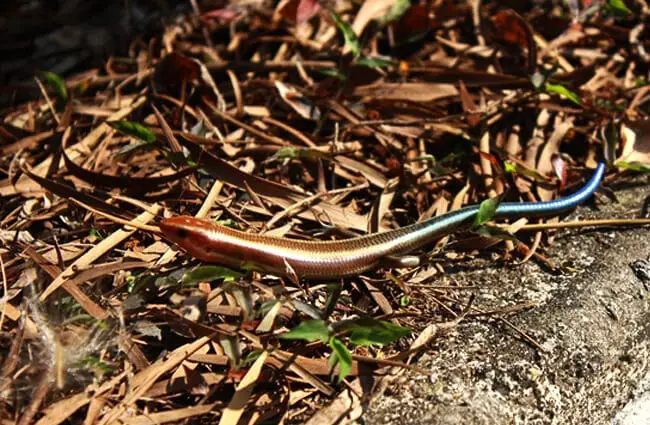
Skinks are primarily insectivores, meaning their diet consists largely of insects. They consume a wide variety of invertebrates, including beetles, ants, termites, caterpillars, and spiders. Larger skinks may also prey on snails, slugs, and even small vertebrates like baby rodents or lizards. Their hunting strategy often involves ambushing prey or actively foraging among leaf litter and vegetation. Some skinks are known to be opportunistic feeders, supplementing their diet with fruits and berries when available.
Behavior and Lifestyle
Skinks exhibit a range of behaviors. Many are diurnal, meaning they are most active during the day, while others are nocturnal or crepuscular (active during twilight hours). They are generally secretive creatures, often hiding under rocks, logs, or leaf litter to avoid predators. When threatened, some skinks can detach their tails—a process known as autotomy. The detached tail continues to wriggle, distracting predators while the skink makes its escape. The tail will eventually regrow, although it may differ in size and color from the original.
Reproduction and Life Cycle
Skinks exhibit diverse reproductive strategies. Most species are oviparous, meaning they lay eggs. The number of eggs laid varies depending on the species and environmental conditions. The eggs are typically deposited in moist soil, leaf litter, or decaying logs. Some skinks are viviparous, giving birth to live young. This strategy is more common in colder climates, as it allows the developing embryos to be protected from harsh temperatures. Skinks typically have a relatively long lifespan, with some species living for over 20 years in captivity.
Skinks and the Ecosystem
Skinks play an important role in maintaining ecosystem health. As insectivores, they help control populations of invertebrates, preventing outbreaks that could damage vegetation or spread disease. They also serve as a food source for larger predators, including birds, snakes, and mammals. Their burrowing activities contribute to soil aeration and nutrient cycling. The presence of healthy skink populations can be an indicator of a thriving ecosystem.
Skinks and Humans
Human interactions with skinks are varied. In some cultures, skinks are considered delicacies and are harvested for food. In others, they are revered as symbols of good luck or healing. Unfortunately, many skink populations are threatened by habitat loss, fragmentation, and the introduction of invasive species. Climate change also poses a significant threat, as rising temperatures and altered rainfall patterns can disrupt their life cycles and reduce their survival rates.
Encountering a Skink in the Wild
If you encounter a skink while hiking or gardening, it’s best to observe it from a distance. Avoid handling it, as this can stress the animal and potentially introduce diseases. If you must move it, gently encourage it to move on its own. Do not attempt to capture or harm it. Protecting their habitat is the best way to ensure their continued survival.
Skink Care in Captivity
For zookeepers and reptile enthusiasts, caring for skinks requires a commitment to providing a suitable environment. A spacious enclosure with appropriate temperature and humidity gradients is essential. The enclosure should be furnished with hiding places, climbing structures, and a substrate that allows for burrowing. Skinks require a varied diet consisting of live insects, supplemented with vitamins and minerals. Regular cleaning and maintenance are crucial to prevent the buildup of bacteria and parasites.
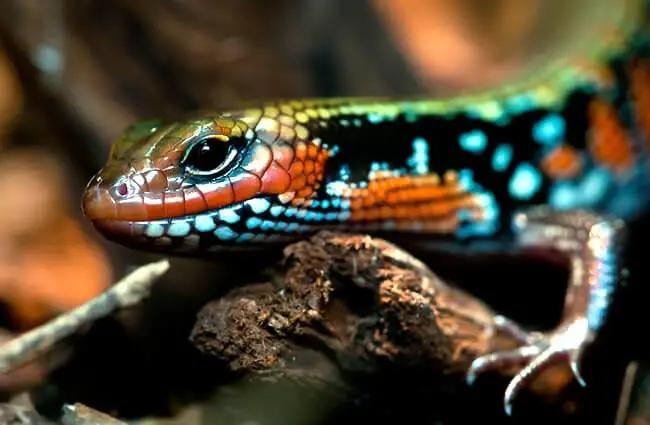
Fascinating Skink Facts
- Some skinks can regenerate not just their tails, but also parts of their limbs.
- The Blue-Tongued Skink gets its name from the bright blue tongue it uses to deter predators.
- Certain skink species can change color to blend in with their surroundings.
- Skinks are found on every continent except Antarctica.
- Some species of skink are capable of parthenogenesis, meaning they can reproduce asexually.
A World of Diversity
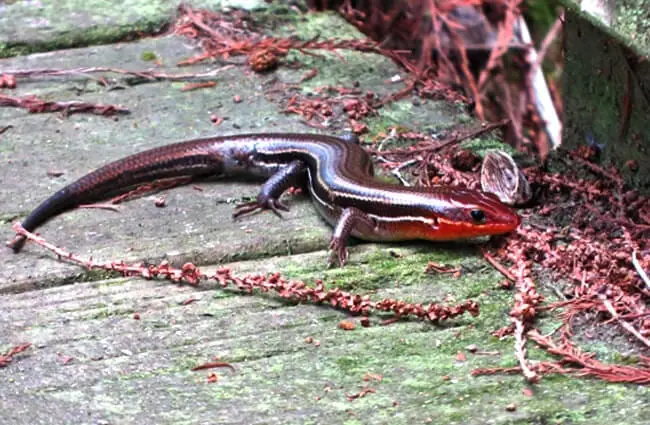
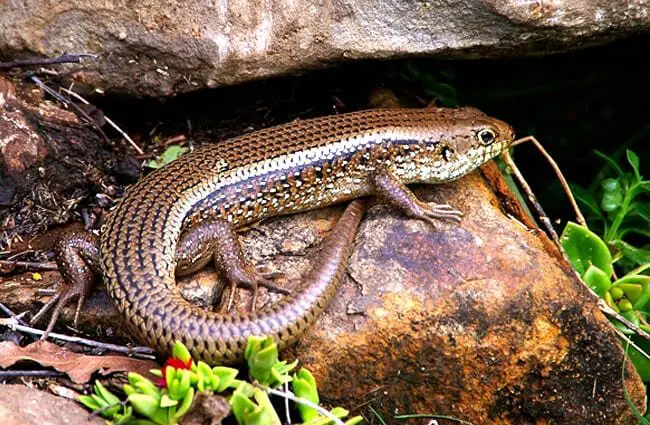
From the sleek and agile Five-lined Skink to the colorful Blue-Tongued Skink, this family of lizards offers a remarkable diversity of forms and behaviors. Understanding their ecology, evolution, and conservation needs is crucial to ensuring their survival in a rapidly changing world. By appreciating these often-overlooked creatures, we can contribute to the health and resilience of the ecosystems they inhabit.
![Closeup of a beautiful Red Angus cowPhoto by: U.S. Department of Agriculture [pubic domain]https://creativecommons.org/licenses/by/2.0/](https://animals.net/wp-content/uploads/2020/03/Red-Angus-4-238x178.jpg "Red Angus")
![Closeup of a beautiful Red Angus cowPhoto by: U.S. Department of Agriculture [pubic domain]https://creativecommons.org/licenses/by/2.0/](https://animals.net/wp-content/uploads/2020/03/Red-Angus-4-100x75.jpg "Red Angus")