The Enigmatic Greenland Shark: A Deep Dive into the World’s Longest Living Vertebrate
The Greenland shark Somniosus microcephalus is a creature of myth and mystery, a silent predator of the frigid Arctic and subarctic waters. More than just a large shark, it holds the title of the longest living vertebrate on Earth, with some individuals estimated to be over 400 years old. This remarkable longevity, coupled with its unique adaptations and crucial role in the polar ecosystem, makes the Greenland shark a subject of intense scientific fascination. This article unravels the secrets of this incredible animal, exploring its habitat, biology, behavior, and its place in both the natural world and human culture.
Habitat and Distribution
Greenland sharks are primarily found in the cold waters of the North Atlantic and Arctic Oceans. Their range extends from the Canadian Arctic, around Greenland, Iceland, and Norway, to the waters of Russia. They are a truly polar species, thriving in temperatures between 0 and 12 degrees Celsius. These sharks are most commonly found at depths of 200 to 400 meters, though they can inhabit waters as deep as 2,000 meters. During the warmer months, they occasionally move into shallower coastal waters, especially in fjords with significant ice cover. Their distribution is closely linked to the availability of cold, deep water and the presence of prey species.
Physical Characteristics
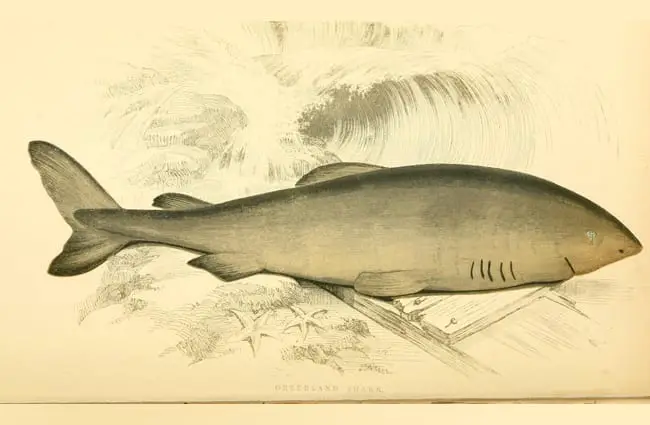
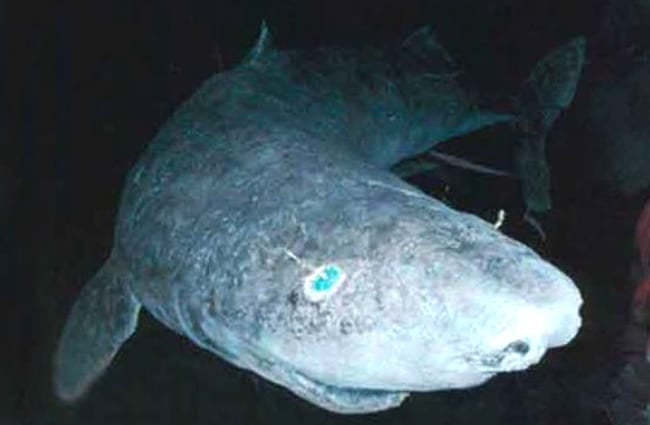
The Greenland shark is a robust and imposing creature. It is a relatively large shark, reaching lengths of up to 7.3 meters (24 feet) and weighing over 1,400 kilograms (3,000 pounds). Its body is cylindrical and stout, with a relatively small dorsal fin and a powerful caudal fin. The skin is a dark greyish‑brown color, providing camouflage in the murky depths. A striking feature is the epibiotic copepod Ommatokoita elongata, often found attached to the shark’s eyes. While the function of the copepod is not fully understood, it does not appear to harm the shark’s vision. The teeth are small, blunt, and arranged in multiple rows, adapted for crushing and tearing flesh.
Diet and Hunting Strategies
The Greenland shark is a generalist predator with a surprisingly diverse diet. While traditionally thought to feed primarily on seals, stomach contents have revealed a wide range of prey, including fish such as Greenland halibut, cod, and redfish, other sharks, squid, and even marine mammals. In some cases, land mammals such as reindeer, caribou, or muskoxen that wash ashore have also been found in their stomachs. The presence of these terrestrial animals indicates that Greenland sharks may scavenge carcasses that reach the sea. They are slow swimmers, relying on ambush tactics and a keen sense of smell to locate prey. They can detect the scent of food from considerable distances, making them efficient hunters in a cold, low‑energy environment.
Longevity and Reproduction
The Greenland shark’s most remarkable characteristic is its extraordinary lifespan. Radiocarbon dating of eye lens proteins has revealed that these sharks can live for several centuries, with the oldest individuals estimated to be over 400 years old. This makes them the longest living vertebrate known to science. The slow metabolic rate that allows them to conserve energy also means that they reach sexual maturity after several years. While the exact age of maturity is uncertain, it is likely to be in the range of five to ten years. Reproduction is poorly understood, but it is believed to be viviparous, meaning the females give birth to live young. Litters are small, typically consisting of one to five pups. This slow reproductive rate makes them particularly vulnerable to overfishing and environmental changes.
Understanding Radiocarbon Dating and Age Estimation
The technique used to determine the age of Greenland sharks is fascinating. The lens of the shark’s eye contains proteins that accumulate over time. By measuring the levels of carbon‑14 (a radioactive isotope) within these proteins, scientists can estimate the shark’s age. This method takes into account the historical levels of carbon‑14 in the ocean, which have varied over time due to factors such as nuclear weapons testing. It is a complex process, but it has provided crucial insights into the incredible lifespan of these sharks.
Ecological Role and Interactions
Greenland sharks are apex predators that help maintain the balance of the Arctic and subarctic ecosystems. They regulate populations of seals, fish, and other marine animals. Their scavenging behavior also contributes to nutrient cycling in the deep sea. Although they are generally solitary, they may aggregate temporarily in areas with abundant food. There is some evidence that they interact with other shark species, such as the basking shark, but their deep water habitat limits encounters with many marine animals.
Human Interactions and Cultural Significance
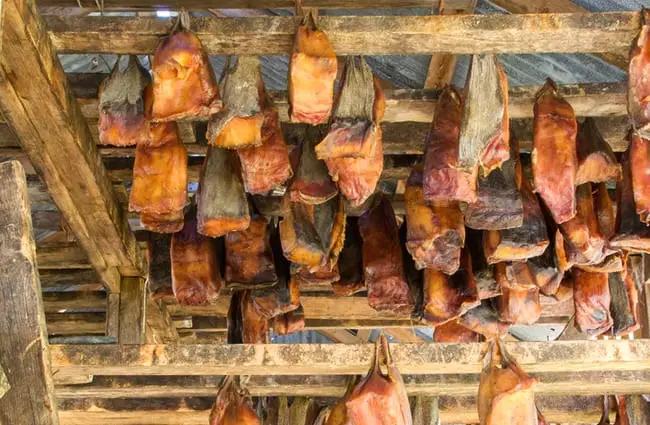
Historically, Greenland sharks have been hunted by Inuit communities for their meat and oil. The meat contains trimethylamine oxide, which can cause unpleasant taste and a mild toxin effect, but it can be rendered edible through a fermentation process that has been practiced for generations. The oil is rich in squalene and has been used for lubrication and skin treatments. Today, hunting is regulated, and the species is listed as Near Threatened by the International Union for Conservation of Nature (IUCN). They are a symbol of resilience and longevity in Inuit culture, often featured in myths and legends, and are increasingly the focus of scientific research and ecotourism.
Encountering a Greenland Shark in the Wild
While encounters are rare, it is possible to spot a Greenland shark while boating or diving in cold, deep waters. If you encounter one, it is best to maintain a respectful distance and avoid any actions that could disturb it. These sharks are generally not aggressive towards humans, but it is always wise to exercise caution around any large marine animal.
Caring for Greenland Sharks in Captivity
Caring for Greenland sharks in captivity is extremely challenging due to their deep-water habitat, slow metabolism, and specific dietary requirements. Large, deep tanks with cold, highly oxygenated water are essential. A diet consisting of whole fish and marine mammals must be carefully formulated to meet their nutritional needs. Maintaining water quality and monitoring their health are crucial for their well-being. Minimal disturbance and a quiet environment are also important to reduce stress.
Interesting Facts
- Greenland sharks can live longer than some species of trees.
- Their flesh contains high levels of trimethylamine oxide, making it toxic to humans, but the Inuit have developed methods to detoxify it.
- They lack a swim bladder, allowing them to adjust to different depths without expending a lot of energy.
- The epibiotic copepod found on their eyes has an unclear role; it does not appear to harm the shark’s vision.
- Their slow metabolic rate means they grow very slowly, only a few centimeters per year.
The Greenland shark remains an enigma, a creature of incredible longevity and adaptation. Ongoing research continues to reveal new insights into its biology, behavior, and ecological role. As we face increasing environmental challenges in the Arctic, understanding and protecting this remarkable species is more important than ever. The Greenland shark is not just a survivor; it is a testament to the power of life and the mysteries of the deep ocean.
![Closeup of a beautiful Red Angus cowPhoto by: U.S. Department of Agriculture [pubic domain]https://creativecommons.org/licenses/by/2.0/](https://animals.net/wp-content/uploads/2020/03/Red-Angus-4-238x178.jpg "Red Angus")


![Closeup of a beautiful Red Angus cowPhoto by: U.S. Department of Agriculture [pubic domain]https://creativecommons.org/licenses/by/2.0/](https://animals.net/wp-content/uploads/2020/03/Red-Angus-4-100x75.jpg "Red Angus")