Unmasking the Deep-Sea Enigma: The Goblin Shark
Deep beneath the ocean’s sunlit surface, where light fades into an eternal twilight, lurks a creature so bizarre it seems plucked from a fever dream. This is the realm of the Goblin Shark, a living fossil whose appearance has captivated scientists and sparked the imaginations of all who encounter its image. With its distinctive elongated snout and protrusible jaws, the Goblin Shark stands as a testament to the incredible diversity and enduring mysteries of our planet’s deepest waters.
A Face Only a Zoologist Could Love: Basic Biology
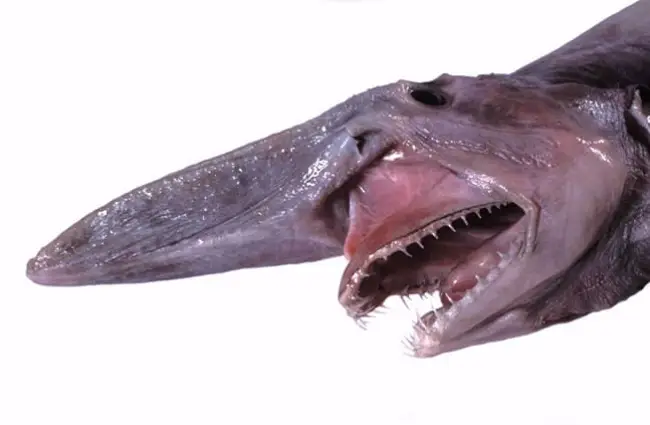
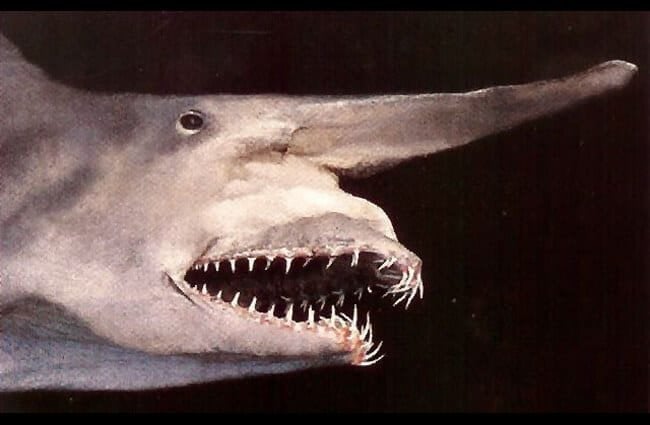
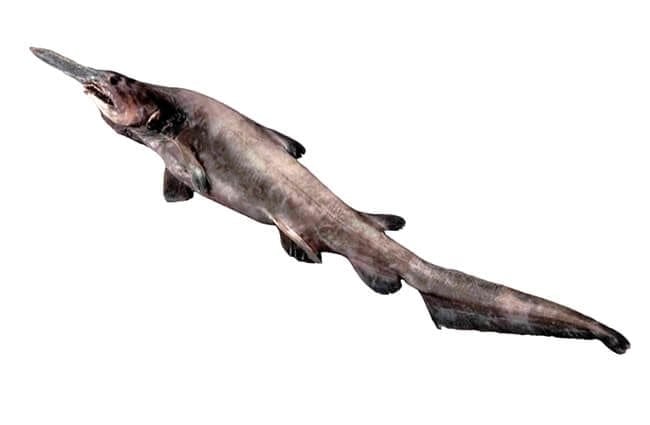
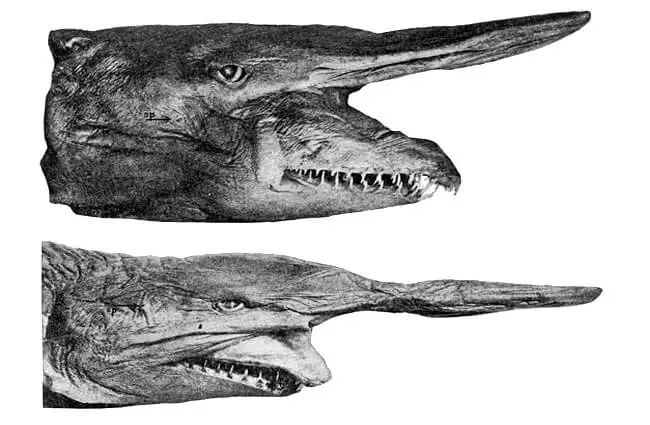
The Goblin Shark, scientifically known as Mitsukurina owstoni, is a truly unique member of the shark family. Its most striking feature is undoubtedly its flattened, blade-like snout, which extends prominently from its head, giving it an almost alien profile. This rostrum, as it is called, is not merely for show; it is packed with electroreceptors, allowing the shark to detect the faint electrical fields generated by prey in the absolute darkness of its habitat.
Adding to its otherworldly charm are its jaws. Normally tucked neatly beneath its head, these jaws can rapidly extend forward, almost detaching from the skull, to snatch unsuspecting prey. This “slingshot” feeding mechanism is one of the most remarkable adaptations in the marine world. Its teeth are slender, sharp, and nail-like, perfectly suited for piercing and gripping soft-bodied deep-sea creatures.
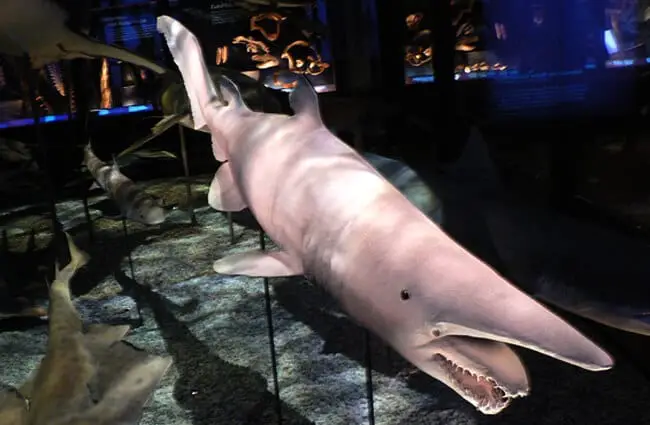
Adult Goblin Sharks typically measure between 3 to 4 meters (10 to 13 feet) in length, though some individuals have been recorded closer to 6 meters (20 feet). Their skin possesses a distinctive pinkish-grey hue, a color that appears almost translucent in the deep ocean, likely due to visible blood vessels beneath the skin and a lack of pigment in an environment devoid of light.
The Deep-Sea Dweller: Habitat and Distribution
For those dreaming of encountering a Goblin Shark in the wild, prepare for a deep dive. This elusive creature is a true denizen of the bathyal and abyssal zones, typically found at depths ranging from 200 to 1,300 meters (660 to 4,265 feet), though it has been recorded as shallow as 100 meters and as deep as 1,500 meters. This means it lives in perpetual darkness, under immense pressure, and in cold temperatures, far from human reach.
Its distribution is surprisingly widespread, indicating a global presence across various ocean basins. Specimens have been caught in the Atlantic, Pacific, and Indian Oceans. Key locations include the western Atlantic off French Guiana, Suriname, and southern Brazil; the eastern Atlantic off France, Portugal, and Madeira; the western Indian Ocean off South Africa and Mozambique; and the western Pacific off Japan, Australia, and New Zealand. While widely distributed, it is rarely encountered, making each sighting a significant scientific event.
The Phantom Hunter: Diet and Feeding Strategy
Living in an environment where food is scarce, the Goblin Shark has evolved a highly specialized hunting strategy. Its diet consists primarily of deep-sea bony fish, such as rattails and dragonfish, as well as crustaceans like shrimp and crabs, and cephalopods like squid. The electroreceptive snout plays a crucial role here, allowing it to pinpoint prey even when completely hidden in the dark.
Once prey is detected, the Goblin Shark employs its unique “slingshot” feeding mechanism. Its jaws, connected by elastic ligaments, can be rapidly propelled forward, engulfing the prey in a fraction of a second. This lightning-fast strike, combined with its sharp, needle-like teeth, makes escape nearly impossible for its deep-sea victims. It is believed to be a relatively sluggish ambush predator, conserving energy in its nutrient-poor environment, waiting for unsuspecting meals to come within striking distance.
A Glimpse into the Past: Evolutionary History
The Goblin Shark is often referred to as a “living fossil” due to its ancient lineage. It is the sole surviving member of the family Mitsukurinidae, a group of sharks that dates back approximately 125 million years to the Early Cretaceous period. Its closest known fossil relatives belong to the genus Scapanorhynchus, which shared many of the Goblin Shark’s distinctive features, including the elongated snout and protrusible jaws. Studying the Goblin Shark provides invaluable insights into the evolutionary history of sharks and how certain deep-sea adaptations have persisted over vast geological timescales.
The Mysteries of Reproduction and Life Cycle
Given its deep-sea habitat and extreme rarity, direct observations of Goblin Shark mating and reproduction are virtually non-existent. However, based on studies of other deep-sea sharks and examination of captured specimens, it is believed to be ovoviviparous. This means that the eggs hatch inside the mother’s uterus, and the embryos develop, feeding on yolk sacs, until they are born as fully formed, miniature versions of the adults. The exact gestation period, litter size, and lifespan remain unknown, adding to the enigmatic nature of this creature. It is presumed that, like many deep-sea species, it has a slow growth rate and a long lifespan.
Ecosystem Role and Interactions
As an apex predator in its specific deep-sea niche, the Goblin Shark plays a role in regulating populations of the fish, crustaceans, and cephalopods it preys upon. Its interactions with other deep-sea animals are largely speculative but would involve competition for food with other deep-sea predators and potentially being preyed upon by larger deep-sea sharks or sperm whales, especially when young. However, its extreme depth and specialized hunting likely limit direct competition with many other species.
Human Interaction and Cultural Impact
Encounters between humans and Goblin Sharks are exceedingly rare. For the animal lover hoping to find one in the wild, the reality is that specialized deep-sea submersibles or remotely operated vehicles (ROVs) are the only means, and even then, sightings are incredibly infrequent. It is not a creature one would “hike” into, as it lives thousands of feet below the surface. If one were to encounter a Goblin Shark, for instance, if a specimen washed ashore (an extremely rare event), the best course of action would be to report it to local marine authorities or research institutions for scientific study, as these are invaluable opportunities to learn more about the species. There is no known threat to humans from a live Goblin Shark, given its habitat and feeding strategy.
The Goblin Shark’s contribution to human culture is primarily through its striking appearance, which has cemented its status as a “monster of the deep” in popular imagination. It frequently appears in documentaries, books, and online articles highlighting bizarre deep-sea creatures, sparking fascination and wonder about the unexplored depths of our oceans. Its unique features make it a symbol of the ocean’s enduring mysteries.
Conservation Status and Threats
The International Union for Conservation of Nature (IUCN) currently lists the Goblin Shark as “Least Concern,” but this designation comes with a significant caveat: it is “data deficient.” This means that while it is rarely caught and not specifically targeted by fisheries, there is simply not enough information about its population size, trends, or specific threats to make a definitive assessment. The primary known threat is incidental bycatch in deep-sea trawling and longline fisheries, though the infrequency of these occurrences suggests it is not a major threat to the global population at present. Continued monitoring and research are essential to ensure its long-term survival.
Caring for a Deep-Sea Enigma: The Zookeeper’s Challenge
For a zookeeper tasked with caring for a Goblin Shark in captivity, the challenges would be immense, bordering on insurmountable with current technology. Deep-sea creatures, especially those from bathyal and abyssal zones, require highly specialized environments that replicate their natural habitat with extreme precision. Key considerations would include:
- Pressure: Replicating the immense pressure of its natural depth (hundreds to over a thousand atmospheres) is technically challenging and expensive. Most deep-sea animals brought to the surface die quickly due to decompression sickness.
- Temperature: Maintaining consistently cold temperatures, typically 4-10°C (39-50°F), is crucial.
- Light: A completely dark environment is necessary, as the shark is adapted to perpetual twilight or absolute darkness.
- Diet: Providing a consistent supply of appropriate deep-sea prey, such as rattails, squid, and deep-sea crustaceans, would be difficult.
- Tank Size and Environment: A vast, deep tank would be required to accommodate its size and provide a suitable environment for a potentially sluggish, ambush predator.
- Water Quality: Maintaining pristine water quality, free from pollutants and with specific salinity and oxygen levels, is paramount.
Tasks a Zookeeper Would Perform (Hypothetically):
- Meticulously monitor water parameters (temperature, pressure, salinity, oxygen, pH).
- Prepare and deliver specialized deep-sea prey.
- Observe behavior for signs of stress or illness (extremely difficult in darkness).
- Maintain and clean highly specialized deep-sea aquarium systems.
- Conduct non-invasive research to learn more about its biology.
Tasks to Be Avoided:
- Any rapid changes in pressure, temperature, or light.
- Introducing incompatible tank mates.
- Overfeeding or underfeeding.
- Any actions that would cause stress or injury, which would be particularly detrimental to a delicate deep-sea creature.
In reality, keeping a Goblin Shark alive and healthy in captivity for any significant period is currently considered impossible, making the prospect of a zookeeper caring for one a hypothetical exercise in extreme biological engineering.
A Huge List of Interesting Facts About the Goblin Shark
- It is the only living member of the ancient shark family Mitsukurinidae.
- Its scientific name, Mitsukurina owstoni, honors Professor Kakichi Mitsukuri, who sent the first specimen to David Starr Jordan for identification, and Alan Owston, who collected the first specimen.
- The elongated snout is called a rostrum and is covered in electroreceptors (ampullae of Lorenzini).
- Its jaws can extend forward dramatically, a unique feeding adaptation among sharks.
- The teeth are slender, sharp, and nail-like, perfect for piercing soft-bodied prey.
- It has a distinctive pinkish-grey skin color, which is unusual for sharks.
- It is a deep-sea shark, typically found between 200 and 1,300 meters deep.
- It has been found in all three major oceans: Atlantic, Pacific, and Indian.
- It is believed to be an ovoviviparous species, meaning eggs hatch internally.
- Direct observation of its mating and reproduction has never occurred.
- It is considered a “living fossil” due to its ancient lineage.
- Its closest fossil relatives date back 125 million years.
- It is a relatively sluggish swimmer, likely an ambush predator.
- Its diet includes deep-sea bony fish, crustaceans, and cephalopods.
- Encounters with humans are extremely rare, usually as bycatch.
- It poses no known threat to humans.
- The IUCN lists it as “Least Concern” but “data deficient” due to lack of information.
- Its eyes are relatively small, suggesting vision is not its primary sense in the dark depths.
- The first specimen was discovered off the coast of Japan in 1898.
- It has a soft, flabby body, typical of many deep-sea fish, which helps it cope with pressure.
Conclusion: The Enduring Mystery of the Deep
The Goblin Shark remains one of the ocean’s most enigmatic inhabitants. Its bizarre appearance, ancient lineage, and specialized adaptations offer a fascinating window into the evolutionary pressures of the deep sea. While direct encounters are rare, every discovery of this creature deepens our understanding of marine biodiversity and the incredible resilience of life in extreme environments. As we continue to explore the vast, largely unknown depths of our oceans, the Goblin Shark stands as a powerful reminder that some of the most extraordinary wonders still await discovery, urging us to protect these mysterious realms for future generations of scientists and enthusiasts alike.
![Closeup of a beautiful Red Angus cowPhoto by: U.S. Department of Agriculture [pubic domain]https://creativecommons.org/licenses/by/2.0/](https://animals.net/wp-content/uploads/2020/03/Red-Angus-4-238x178.jpg "Red Angus")

![Closeup of a beautiful Red Angus cowPhoto by: U.S. Department of Agriculture [pubic domain]https://creativecommons.org/licenses/by/2.0/](https://animals.net/wp-content/uploads/2020/03/Red-Angus-4-100x75.jpg "Red Angus")