The Cassowary: A Living Dinosaur of the Rainforest
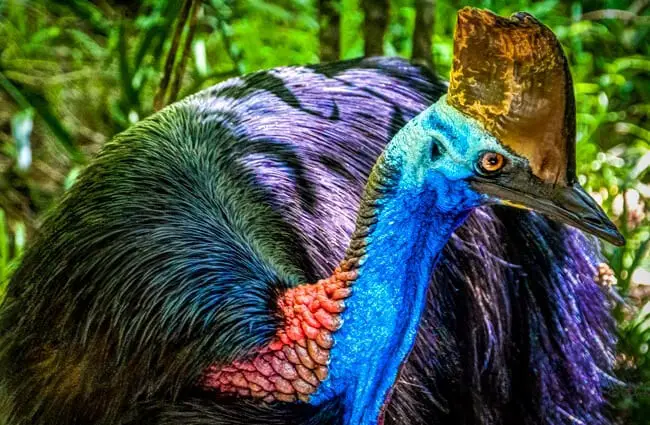
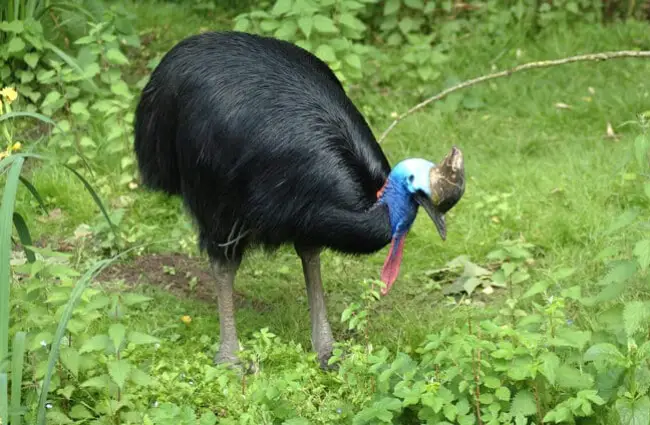
Deep within the ancient rainforests of New Guinea and northeastern Australia roams a creature that seems to defy time itself. With its vibrant blue and purple neck, a helmet-like casque, and powerful, clawed feet, the cassowary is a magnificent and somewhat intimidating bird. Often dubbed a “living dinosaur,” this flightless giant is not just a spectacle of nature, but a vital architect of its ecosystem, playing a role few other animals can match. Join us on an exploration of this enigmatic avian marvel, from its prehistoric lineage to its crucial modern-day existence.
Meet the Rainforest’s Royal Resident: Basic Cassowary Facts
The cassowary belongs to a group of large, flightless birds known as ratites, which also includes ostriches, emus, and rheas. These birds are characterized by a flat, raft-like sternum, lacking the keel that anchors flight muscles in flying birds. There are three distinct species of cassowary, each with its own unique charm:
- Southern Cassowary (Casuarius casuarius): The largest and most commonly known, found in southern New Guinea, northeastern Australia, and some Indonesian islands.
- Northern Cassowary (Casuarius unappendiculatus): Slightly smaller, inhabiting northern New Guinea.
- Dwarf Cassowary (Casuarius bennetti): The smallest species, found in the mountainous regions of New Guinea and New Britain.
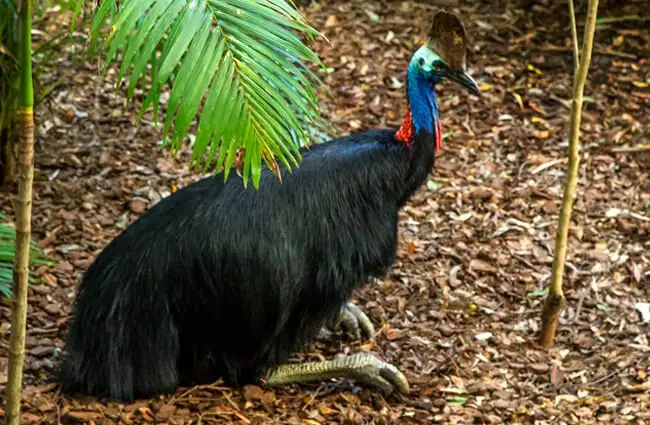
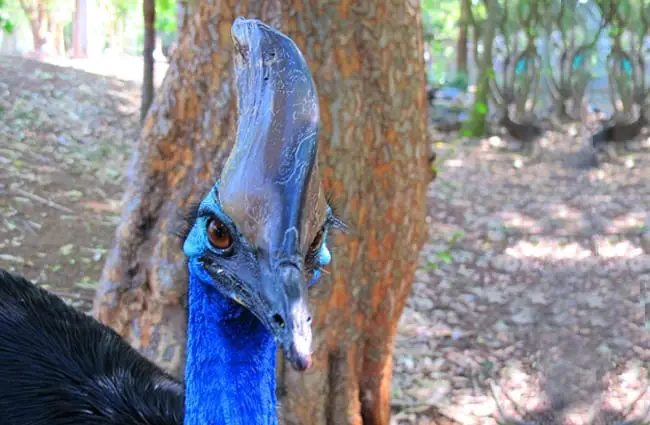
These birds are instantly recognizable by their glossy black plumage, which is coarse and hair-like, perfectly adapted for shedding water in their wet rainforest homes. Their most striking features are the bright blue and purple skin on their heads and necks, often adorned with red wattles, and the prominent, bony casque on top of their heads. This casque, a keratin-covered helmet, is thought to serve multiple purposes, from protecting the head as the bird pushes through dense undergrowth to amplifying low-frequency sounds or even acting as a display during courtship.
Where to Find Them: Cassowary Habitat and Distribution
Cassowaries are creatures of the dense tropical rainforest. Their primary habitat spans the lowland rainforests of New Guinea and the Wet Tropics of Queensland, Australia. They prefer areas with a thick understory, abundant fruit-bearing trees, and access to water. These birds are largely solitary, territorial, and incredibly elusive, making sightings in the wild a rare and cherished experience for any animal enthusiast or aspiring zoologist.
For those hoping to catch a glimpse of a cassowary in its natural environment, the Daintree Rainforest in Queensland, Australia, is one of the best locations. Specific areas like Mission Beach, Etty Bay, and the Cape Tribulation region are known hotspots. The best times for observation are typically early morning or late afternoon when the birds are most active. Patience and quiet observation are paramount, as these birds are masters of camouflage within their verdant surroundings.
The Rainforest’s Fruitarian: Cassowary Diet
Cassowaries are primarily frugivores, meaning their diet consists almost entirely of fallen fruit. They consume a staggering variety of fruits, often swallowing them whole, including those that are toxic to most other animals. This unique digestive system allows them to process fruits with large seeds, which pass through their gut intact and are then dispersed far from the parent plant. Beyond fruit, they are opportunistic feeders and will also consume:
Their broad diet underscores their adaptability and their critical role in the rainforest ecosystem, which we will explore further.
A Deeper Dive: The Cassowary’s World
An Ancient Lineage: Cassowary Evolutionary History
The story of the cassowary stretches back millions of years, connecting it to the supercontinent Gondwana. As members of the ratite family, cassowaries share a common ancestor with ostriches, emus, rheas, and kiwis. The distribution of these flightless birds across continents like Africa, Australia, and South America provides compelling evidence for continental drift. Their ancestors were likely present before the landmasses separated, evolving into distinct species in isolation. Cassowaries represent an ancient branch of avian evolution, having retained many primitive characteristics while adapting perfectly to their rainforest niche. Their powerful legs and formidable claws are remnants of a time when large, ground-dwelling birds were more common, and they serve as a powerful reminder of their dinosaurian heritage.
A Role Reversal: Mating and Reproduction
Cassowary reproduction is a fascinating example of parental role reversal. During the breeding season, typically from May to November, the female cassowary initiates courtship. She will often mate with several males, laying clutches of three to eight large, bright green or pale blue-green eggs in nests prepared by different males. These nests are simple scrapes on the forest floor, lined with leaves and grass.
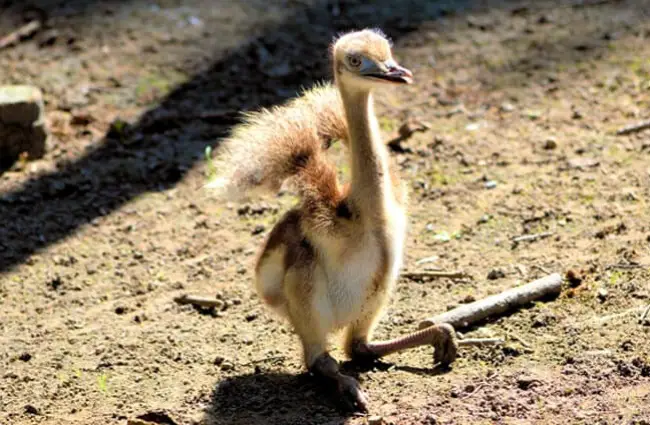
Once the eggs are laid, the female’s involvement largely ends. It is the male cassowary who takes on the sole responsibility of incubation, a process lasting about 50 days. After the chicks hatch, he continues to care for them for approximately nine months, teaching them foraging skills and protecting them from predators. The chicks are striped brown and cream, providing excellent camouflage in the dappled light of the rainforest floor. This dedicated paternal care is crucial for the survival of the young cassowaries, highlighting the male’s significant investment in the next generation.
The Rainforest Gardener: Ecosystem Contribution
The cassowary is a true keystone species, often referred to as the “rainforest gardener.” Its unique digestive system and diet make it an indispensable seed disperser. By consuming large fruits whole and passing the seeds intact, often far from the parent plant, cassowaries facilitate the regeneration and biodiversity of the rainforest. Many rainforest plants rely almost exclusively on cassowaries for seed dispersal, particularly those with large fruits that other animals cannot consume or effectively distribute.
Without the cassowary, the composition and health of the rainforest would drastically change, leading to a decline in plant diversity and overall ecosystem resilience. Their foraging habits also help to clear undergrowth, creating pathways and disturbing the leaf litter, which can aid in nutrient cycling. Their interaction with other animals is generally minimal due to their solitary nature, but their presence supports a healthy forest environment that benefits countless other species.
Cassowaries and Humans: Coexistence and Conservation
Cultural Significance
For Indigenous peoples of New Guinea and Australia, the cassowary holds significant cultural importance. It features prominently in creation stories, myths, and ceremonies, often revered for its strength, beauty, and connection to the forest. Its feathers are highly prized for ceremonial attire, and its meat has traditionally been a food source. This deep cultural connection underscores the long-standing relationship between humans and cassowaries in their shared landscapes.
Encountering a Cassowary: Safety and Interaction
While cassowaries are generally shy and reclusive, they are powerful animals capable of inflicting serious injury if provoked or cornered. Their large size, strong legs, and dagger-like claws (up to 12 cm long on the inner toe) make them formidable. Most incidents occur when birds are fed by humans, leading them to associate people with food, or when they feel threatened, particularly if they are protecting chicks.
If you encounter a cassowary in the wild:
- Maintain Distance: Keep at least 5 meters (16 feet) away. Never approach a cassowary.
- Do Not Feed: Feeding cassowaries habituates them to humans, leading to aggressive behavior and making them vulnerable to dangers like road traffic.
- Back Away Slowly: If a cassowary approaches you, back away slowly and calmly. Do not run, as this can trigger a chase response.
- Protect Yourself: If a cassowary acts aggressively (hissing, ruffling feathers, charging), put a backpack or object between yourself and the bird. If it attacks, curl into a ball to protect your head and vital organs.
- Be Aware: Always be vigilant in cassowary habitat, especially around fruit trees or water sources.
The primary threats to cassowaries are habitat loss and fragmentation due to human development, vehicle strikes, and attacks by domestic dogs. Conservation efforts focus on protecting their rainforest habitat, reducing road mortality, and educating the public about safe interactions.
Caring for Cassowaries in Captivity: A Zookeeper’s Role
Caring for cassowaries in a zoological setting requires specialized knowledge and dedication. Zookeepers play a crucial role in ensuring the well-being of these magnificent birds, contributing to conservation through education and sometimes breeding programs. Key tasks and considerations include:
- Diet Management: Providing a balanced diet rich in fresh fruits, supplemented with specialized pellets to ensure all nutritional needs are met. Variety is important to mimic their natural diet.
- Enclosure Design: Creating spacious, naturalistic enclosures that replicate their rainforest habitat, complete with dense vegetation, water features, and soft substrate. This allows for natural behaviors like foraging and dust bathing.
- Enrichment: Implementing daily enrichment activities to stimulate their minds and bodies. This can include puzzle feeders, new scents, different substrates, or hidden food items to encourage natural foraging behaviors.
- Health Monitoring: Regular health checks, observing behavior for any signs of illness or stress, and working closely with veterinary staff.
- Safety Protocols: Strict safety protocols are essential for both the birds and the keepers, given the cassowary’s powerful nature. Keepers must be trained in safe handling and enclosure management.
- Avoidances:
- Over-handling: Minimizing direct physical contact to reduce stress and maintain natural behaviors.
- Inadequate Space: Small or barren enclosures can lead to stress and stereotypical behaviors.
- Improper Diet: Feeding inappropriate foods or an unbalanced diet can lead to nutritional deficiencies.
- Lack of Enrichment: Without mental and physical stimulation, cassowaries can become bored or stressed.
Fascinating Facts and Practical Insights
The cassowary is a creature of endless intrigue. Here is a list of interesting facts that highlight its unique adaptations and behaviors:
- Powerful Kicks: A cassowary can run up to 50 km/h (31 mph) through dense forest and jump up to 1.5 meters (5 feet). Its powerful legs and claws are capable of delivering potentially fatal kicks.
- Excellent Swimmers: Despite being flightless, cassowaries are surprisingly good swimmers, often crossing rivers and even venturing into the ocean.
- Low-Frequency Communication: They produce very low-frequency sounds, some of the lowest known bird calls, which can travel long distances through dense rainforest. This is thought to be aided by their casque.
- Solitary Nature: Except during breeding season, cassowaries are highly solitary and territorial, marking their territories with scent and calls.
- Long Lifespan: In the wild, cassowaries can live for 12 to 19 years, and even longer in captivity, sometimes reaching over 40 years.
- Unique Plumage: Their coarse, hair-like feathers lack barbs, giving them a shaggy appearance and helping them shed water efficiently.
- Casque Mystery: While its exact functions are debated, the casque is believed to play roles in defense, pushing through vegetation, sound amplification, and sexual display.
- Digestive Powerhouse: Cassowaries can digest fruits that are toxic to many other animals, thanks to their specialized digestive system.
- Rainbow Neck: The vibrant colors of their neck and head are not due to pigments but structural coloration, where light interacts with the microscopic structure of the skin.
- Ancient Ancestry: Their lineage dates back to the time of dinosaurs, making them one of the most ancient bird species alive today.
Conclusion: Protecting the Rainforest’s Guardian
The cassowary is more than just a striking bird; it is a living relic, a vital component of one of the world’s most ancient and biodiverse ecosystems. Its unique adaptations, complex social behaviors, and indispensable role as a seed disperser make it a creature worthy of our utmost respect and protection. Understanding the cassowary’s life, its challenges, and its contributions allows us to appreciate the intricate web of life in our rainforests. By supporting conservation efforts, respecting their space in the wild, and learning from their ancient wisdom, we can ensure that this magnificent “rainforest gardener” continues to thrive for generations to come, a vibrant testament to the enduring power of nature.
![Closeup of a beautiful Red Angus cowPhoto by: U.S. Department of Agriculture [pubic domain]https://creativecommons.org/licenses/by/2.0/](https://animals.net/wp-content/uploads/2020/03/Red-Angus-4-238x178.jpg "Red Angus")
![Closeup of a beautiful Red Angus cowPhoto by: U.S. Department of Agriculture [pubic domain]https://creativecommons.org/licenses/by/2.0/](https://animals.net/wp-content/uploads/2020/03/Red-Angus-4-100x75.jpg "Red Angus")