The Fascinating World of Mergansers
Mergansers are a distinctive group of waterfowl that combine remarkable evolutionary adaptations with important ecological roles. These “fish ducks” are known for their sleek bodies, narrow serrated bills, and expert diving skills. In this guide we explore their origins, physical traits, behaviour, habitats, and interactions with the environment and people.
What is a Merganser?
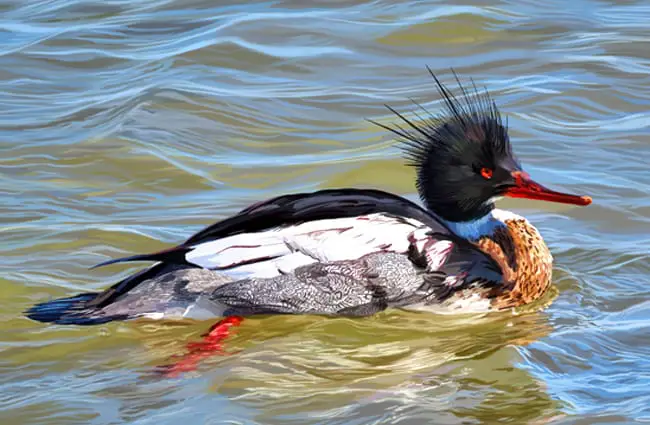
The word “merganser” comes from Dutch words that mean “fish” and “duck,” a reference to their specialised diet and aquatic lifestyle. These birds belong to the family Anatidae, which also includes ducks, geese and swans. There are four extant species: the Common Merganser (Mergus merganser), the Red-breasted Merganser (Mergus serrator), its northern subspecies the Hooded Merganser, and the Scaly-sided Merganser (Mergus squamatus) of East Asia. All share the hallmark serrated bill and streamlined body, but each species has distinct habits and appearances.
Physical Characteristics
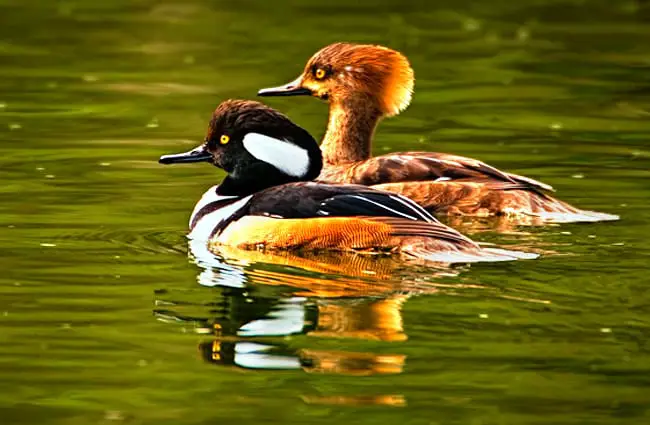
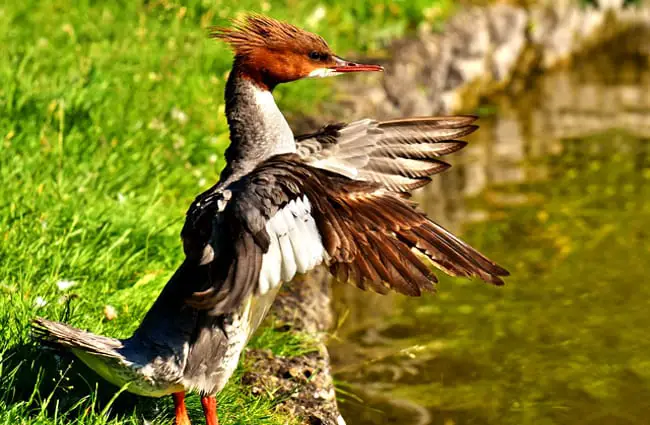
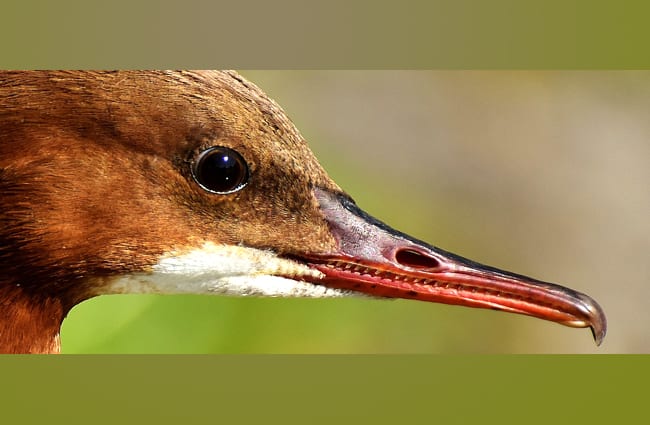
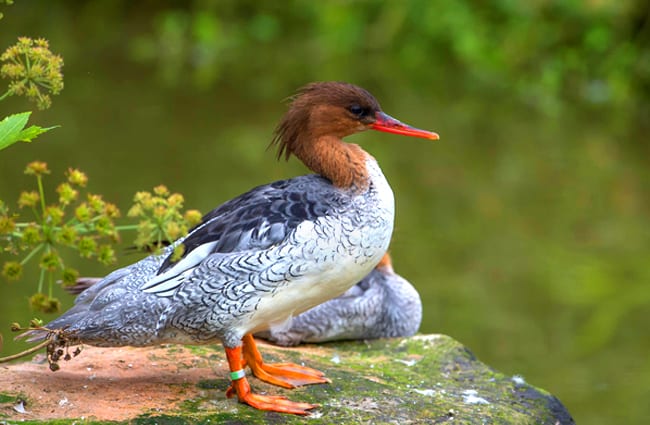
Mergansers range from medium to large waterfowl. Their bodies are built for speed and agility underwater, and their bills are narrow and serrated—tiny “teeth” that hold slippery fish. Males display bright plumage during breeding season, while females are more subdued to blend with the surroundings. The Common Merganser is the largest, with males up to 25 inches long. The Red-breasted Merganser sports a rusty‑red head and a dramatic crest on the female. The Hooded Merganser, the smallest of the group, has a black head and a fan‑shaped crest on the male.
Habitat and Distribution
These birds can be found across North America, Europe and Asia. They prefer clean, clear rivers, lakes and coastal waters where they can feed and nest. The Common Merganser occupies both freshwater and saltwater, often nesting near wooded riverbanks or lake shores. The Red-breasted Merganser is largely a coastal species that dives in open ocean waters. Hooded Mergansers favour freshwater ponds and small lakes with nearby trees for nesting. Their ranges shift with the seasons: they move northward to breeding sites in spring and southward to wintering areas in fall.
Finding Mergansers in the Wild
Birdwatchers can locate mergansers by following their seasonal movements and preferred habitats. During breeding season—spring to early summer—look for them on rivers and lakes that have ample vegetation and potential nesting cavities. In winter, coastal bays and large lakes host significant numbers of Red-breasted and Common Mergansers. Patience and a good pair of binoculars are essential. Look for their streamlined bodies and, when conditions allow, their impressive diving displays.
Diet and Feeding Behavior
Mergansers are almost exclusively fish eaters, a fact reflected in their name. Their serrated bills allow them to grasp and hold slippery prey. They dive quickly and skillfully, chasing fish beneath the surface. The size of the fish they take varies by species and individual size, but typical prey includes minnows, perch, trout and other small to medium fish. Occasionally they consume crustaceans, amphibians and aquatic insects. Their feeding can often be seen as they surface with a wriggling fish in their bill.
Reproduction and Life Cycle
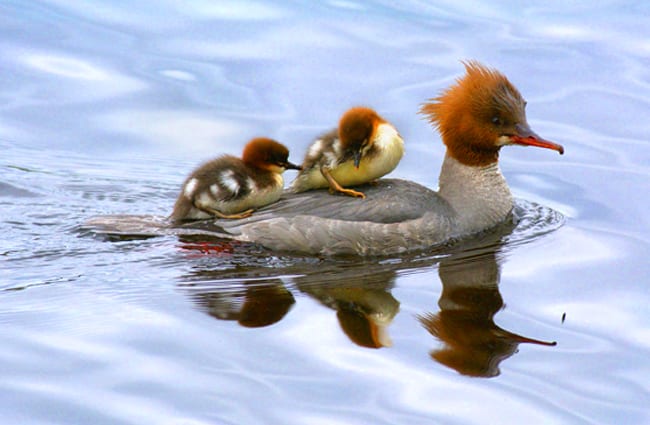
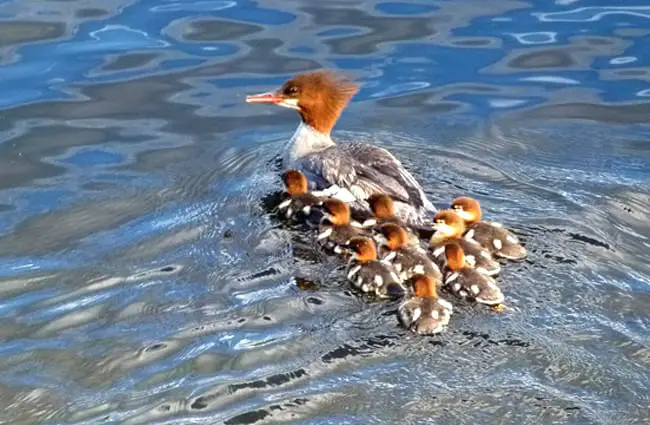
Mergansers are generally monogamous, forming long‑lasting pair bonds. They nest in cavities—natural tree hollows, abandoned woodpecker nests or even on the ground near water. Females lay 6 to 12 eggs and incubate them for about 28 days. Ducklings are precocial, able to swim soon after hatching. The female guides them to feeding areas and protects them from predators. The ducklings grow rapidly, developing flight feathers within 6 to 8 weeks. They become independent and reach sexual maturity at two to three years of age.
Ecological Role and Interactions
Mergansers help maintain healthy aquatic ecosystems. As predators, they control fish populations and support a balanced food web. Their foraging and droppings also contribute to nutrient cycling. Mergansers often share feeding and nesting areas with other waterfowl, and may compete for resources. Predators include foxes, raccoons, eagles and large hawks, especially when the birds are nesting or when ducklings are young.
Mergansers and Humans
Historically, mergansers were hunted for their meat and feathers. Today, most species are protected by national laws and international agreements such as CITES, and hunting is carefully regulated. Human activities—habitat destruction, pollution and dam construction—threaten their populations. Protecting and restoring clean waterways is vital for their survival. Mergansers also attract birdwatchers and nature enthusiasts, offering opportunities for observation and appreciation of wildlife.
Evolutionary History
The evolutionary history of mergansers dates back to the Anatidae family, which includes ducks, geese and swans. Fossil evidence shows that early merganser ancestors appeared during the Oligocene epoch, about 30 to 35 million years ago. Over time they evolved specialised fish‑eating adaptations, developing the serrated bills and streamlined bodies that modern mergansers exhibit. The four extant species represent distinct lineages within the family, each adapted to particular ecological conditions. Studying their genetics and morphology provides insight into the evolutionary processes that shape their diversity.
Caring for Mergansers in Captivity
Zookeepers must create a carefully managed environment that mimics the birds’ natural habitat. A large pool of clean water is essential so mergansers can swim, dive and forage naturally. The water should be regularly filtered to maintain quality. Providing a variety of fish species in their diet helps replicate the prey diversity found in the wild. Suitable nesting cavities or platforms encourage breeding. Routine health checks and veterinary care keep the birds healthy. Avoiding overcrowding and adding enrichment—such as floating vegetation or underwater structures—promotes physical and mental wellbeing.
Fascinating Facts about Mergansers
- Hooded Mergansers perform dramatic courtship displays that include head‑bobbing and whistling.
- Red-breasted Mergansers can dive to depths of up to 30 feet in search of fish.
- Common Mergansers can fly at speeds of up to 60 miles per hour.
- Merganser ducklings often follow their mother in a single file line, creating a charming sight.
- Scaly-sided Mergansers, found in East Asia, are a rare and endangered species.
Mergansers exemplify the power of adaptation and the intricate beauty of the natural world. Their unique characteristics, ecological importance and captivating behaviours make them a fascinating subject for study and admiration. By understanding their needs and protecting their habitats, we can ensure that these remarkable birds continue to thrive for generations to come.
![Closeup of a beautiful Red Angus cowPhoto by: U.S. Department of Agriculture [pubic domain]https://creativecommons.org/licenses/by/2.0/](https://animals.net/wp-content/uploads/2020/03/Red-Angus-4-238x178.jpg "Red Angus")
![Closeup of a beautiful Red Angus cowPhoto by: U.S. Department of Agriculture [pubic domain]https://creativecommons.org/licenses/by/2.0/](https://animals.net/wp-content/uploads/2020/03/Red-Angus-4-100x75.jpg "Red Angus")