Gopher snakes, often misunderstood yet remarkably beneficial creatures, are a fascinating subject for both casual nature enthusiasts and dedicated herpetologists. These non venomous constrictors play a vital role in maintaining ecological balance across a wide range of habitats. This comprehensive guide will delve into the world of the gopher snake, covering its natural history, behavior, and interactions with both the environment and humans.
Understanding the Gopher Snake
The gopher snake, scientifically known as Pituophis catenifer, is a large, non venomous snake found throughout North America. Its common name originates from its habit of inhabiting burrow systems—often those created by gophers—though its diet is far more diverse. These snakes are renowned for their impressive size, reaching lengths of up to seven feet, and their striking patterns, which vary considerably depending on their geographic location.
Habitat and Distribution
Gopher snakes exhibit remarkable adaptability, thriving in a broad spectrum of habitats. They are commonly found in grasslands, prairies, shrublands, forests, and even deserts. Their distribution spans much of the western United States, extending into southwestern Canada and parts of Mexico. They favor areas with loose soil, providing ample opportunity for burrowing or utilizing existing burrows for shelter and ambush hunting. Specific subspecies demonstrate preferences for particular environments; for example, the Sonoran gopher snake is well adapted to the arid landscapes of the Sonoran Desert.
Physical Characteristics
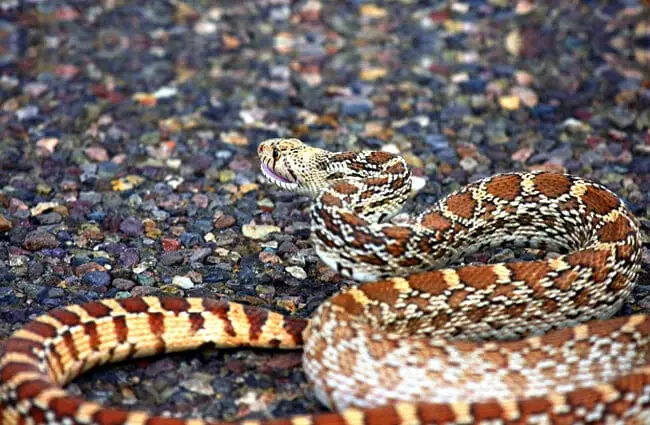
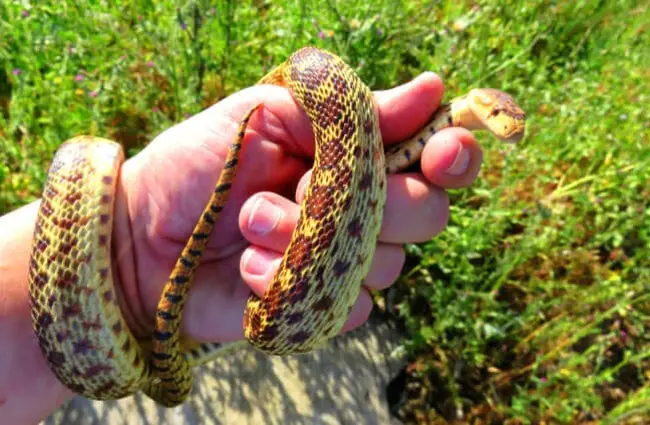
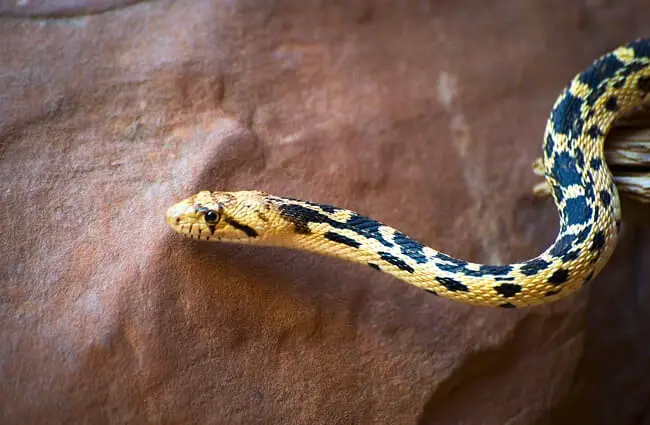
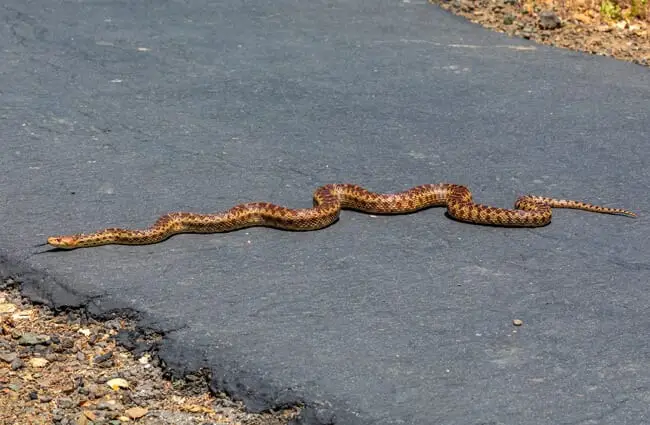
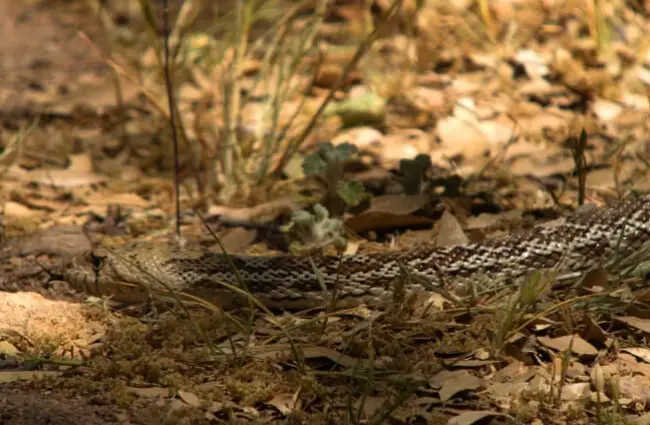
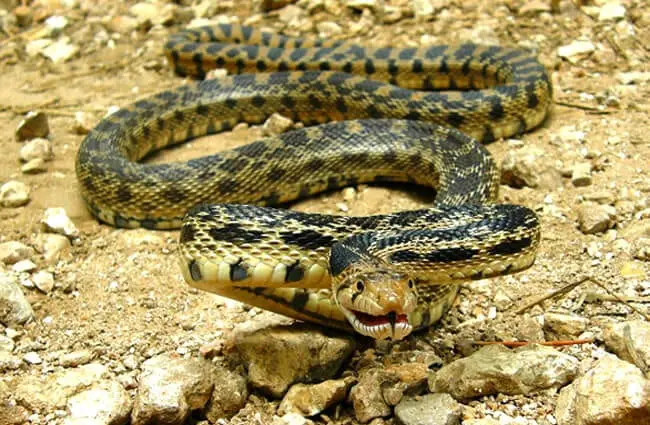
Gopher snakes are robust snakes with keeled scales, giving them a somewhat rough texture. Their coloration is highly variable, ranging from light tan or yellowish to dark brown or black. Many individuals display blotched or banded patterns, providing excellent camouflage within their natural environment. The pattern and intensity of these markings can differ significantly based on location and individual variation. A defining characteristic is the distinctive ‘racing stripe’ down the back, though this may be faint or absent in some populations. Their large size and powerful build are indicative of their constricting hunting method.
Diet and Hunting Strategies
Despite their name, gopher snakes do not exclusively feed on gophers. Their diet is remarkably diverse, encompassing rodents, ground squirrels, prairie dogs, birds, lizards, and even other snakes. They are opportunistic predators, consuming whatever prey is readily available.
Gopher snakes are constrictors, meaning they subdue their prey by wrapping their bodies around it and squeezing until it suffocates. They often lie in ambush near rodent burrows or along frequently traveled paths, striking quickly when prey approaches. Their powerful muscles and sharp teeth ensure a secure grip, and they swallow their prey whole. A fascinating behavior is their tendency to mimic rattlesnakes when threatened—they will flatten their heads, vibrate their tails, and hiss loudly to deter potential predators.
Reproduction and Life Cycle
Gopher snakes are oviparous, meaning they reproduce by laying eggs. Mating typically occurs in the spring, and females lay a clutch of between four and twenty eggs in a sheltered location, such as a rodent burrow or a rock crevice. The eggs incubate for approximately two to three months, with the temperature influencing the incubation period and the sex of the hatchlings—higher temperatures generally produce more females.
Hatchlings are typically around eight to twelve inches long and are immediately independent. They begin hunting small rodents and lizards, growing rapidly throughout their first few years. Gopher snakes are relatively long lived, with some individuals reaching ages of twenty years or more in the wild.
Ecological Role and Interactions
Gopher snakes play a crucial role in maintaining the health of their ecosystems. As predators of rodents and other small animals, they help to regulate populations and prevent outbreaks. They also contribute to nutrient cycling by consuming prey and depositing waste. Their burrowing activities can aerate the soil and improve drainage.
They share their habitat with a variety of other animals, including predators such as hawks, eagles, and coyotes. They also interact with other snake species, sometimes competing for food or shelter. Their ability to mimic rattlesnakes serves as a form of defensive mimicry, deterring predators and reducing the risk of predation.
Gopher Snakes and Humans
Gopher snakes often encounter humans in agricultural areas, gardens, and near residential developments. They are frequently mistaken for rattlesnakes, leading to unnecessary fear and persecution. However, they are harmless to humans and pose no threat. In fact, they can be beneficial by controlling rodent populations around homes and farms.
It is important to remember that gopher snakes are protected by law in many areas. Killing or harassing them is illegal and can result in fines or other penalties. If you encounter a gopher snake, it is best to leave it alone. If it is necessary to relocate it, do so carefully and release it in a suitable habitat away from human activity.
For the Aspiring Zoologist: Advanced Insights
Subspecies identification within Pituophis catenifer can be complex, relying on a combination of geographic location, scale counts, and coloration patterns. Genetic studies are continually refining our understanding of their evolutionary relationships. Researchers are also investigating the role of pheromones in their communication and mate selection. The impact of habitat fragmentation and climate change on gopher snake populations is an ongoing area of concern.
For the Wildlife Observer: Finding Gopher Snakes
The best time to observe gopher snakes is during the spring and fall when they are most active. Look for them basking in the sun on rocks or roads, or near rodent burrows. They are often found in areas with loose soil or rocky outcrops. Be patient and observant, and remember to approach slowly and quietly. Bring binoculars for a better view, and a camera to capture the moment.
For the Zookeeper: Captive Care
Providing appropriate care for gopher snakes in captivity requires a spacious enclosure with a temperature gradient, allowing them to thermoregulate effectively. Provide a substrate that allows for burrowing, such as aspen shavings or cypress mulch. Offer a varied diet of appropriately sized rodents, and supplement with vitamins and minerals. Ensure a clean and sanitary environment, and monitor for signs of illness or stress. Avoid handling them excessively, as this can cause stress. Offer enrichment items, such as branches or rocks, to stimulate their natural behaviors.
Fun Facts about Gopher Snakes
- Gopher snakes can grow to be over seven feet long.
- They are excellent climbers and can often be found in trees.
- Their scales are keeled, giving them a rough texture.
- They can mimic rattlesnakes to deter predators.
- They are non venomous and harmless to humans.
- They are found in a variety of habitats, including grasslands, prairies, and deserts.
- They are oviparous, meaning they lay eggs.
In conclusion, the gopher snake is a fascinating and ecologically important creature. Its adaptability, unique behaviors, and crucial role in maintaining healthy ecosystems make it a subject worthy of admiration and protection. By understanding these often misunderstood snakes, we can foster a greater appreciation for the biodiversity of our natural world.
![Closeup of a beautiful Red Angus cowPhoto by: U.S. Department of Agriculture [pubic domain]https://creativecommons.org/licenses/by/2.0/](https://animals.net/wp-content/uploads/2020/03/Red-Angus-4-238x178.jpg "Red Angus")


![Closeup of a beautiful Red Angus cowPhoto by: U.S. Department of Agriculture [pubic domain]https://creativecommons.org/licenses/by/2.0/](https://animals.net/wp-content/uploads/2020/03/Red-Angus-4-100x75.jpg "Red Angus")