Unearthing the Ancient Marvels: A Deep Dive into Trilobites
Imagine a world teeming with life unlike anything seen today, where the oceans pulsed with creatures sporting intricate armor and eyes that saw the world in a way we can only begin to comprehend. For nearly 300 million years, these fascinating beings dominated the ancient seas, evolving into a bewildering array of forms. These are the trilobites, a group of extinct marine arthropods whose fossilized remains continue to captivate scientists and enthusiasts alike. From their humble beginnings in the Cambrian explosion to their final disappearance during the Permian extinction, trilobites offer an unparalleled window into the deep past of our planet.
The Basic Blueprint: Anatomy of an Ancient Arthropod
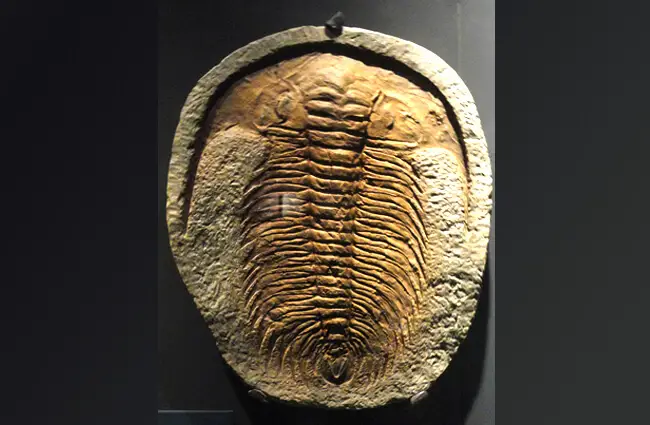
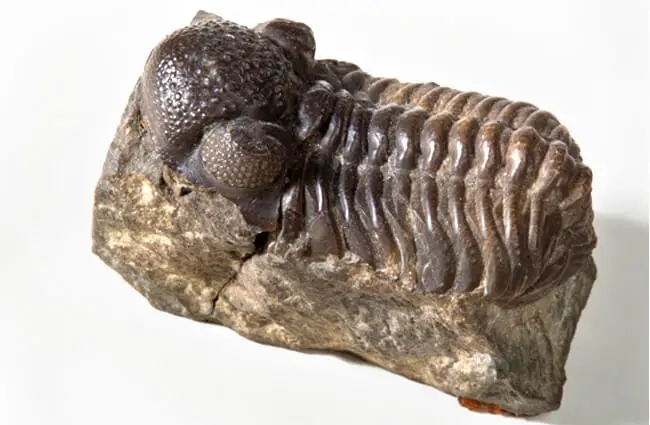
Trilobites belong to the phylum Arthropoda, making them distant relatives of modern insects, spiders, and crustaceans. Their name, “trilobite,” literally means “three lobes,” a reference to their distinctive body plan. A trilobite’s body is divided both longitudinally and transversely.
- Longitudinal Lobes:
- The central, raised axial lobe runs down the length of the body.
- Flanking it on either side are the two flatter pleural lobes.
- Transverse Divisions (Tagmata):
- The cephalon, or head shield, housed the mouth, antennae, and most notably, the eyes.
- The segmented thorax followed, composed of a varying number of articulated segments, allowing for flexibility and, in many species, the ability to enroll.
- Finally, the pygidium, or tail shield, was a fused segment at the posterior end.
Their entire body was covered by a hard, calcified exoskeleton, which they shed periodically to grow, a process known as ecdysis or molting. While the soft parts of trilobites rarely fossilize, evidence suggests they possessed biramous (two-branched) appendages beneath their bodies, used for walking, swimming, and respiration (gills).
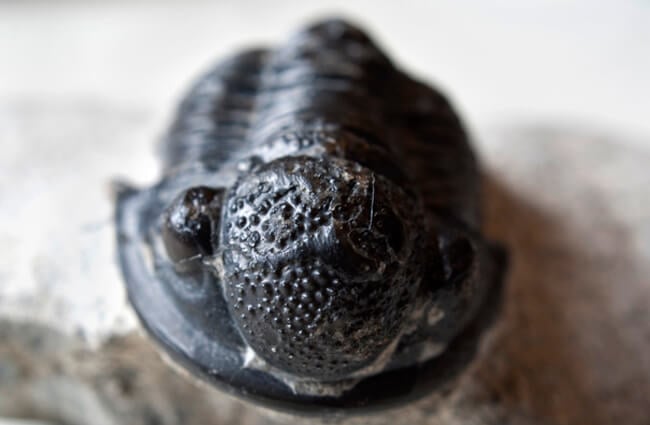
Perhaps one of their most remarkable features was their eyes. Trilobites were among the first animals to develop complex visual systems. Most possessed compound eyes, similar to those of modern insects, composed of numerous individual lenses. These could be either holochroal (many small, closely packed lenses under a single corneal layer) or the more advanced schizochroal (fewer, larger, individually separated lenses, each with its own cornea). Some deep-sea or burrowing species, however, evolved to be completely blind, adapting to environments where sight was unnecessary.
A Journey Through Time: Trilobite Evolution and Diversity
The story of trilobites is a saga spanning nearly 300 million years, a testament to their evolutionary success. They first appeared in the fossil record during the early Cambrian period, approximately 521 million years ago, as part of the “Cambrian Explosion,” a rapid diversification of complex life forms. From these early, relatively simple forms, trilobites underwent an incredible adaptive radiation, diversifying into over 20,000 recognized species grouped into 10 orders.
Their peak diversity occurred during the Ordovician period, where they filled a vast array of ecological niches across the globe. However, their numbers began to decline significantly during the Late Devonian extinction events. Despite this setback, several orders persisted, though with reduced diversity, through the Carboniferous and into the Permian period. Their long reign finally came to an end with the catastrophic Permian-Triassic extinction event, around 252 million years ago, which wiped out an estimated 90% of all marine species. Trilobites, having survived numerous lesser extinction events, could not weather this “Great Dying.”
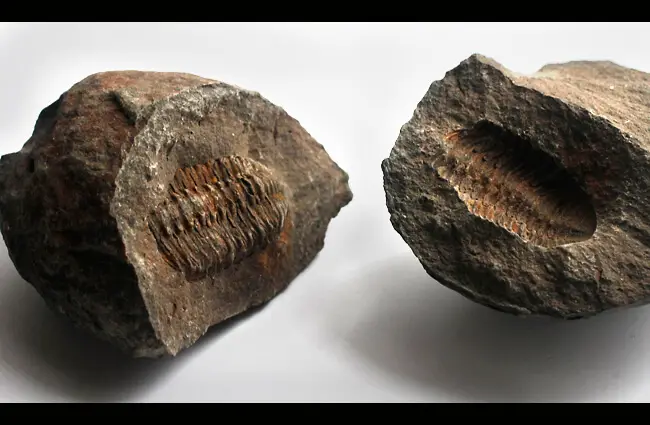
Their extensive fossil record makes them invaluable “index fossils,” allowing paleontologists to accurately date rock layers and correlate geological strata across continents. Studying their evolutionary changes provides crucial insights into ancient environments, continental drift, and the mechanisms of evolution itself.
Life in the Paleozoic Seas: Habitat and Lifestyle
Trilobites were exclusively marine creatures, inhabiting a wide range of oceanic environments. Their adaptability allowed them to thrive from shallow, sunlit coastal waters to the abyssal depths of the ancient oceans. Most species were benthic, meaning they lived on or near the seafloor, crawling across sediments or burrowing into them (infaunal). However, some forms evolved streamlined bodies and large eyes, suggesting a pelagic, or free-swimming, lifestyle in the water column.
Their diet was as varied as their habitats, reflecting the diverse ecological roles they played:
- Deposit Feeders: Many trilobites likely consumed organic matter found in the sediment, sifting through mud and sand for detritus.
- Scavengers: They would have fed on dead organisms and decaying plant matter, acting as important clean-up crews in the ancient ecosystems.
- Filter Feeders: Some species, particularly those with specialized mouthparts, are thought to have filtered plankton and other small particles from the water.
- Predators: Evidence suggests certain trilobites were active predators, preying on small invertebrates or worms, using their appendages to capture food.
To protect themselves from predators, trilobites developed various defensive strategies. Many species could “enroll,” rolling their bodies into a tight ball, much like a modern pill bug, presenting only their hard, armored exoskeleton to a threat. Others developed elaborate spines, particularly on their cephalon and pygidium, which would have deterred attackers or made them difficult to swallow. The sheer diversity in their morphology speaks volumes about the constant evolutionary arms race in the Paleozoic seas.
![Trilobite fossil found in southern France Photo by: [public domain]](https://animals.net/wp-content/uploads/2020/01/Trilobite-4-650x425.jpg)
Reproduction and Development: The Cycle of Ancient Life
While direct fossil evidence of trilobite reproduction is scarce, paleontologists infer their life cycle based on comparisons with modern arthropods and the discovery of larval forms. It is widely believed that trilobites reproduced sexually, likely through external fertilization in the water column. Females would have released eggs, and males sperm, leading to the development of free-swimming larvae.
The earliest larval stage, known as the protaspis, was typically planktonic, drifting in the open ocean. As the protaspis grew, it underwent a series of molts, gradually adding segments to its thorax and developing the characteristic trilobite form. This process of growth through molting, or ecdysis, continued throughout their lives, allowing them to increase in size and mature. Each molt left behind a discarded exoskeleton, contributing to the abundant fossil record.
Ecosystem Architects: Trilobites’ Role and Interactions
For millions of years, trilobites were integral components of marine ecosystems. Their sheer abundance and diversity meant they played multiple roles:
- Food Source: As a primary food source, trilobites were preyed upon by early fish, cephalopods (like ancient nautiloids), and other larger arthropods. Evidence of bite marks on trilobite fossils provides direct proof of these ancient predator-prey interactions.
- Sediment Disturbers: Their burrowing and crawling activities on the seafloor would have significantly disturbed and aerated sediments, influencing nutrient cycling and the distribution of other benthic organisms.
- Competitors: They competed with other bottom-dwelling invertebrates for food and space, shaping the structure of ancient marine communities.
- Bioindicators: Different species thrived in specific environmental conditions, making them excellent bioindicators for reconstructing ancient oceanographic parameters such as depth, temperature, and oxygen levels.
Trilobites and Us: From Fossils to Fascination
The interaction between trilobites and humans is, by definition, an interaction with their fossilized remains. Yet, these ancient creatures have left an indelible mark on our understanding of life’s history and even seeped into human culture.
- Contribution to Human Culture:
- Scientific Understanding: Trilobites are cornerstones of paleontology, providing crucial evidence for evolution, ancient environments, and the history of life on Earth.
- Art and Jewelry: Their aesthetic appeal, with intricate designs and often beautiful preservation, has led to trilobite fossils being prized as decorative items, collectibles, and even incorporated into jewelry.
- Indigenous Lore: In some indigenous cultures, particularly among the Paiute people of the American Southwest, trilobite fossils were known as “Timpe-Kon-shaw-a” or “stone butterflies,” sometimes believed to bring good luck or possess spiritual significance.
- Interaction with Humans:
- Paleontological Research: Scientists continue to study trilobite fossils to unlock secrets of ancient biology, ecology, and geology.
- Amateur Fossil Hunting: Enthusiasts worldwide enjoy searching for trilobite fossils, contributing to both personal collections and, occasionally, significant scientific discoveries.
- Finding a Trilobite in the Wild (and what to do):
A crucial point for any animal lover hoping to encounter a trilobite: these magnificent creatures are extinct. You cannot find a living trilobite in the wild today.
However, you absolutely can find their fossils! If you are a hiker or an aspiring zoologist interested in paleontology, here is how and where to look, and what to do if you make a discovery:
- Where to Look: Trilobite fossils are found in sedimentary rocks from the Paleozoic Era (Cambrian, Ordovician, Silurian, Devonian, Carboniferous, Permian periods). Look for exposures of shale, limestone, and sandstone in areas known for fossil deposits. Geological maps and local rockhounding clubs can point you to prime locations.
- How to Look: Carefully examine rock surfaces for outlines, textures, or shapes that don’t quite match the surrounding rock. A small geological hammer and chisel can be useful for careful extraction, but always prioritize safety and minimal impact.
- What to Do if You Find a Fossil:
- Appreciate the Discovery: Take a moment to marvel at a creature that lived millions of years ago!
- Document Your Find: Take clear photographs of the fossil in situ (before removal), note the exact location using GPS, and record details about the rock layer it was found in. This information is invaluable for scientific context.
- Check Regulations: If you are on private land, always seek permission from the landowner before collecting. On public lands (national parks, state parks, wilderness areas), collection rules vary widely. Some allow casual collection of small specimens, while others strictly prohibit it. Always check with local authorities.
- Consider Scientific Contribution: If you believe you’ve found a significant or unusual specimen, consider contacting a local natural history museum, university paleontology department, or geological survey. Your find could contribute to scientific knowledge.
- Caring for a Trilobite in Captivity (A Zookeeper’s Hypothetical Dilemma):
As established, trilobites are extinct. Therefore, caring for a living trilobite in captivity is a purely hypothetical scenario. However, if a zookeeper were tasked with such an extraordinary challenge, it would be an immense undertaking, requiring a deep understanding of ancient marine biology.
Hypothetically, a zookeeper would need to:
- Replicate Paleozoic Marine Conditions: This would involve meticulously controlling salinity, temperature, pH, and oxygen levels to match the specific ancient ocean environment of the trilobite species.
- Provide Appropriate Substrate: Depending on whether the species was benthic, infaunal, or pelagic, the enclosure would need suitable sand, mud, or open water.
- Diverse Dietary Provision: Given their varied diets, a range of microscopic organisms, detritus, and small invertebrates would need to be cultured and provided.
- Protection from Modern Pathogens: Maintaining a sterile environment free from modern bacteria and viruses, to which ancient organisms would have no immunity, would be critical.
- Monitoring Molting Cycles: Careful observation of their ecdysis process would be necessary to ensure successful growth and identify any issues.
This thought experiment highlights the incredible complexity and interconnectedness of ecosystems, both ancient and modern.
- A Huge List of Interesting Facts About Trilobites:
- Trilobites were among the first animals on Earth to develop complex eyes, a significant evolutionary innovation.
- Despite their advanced vision, some species adapted to deep-sea or burrowing lifestyles and became completely blind.
- Their size varied dramatically, from tiny species just a few millimeters long to giants like Isotelus rex, which could exceed 70 centimeters (over 2 feet) in length.
- They existed for approximately 270 million years, a span far longer than the entire age of dinosaurs (about 165 million years).
- Trilobites are considered excellent “index fossils” because of their widespread distribution, rapid evolution, and distinct morphology, making them invaluable for dating rock layers.
- Their ability to enroll into a protective ball was a sophisticated defense mechanism, showcasing early forms of complex behavior.
- Many species developed elaborate spines, which likely served multiple purposes: defense against predators, stabilization in currents, or even display during mating.
- Trilobite fossils have been found on every continent, including Antarctica, demonstrating their global distribution in ancient oceans.
Conclusion: The Enduring Legacy of the Three-Lobes
From their first appearance in the Cambrian to their final curtain call in the Permian, trilobites were an undeniable success story of early life. Their incredible diversity, adaptability, and long reign make them a cornerstone of paleontological study. While we can no longer observe these “three-lobed” wonders swimming through ancient seas, their fossilized remains continue to tell a compelling story of evolution, survival, and the dynamic history of our planet. They remind us that even the most dominant life forms can eventually fade, leaving behind only echoes in stone for us to discover and interpret.
![Closeup of a beautiful Red Angus cowPhoto by: U.S. Department of Agriculture [pubic domain]https://creativecommons.org/licenses/by/2.0/](https://animals.net/wp-content/uploads/2020/03/Red-Angus-4-100x75.jpg "Red Angus")