
The Reign of Spinosaurus: A Comprehensive Look at the Largest Terrestrial Predator
Imagine a predator larger than a Tyrannosaurus rex, not stalking through woodlands but wading through ancient rivers and estuaries. This was Spinosaurus aegyptiacus, a truly remarkable dinosaur that has captivated paleontologists and the public alike. Recent discoveries have dramatically reshaped our understanding of this colossal creature, revealing a semi aquatic lifestyle and unique adaptations unlike any other known dinosaur. This article delves into the fascinating world of Spinosaurus, exploring its anatomy, habitat, diet, evolutionary history, and place in the prehistoric ecosystem.
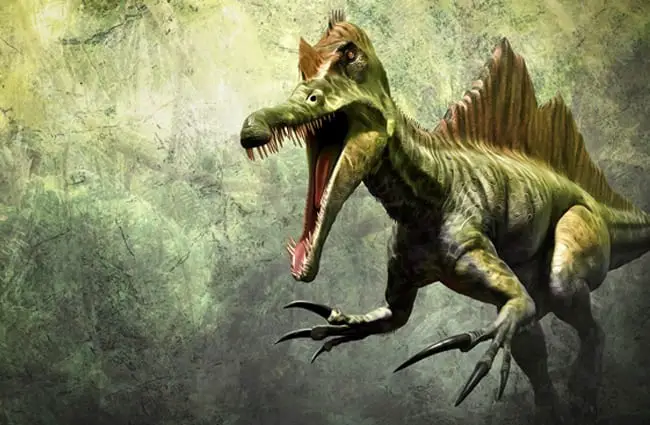
Anatomy and Physical Characteristics
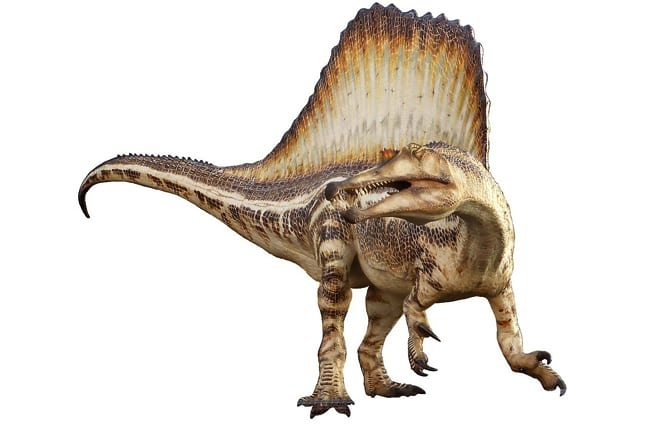
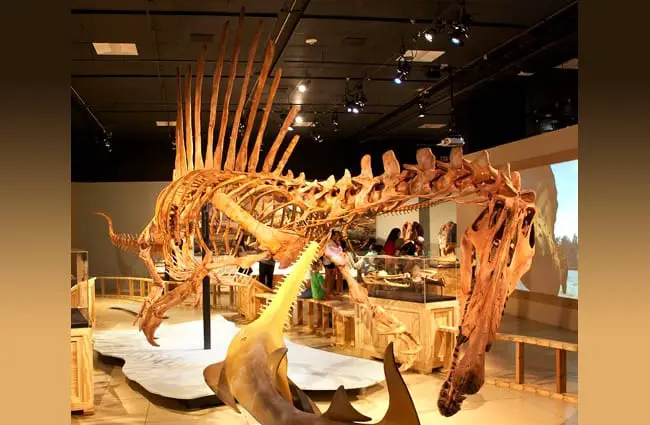
Spinosaurus is most recognizable for the massive sail on its back, formed by elongated neural spines. While the exact purpose of this sail is debated, the leading hypotheses suggest it served as a display structure for attracting mates or intimidating rivals, or perhaps as a thermoregulatory device for absorbing or dissipating heat. Beyond the sail, Spinosaurus possessed a long, crocodile like snout, filled with conical teeth perfect for grasping slippery fish. Its limbs were relatively short but robust, and its feet were likely webbed, aiding in swimming and navigating muddy terrain. Estimates place Spinosaurus at up to 12 meters (39 feet) in length and weighing between 6 and 10 tons, making it one of the largest predators that ever walked the Earth. Notably, recent studies suggest its center of gravity was well suited for moving in water, implying a lifestyle significantly different from the more terrestrial theropods like Tyrannosaurus.
The Unique Skull of Spinosaurus
The skull of Spinosaurus is unlike any other known dinosaur. It was long and low, with nostrils positioned high on the head, suggesting an adaptation for breathing while partially submerged. The teeth were not serrated like those of Tyrannosaurus, but smooth and conical, well suited for catching and holding fish. Furthermore, the skull shows evidence of a complex network of blood vessels, possibly related to its semi aquatic lifestyle.
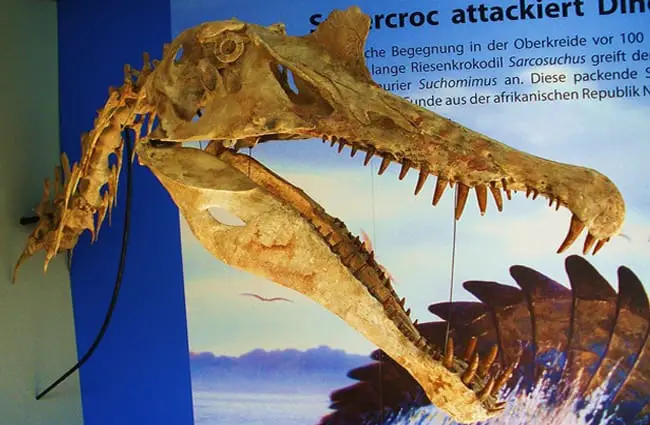
Habitat and Distribution
Fossil evidence suggests Spinosaurus inhabited what is now North Africa during the Cretaceous period, approximately 99 to 93.5 million years ago. This region was a very different landscape than it is today, characterized by vast river systems, mangrove swamps, and lush vegetation. Spinosaurus fossils have been found in Morocco, Egypt, and Niger, indicating a widespread distribution throughout this ancient environment. Paleoecological reconstructions suggest it favored coastal regions and large waterways, thriving in a humid, subtropical climate.
Diet and Feeding Behavior
Spinosaurus was primarily a piscivore, meaning its diet consisted mainly of fish. However, it was likely an opportunistic predator, also feeding on turtles, crocodiles, and potentially even large terrestrial dinosaurs that ventured too close to the water’s edge. The conical teeth and long snout were perfectly adapted for snatching slippery fish from the water. Some paleontologists propose that Spinosaurus may have hunted much like a heron, wading into shallow water and ambushing its prey. Isotope analysis of fossilized teeth supports the hypothesis of a primarily aquatic diet.
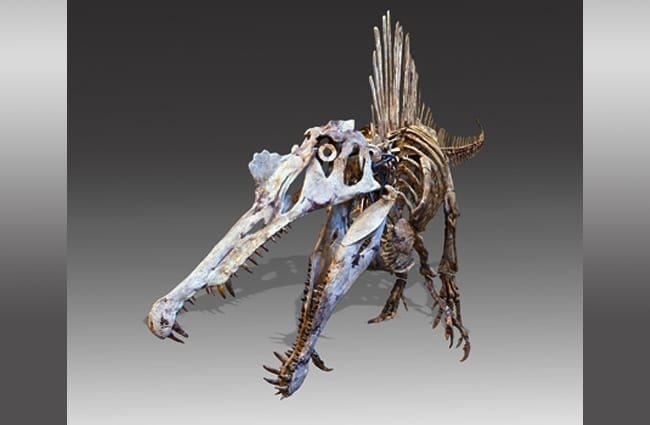
Evolutionary History and Phylogeny
Spinosaurus belongs to a group of dinosaurs called Spinosauridae, which are characterized by their elongated neural spines and crocodile like snouts. The earliest known spinosaurids appeared in the Middle Jurassic period, but Spinosaurus itself evolved during the Early Cretaceous. Its closest relatives include Baryonyx and Suchomimus, both of which also possessed adaptations for aquatic lifestyles. The evolutionary lineage of Spinosauridae is still being investigated, but it is thought they may have originated in Europe before dispersing into Africa and South America.
Spinosaurus and the Ecosystem
As an apex predator, Spinosaurus played a crucial role in regulating the populations of its prey and maintaining the health of the ancient ecosystem. It likely competed with other large predators, such as Carcharodontosaurus, for resources. The presence of Spinosaurus would have also influenced the behavior of other animals, creating a complex web of interactions. By controlling fish populations, it may have also affected the vegetation and overall productivity of the waterways.
Reproduction and Life Cycle
Unfortunately, very little is known about the reproductive habits of Spinosaurus. No nests or eggs have been discovered, so we can only speculate based on the behavior of other dinosaurs. It is likely that Spinosaurus laid eggs, possibly in a communal nesting site. The young would have been vulnerable to predators and would have required parental care. Growth rates are estimated to have been relatively rapid, allowing them to reach their immense size within a few decades.
Spinosaurus in Popular Culture
Spinosaurus has captured the imagination of the public and has been featured in numerous books, documentaries, and films. It made a prominent appearance in the film Jurassic Park III, although its depiction was not entirely accurate based on current scientific knowledge. Its unique anatomy and predatory prowess have made it a popular subject for paleontological illustrations and museum exhibits. The ongoing discoveries and revisions of its biology ensure that Spinosaurus will continue to fascinate and inspire future generations.
Practical Considerations
Given that Spinosaurus is extinct, encountering one in the wild is impossible. However, if you were to hypothetically stumble upon a living Spinosaurus (a scenario best left to science fiction), maintaining a safe distance would be paramount. Its immense size and predatory capabilities would pose a significant threat. In a captive setting, a zookeeper caring for a Spinosaurus would need to prioritize a large aquatic enclosure with ample swimming space. Diet would consist primarily of fish, and enrichment activities would need to focus on stimulating its predatory instincts in a safe and controlled manner. Regular veterinary checkups would be essential to monitor its health and well being.
Spinosaurus remains one of the most enigmatic and fascinating dinosaurs ever discovered. Its unique adaptations, unusual lifestyle, and ongoing scientific revisions ensure its place as a true icon of the prehistoric world. As we continue to uncover more fossils and refine our understanding of its biology, Spinosaurus will undoubtedly continue to surprise and inspire us for years to come.
![Closeup of a beautiful Red Angus cowPhoto by: U.S. Department of Agriculture [pubic domain]https://creativecommons.org/licenses/by/2.0/](https://animals.net/wp-content/uploads/2020/03/Red-Angus-4-238x178.jpg "Red Angus")
![Closeup of a beautiful Red Angus cowPhoto by: U.S. Department of Agriculture [pubic domain]https://creativecommons.org/licenses/by/2.0/](https://animals.net/wp-content/uploads/2020/03/Red-Angus-4-100x75.jpg "Red Angus")