
Deep beneath the ocean’s surface, where sunlight fades into an eternal twilight, reigns a creature of immense power and profound mystery: the Sperm Whale. Known scientifically as Physeter macrocephalus, this magnificent marine mammal is not just the largest toothed predator on Earth, but also a master of the deep, holding secrets of the abyss within its colossal head. Join us on a journey to uncover the fascinating world of the Sperm Whale, from its ancient lineage to its vital role in our planet’s oceans and its enduring presence in human lore.
Prepare to dive into the depths of knowledge about this iconic leviathan, exploring its life, its habitat, and its intricate dance with the marine ecosystem.
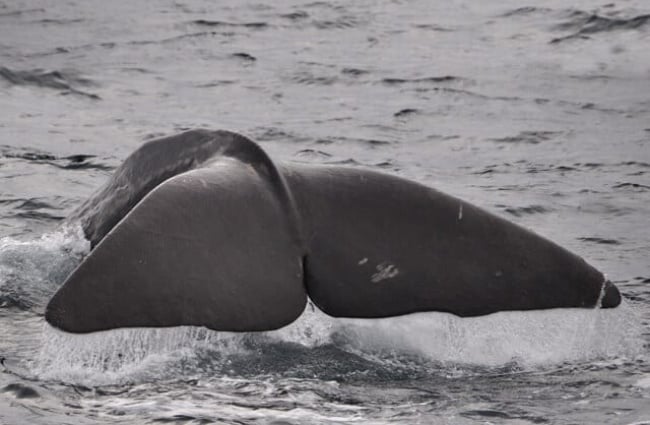
The Colossal King of the Deep: An Introduction to the Sperm Whale
The Sperm Whale is instantly recognizable by its enormous, block-shaped head, which can make up to one-third of its total body length. Males are significantly larger than females, reaching lengths of up to 20.5 meters (67 feet) and weighing over 57,000 kilograms (126,000 pounds). Females typically grow to about 11 meters (36 feet) and weigh around 15,000 kilograms (33,000 pounds). Their skin is often wrinkled, particularly around the head, and they possess a dark grey or brownish coloration, sometimes with white patches on the belly.
Unlike baleen whales, Sperm Whales possess teeth, formidable conical structures in their lower jaw that can be up to 20 centimeters (8 inches) long. These teeth are primarily used for grasping slippery prey, not for chewing, as they swallow their food whole.
Global Wanderers: Sperm Whale Habitat
Sperm Whales are truly cosmopolitan, inhabiting all the world’s oceans, from the frigid polar waters to the warm tropics. However, their preferred habitat is the deep, open ocean, typically in waters deeper than 1,000 meters (3,300 feet). They are often found along continental shelves and slopes, near underwater canyons, and around oceanic islands where deep-water squid, their primary food source, are abundant.
Female Sperm Whales and their young tend to remain in warmer, tropical, and subtropical waters year-round. Mature males, on the other hand, undertake extensive migrations, often traveling to higher latitudes, including the Arctic and Antarctic, to feed in rich, cold waters, returning to warmer zones for breeding.
Masters of the Hunt: The Sperm Whale’s Diet
The Sperm Whale’s diet consists almost exclusively of cephalopods, particularly various species of squid. They are renowned for their ability to hunt giant and colossal squid in the abyssal depths, creatures that are rarely seen by humans. Evidence of these epic battles can sometimes be observed as circular scars on the whales’ heads, left by the suckers and claws of their formidable prey.
While squid form the bulk of their diet, they are opportunistic feeders and may also consume deep-sea fish, octopuses, and even sharks if the opportunity arises. Their unique echolocation abilities allow them to pinpoint prey in the absolute darkness of the deep ocean.
Life in the Pod: Social Structure and Reproduction
Sperm Whales exhibit a complex and fascinating social structure. Females and their young live in stable, matriarchal groups called “nursery schools” or “pods,” typically consisting of 10 to 20 individuals, though sometimes numbering up to 40. These pods are highly cooperative, with females often sharing the responsibility of caring for calves, a behavior known as alloparenting. When one female dives for food, others will remain at the surface to protect and nurse the young.
Males, once they reach sexual maturity, typically leave their birth pods and form bachelor groups with other males of similar age. As they grow older and larger, these males become increasingly solitary, only joining female pods during the breeding season.
Reproduction is a slow process for Sperm Whales. Females reach sexual maturity between 7 and 13 years of age. Mating occurs in warmer waters, and after a gestation period of 14 to 16 months, a single calf is born. Calves are typically 3.5 to 4.5 meters (11 to 15 feet) long at birth and weigh around 1,000 kilograms (2,200 pounds). They are nursed for an extended period, sometimes up to 19 years, though weaning usually begins around 2 years of age. This long period of maternal care and slow reproductive rate makes them particularly vulnerable to population declines.
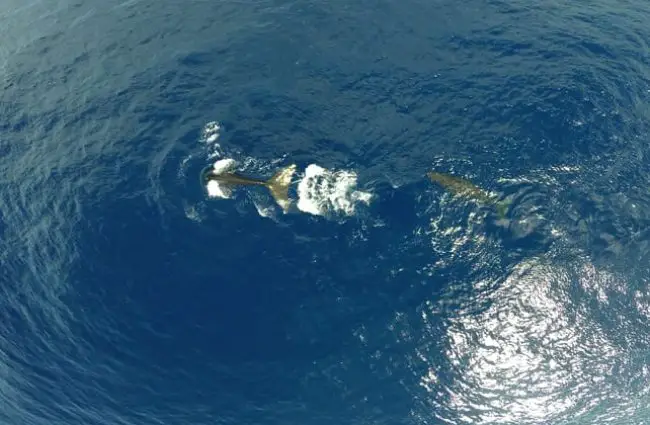
Diving Deeper: Advanced Insights into Sperm Whale Biology and Ecology
Beyond their basic biology, Sperm Whales possess an array of extraordinary adaptations and play a crucial role in the marine environment.
Evolutionary Journey: From Land to Deep Sea
The evolutionary history of the Sperm Whale, like all cetaceans, is a remarkable tale of adaptation from land-dwelling ancestors to fully aquatic life. Their lineage diverged from other toothed whales (Odontocetes) millions of years ago. Fossil evidence suggests that early cetaceans were small, four-legged mammals that gradually adapted to a semi-aquatic existence before becoming fully marine. The distinctive features of the Sperm Whale, particularly its massive head and specialized diving capabilities, evolved over eons to exploit the rich food resources of the deep ocean.
The Spermaceti Organ: A Biological Marvel
The most distinctive feature of the Sperm Whale is its enormous head, which houses the spermaceti organ. This organ, filled with a waxy substance called spermaceti, plays a critical role in the whale’s ability to dive to extreme depths and to echolocate. Scientists believe the spermaceti organ functions as a sophisticated acoustic lens, focusing and directing the powerful clicks used for echolocation, allowing the whale to navigate and hunt in the dark abyss.
It is also thought to aid in buoyancy control. By regulating blood flow to the organ, the whale can cool the spermaceti, causing it to solidify and increase in density, thereby assisting in rapid descent. Conversely, warming the spermaceti would decrease its density, aiding in ascent.
Ecosystem Engineers: Contribution and Interactions
As apex predators of the deep ocean, Sperm Whales play a vital role in regulating the populations of deep-sea squid and fish. Their massive consumption of these creatures helps maintain the balance of the deep-sea ecosystem. Furthermore, when a Sperm Whale dies, its carcass sinks to the ocean floor, creating a “whale fall” ecosystem. These whale falls provide a sudden, massive influx of nutrients to the otherwise food-scarce deep sea, supporting unique communities of scavengers and specialized organisms for decades, sometimes even centuries. This process contributes significantly to nutrient cycling in the deep ocean.
While they are at the top of their food chain, Sperm Whales do interact with other marine life. They are known to occasionally compete with other deep-diving predators for food, though direct competition is rare given the vastness of their habitat. Young calves may be vulnerable to predation by Orcas (killer whales), but adult Sperm Whales are generally too large and powerful to be preyed upon.
A Legacy in Culture: Sperm Whales and Humanity
The Sperm Whale has long captured the human imagination, perhaps most famously immortalized as the elusive Moby Dick in Herman Melville’s classic novel. This literary masterpiece cemented the whale’s image as a symbol of nature’s raw power and the human struggle against it. Beyond literature, Sperm Whales have featured in indigenous folklore and art across various cultures, often revered for their immense size and mysterious nature.
Historically, however, human interaction with Sperm Whales was far from reverent. The whaling industry, particularly in the 18th and 19th centuries, targeted Sperm Whales extensively for their spermaceti oil, used for lamps, candles, and lubricants, and for ambergris, a waxy substance found in their digestive tracts, highly prized in perfumery. This intense hunting decimated populations worldwide.
Today, commercial whaling of Sperm Whales is largely banned, and they are listed as ‘Vulnerable’ by the IUCN. Current threats include entanglement in fishing gear, ship strikes, ocean noise pollution (which can interfere with their echolocation and communication), and the impacts of climate change on their food sources and habitat.
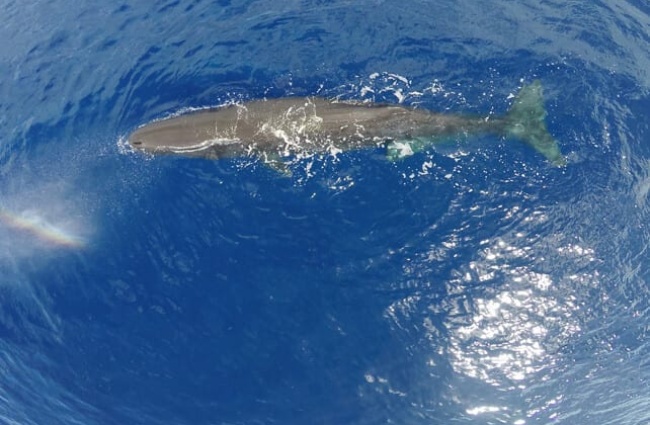
Practical Insights and Fascinating Facts
Understanding the Sperm Whale is not just an academic exercise; it offers practical insights for various audiences.
For the Aspiring Zoologist and Researcher
Studying Sperm Whales offers immense opportunities in marine biology, acoustics, and conservation. Research focuses on their diving physiology, social communication (their complex coda vocalizations), population genetics, and the impacts of anthropogenic threats. Aspiring zoologists should consider fields like bioacoustics, deep-sea ecology, and cetacean behavior to contribute to our understanding and protection of these magnificent creatures.
Finding Sperm Whales in the Wild: A Guide for Animal Lovers
Spotting a Sperm Whale in the wild is an unforgettable experience. Due to their deep-diving habits, they spend significant time underwater, but they must surface to breathe. Look for their distinctive, bushy blow, which is angled forward and to the left, unlike the vertical blow of baleen whales. This unique blow is a telltale sign of a Sperm Whale. They also often spend extended periods resting at the surface, sometimes logging motionless.
Prime locations for sightings include:
- The Azores, Portugal
- Dominica, Caribbean
- Kaikoura, New Zealand
- Sri Lanka
- The Canary Islands, Spain
Always choose reputable, eco-tourism operators who adhere to strict whale-watching guidelines to ensure minimal disturbance to the animals.
Encountering a Sperm Whale: What to Do (and Not Do)
For ocean enthusiasts or boaters who might encounter a Sperm Whale:
- Maintain Distance: Always keep a respectful and legal distance. Never approach a whale directly or too closely.
- Slow Down: If a whale is sighted, reduce your boat’s speed immediately and proceed with caution.
- Avoid Sudden Movements: Do not make sudden changes in speed or direction that could startle the animal.
- Never Harass: Do not attempt to feed, touch, or swim with wild Sperm Whales. This can be dangerous for both you and the whale and is often illegal.
- Report Sightings (if appropriate): In some regions, reporting whale sightings to local authorities or research groups can contribute to conservation efforts.
Remember, these are wild animals in their natural habitat. Observe from afar and appreciate their majesty without interference.
A Zookeeper’s Hypothetical Challenge: Caring for a Sperm Whale
It is important to state upfront that Sperm Whales are not kept in captivity anywhere in the world, nor should they be. Their immense size, profound deep-diving capabilities, complex social structures, and specialized diet make them entirely unsuitable for any captive environment. No aquarium or marine park could possibly replicate the vastness and complexity of their natural deep-ocean habitat.
However, if one were to hypothetically consider the immense challenges, a zookeeper’s tasks would be monumental and likely insurmountable:
- Enclosure Size: An enclosure would need to be miles in length and depth, not just hundreds of feet, to allow for natural swimming and diving behaviors.
- Water Quality and Depth: Maintaining deep-ocean pressure, temperature gradients, and pristine water quality on such a scale is beyond current technological capabilities.
- Diet: Sourcing and providing thousands of pounds of fresh, deep-sea squid daily would be an unprecedented logistical and financial challenge.
- Social Needs: Replicating their complex matriarchal social structure and providing appropriate social interaction would be impossible with a single animal or a small, confined group.
- Acoustic Environment: Their reliance on echolocation means a captive environment would need to be acoustically perfect, free from artificial noise, and designed to allow for natural sound propagation, which is impossible in a tank.
- Veterinary Care: Managing the health of such a large, deep-diving animal in a confined space would present unparalleled veterinary challenges.
In essence, the best “care” for a Sperm Whale is to protect its natural habitat and ensure its freedom in the wild.
A Huge List of Interesting Sperm Whale Facts
- The Sperm Whale has the largest brain of any animal on Earth, weighing up to 9 kilograms (20 pounds).
- They are the loudest animals on the planet, producing clicks that can reach 230 decibels, used for echolocation and communication.
- Sperm Whales can dive to depths of over 2,000 meters (6,500 feet) and hold their breath for up to 90 minutes, making them the deepest diving mammals.
- Their lower jaw contains 18 to 26 pairs of conical teeth, but the upper jaw has only rudimentary, non-functional teeth that sometimes erupt.
- The name “Sperm Whale” comes from the waxy substance, spermaceti, found in its head, which was historically mistaken for semen.
- They sleep vertically, often in groups, hanging motionless just below the surface.
- Ambergris, a rare and valuable substance used in perfumes, is produced in the digestive system of some Sperm Whales.
- Sperm Whales are thought to live for 70 years or more.
- They communicate using complex sequences of clicks known as “codas,” which vary between different social groups.
- A Sperm Whale’s skin is often scarred from encounters with giant squid and other whales.
Conclusion: Guardians of the Deep
The Sperm Whale stands as a testament to the incredible power and adaptability of life in our oceans. From its ancient lineage to its profound impact on the deep-sea ecosystem, this magnificent creature embodies the mysteries and wonders that still lie beneath the waves. As guardians of the deep, Sperm Whales remind us of the intricate balance of marine life and the urgent need for conservation efforts.
Protecting these colossal kings of the ocean means safeguarding their habitats from pollution, reducing noise interference, and mitigating the impacts of climate change. By understanding and appreciating the Sperm Whale, we not only enrich our own knowledge but also commit to ensuring a future where these majestic leviathans continue to thrive in the vast, blue wilderness they call home.
![Closeup of a beautiful Red Angus cowPhoto by: U.S. Department of Agriculture [pubic domain]https://creativecommons.org/licenses/by/2.0/](https://animals.net/wp-content/uploads/2020/03/Red-Angus-4-238x178.jpg "Red Angus")




![Closeup of a beautiful Red Angus cowPhoto by: U.S. Department of Agriculture [pubic domain]https://creativecommons.org/licenses/by/2.0/](https://animals.net/wp-content/uploads/2020/03/Red-Angus-4-100x75.jpg "Red Angus")