Shearwaters, those elegant masters of the ocean currents, represent a fascinating group of seabirds that have captivated ornithologists and seafarers for centuries. Belonging to the family Procellariidae, within the order Procellariiformes, commonly known as the tube-nosed seabirds, these birds are renowned for their incredible endurance, sophisticated navigation skills, and crucial role in marine ecosystems. This guide delves into the world of shearwaters, exploring their biology, behavior, habitat, and conservation status.
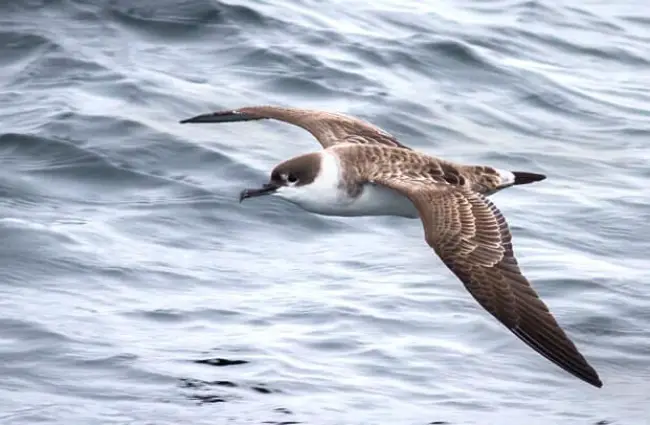
Shearwaters, those elegant masters of the ocean currents, represent a fascinating group of seabirds that have captivated ornithologists and seafarers for centuries. Belonging to the family Procellariidae, within the order Procellariiformes, commonly known as the tube-nosed seabirds, these birds are renowned for their incredible endurance, sophisticated navigation skills, and crucial role in marine ecosystems. This guide delves into the world of shearwaters, exploring their biology, behavior, habitat, and conservation status.
Physical Characteristics
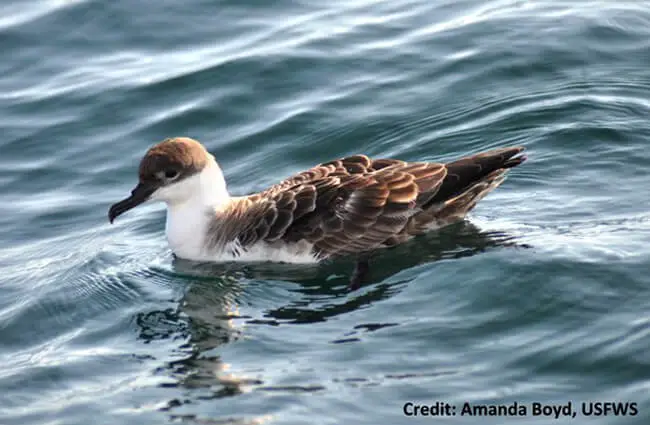
Shearwaters are medium to large seabirds, typically measuring 30–45 cm in length with wingspans ranging from 70–90 cm. Their plumage is generally a blend of white, gray, and brown, which provides excellent camouflage against the sea and sky. The most distinctive feature of shearwaters is their long, narrow wings, which are specially adapted for dynamic soaring. These wings enable them to glide effortlessly over vast distances while consuming minimal energy. In addition, shearwaters possess a specialized gland near their nostrils that removes excess salt from seawater, allowing them to thrive in saline environments.
Behavior and Diet
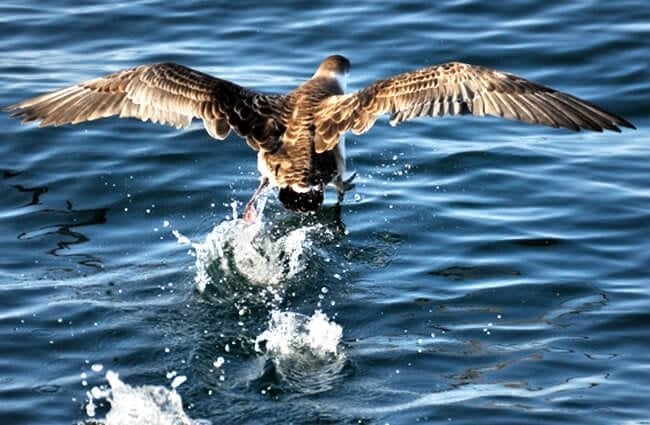
Shearwaters are carnivorous, feeding primarily on fish, squid, and crustaceans. Their highly developed sense of smell allows them to detect the scent of prey from great distances, even in complete darkness. Shearwaters often hunt by swooping close to the surface of the water and darting into schools of fish. Many species also forage by following the wakes of large marine animals such as whales, dolphins, and sharks, taking advantage of the prey these animals stir up. Occasionally, shearwaters engage in kleptoparasitic behavior, stealing prey from other seabirds.
Habitat and Migration
Shearwaters occupy a wide range of marine habitats, from temperate to polar waters. They typically nest in burrows, crevices, or on cliff ledges, where they lay a single white egg. Many species breed on remote islands, with prime breeding sites including islands off the coasts of North America, Europe, New Zealand, and Australia. Outside the breeding season, shearwaters migrate to the open ocean, forming large flocks that travel in search of food. Shearwaters have a high degree of site fidelity, returning to their natal colonies to breed. Shearwaters also exhibit long distance migrations, with the Sooty Shearwater known for its incredible circular migration around the Pacific Ocean.
Reproduction and Lifespan
Shearwaters are monogamous, forming long term pair bonds. Both parents participate in incubating the egg and feeding the chick, which is usually weaned after 60–70 days. Shearwaters have a relatively late maturity, typically breeding for the first time at several years of age. Some species can live for over 50 years, with the oldest recorded individuals exceeding 60 years of age.
Threats and Conservation
Like many seabirds, shearwaters face threats from overfishing, pollution, plastic ingestion, and the introduction of non-native predators on breeding islands. Climate change also alters oceanic currents and prey availability, potentially affecting their migration routes and breeding success. Conservation efforts focus on protecting breeding colonies, managing fisheries to reduce bycatch, and monitoring population trends. International agreements such as the Convention on Migratory Species provide a framework for coordinated conservation actions across the shearwaters’ extensive range.
Interesting Facts
- The Sooty Shearwater is famous for its long distance migrations, traveling thousands of kilometers each year.
- Shearwaters have a highly developed sense of smell, enabling them to locate prey from hundreds of kilometers away.
- Shearwaters have a specialized gland near their nostrils that removes salt from seawater.
- Shearwaters are highly adaptable, nesting on islands, cliffs, and even urban rooftops when suitable natural sites are unavailable.
- Shearwaters exhibit complex social behaviors, often forming large roosting colonies that provide safety in numbers.
![Closeup of a beautiful Red Angus cowPhoto by: U.S. Department of Agriculture [pubic domain]https://creativecommons.org/licenses/by/2.0/](https://animals.net/wp-content/uploads/2020/03/Red-Angus-4-238x178.jpg "Red Angus")
![Closeup of a beautiful Red Angus cowPhoto by: U.S. Department of Agriculture [pubic domain]https://creativecommons.org/licenses/by/2.0/](https://animals.net/wp-content/uploads/2020/03/Red-Angus-4-100x75.jpg "Red Angus")