The rainforests of Southeast Asia are home to one of the most intelligent and fascinating primates on Earth, the orangutan. These “people of the forest,” as their name translates, are known for their remarkable cognitive abilities, complex social structures, and crucial role in maintaining the health of their fragile ecosystems. This comprehensive guide delves into the world of orangutans, exploring their biology, behavior, conservation status, and interactions with both the natural world and humanity.
Orangutan Basics: An Introduction
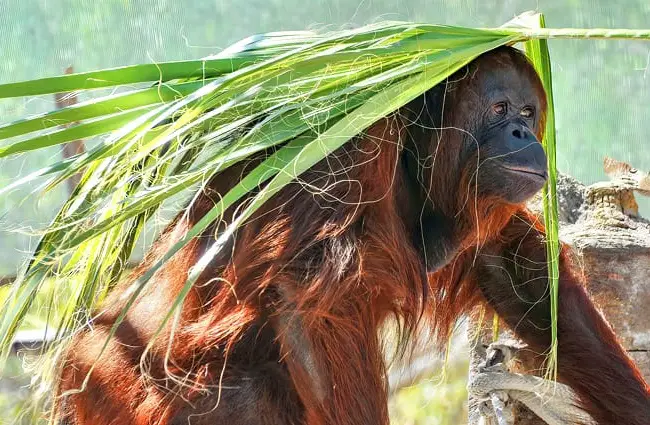
There are three distinct species of orangutans: Bornean orangutans (Pongo pygmaeus), Sumatran orangutans (Pongo abelii), and Tapanuli orangutans (Pongo tapanuliensis). Each species occupies a different geographic range within the islands of Borneo and Sumatra. These large apes exhibit pronounced sexual dimorphism, meaning males and females differ significantly in size and appearance. Adult male Bornean orangutans can weigh over 100 kilograms, while females are considerably smaller. Sumatran and Tapanuli orangutans are generally smaller than their Bornean counterparts. Their reddish‑brown fur provides camouflage within the dense forest canopy.
Habitat and Distribution
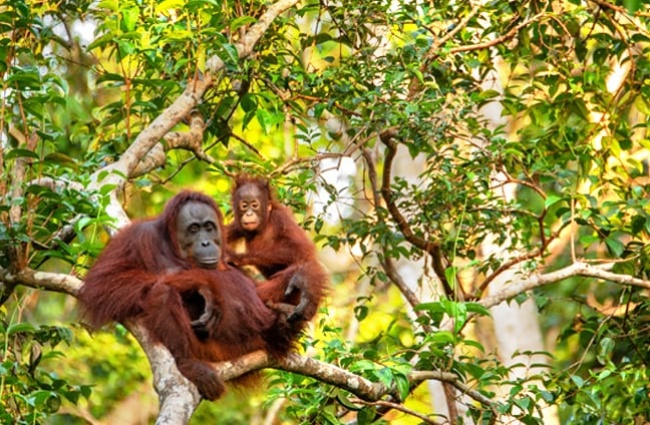
Orangutans are exclusively arboreal, spending almost their entire lives in trees. They inhabit lowland rainforests, swamp forests, and even degraded forests in Borneo and Sumatra. The availability of fruit, particularly figs, is a key determinant of orangutan distribution. Old‑growth forests, with their diverse fruiting trees, provide the most suitable habitat. Unfortunately, large‑scale deforestation for palm oil plantations, logging, and agriculture is rapidly shrinking orangutan habitat, pushing them closer to extinction.
Evolutionary History
The evolutionary history of orangutans is complex. Fossil evidence suggests that ancestors of modern orangutans inhabited mainland Southeast Asia millions of years ago. As the climate changed and forests fragmented, orangutan populations became isolated on Borneo and Sumatra. The Tapanuli orangutan, discovered in 2017, is the most recently identified great ape species and is genetically distinct from both Bornean and Sumatran orangutans, highlighting the importance of ongoing research into their evolutionary origins.
Diet and Foraging Behavior
Orangutans are primarily frugivores, with fruit making up the majority of their diet. However, they are also opportunistic omnivores, supplementing their diet with leaves, bark, insects, and occasionally bird eggs or small vertebrates. They exhibit remarkable foraging skills, carefully selecting ripe fruits and employing tools to extract insects from crevices or access seeds within hard shells. They are known to use sticks to fish for termites or to probe for honey. This dietary flexibility is crucial for survival, especially during periods when fruit is scarce.
Social Structure and Behavior
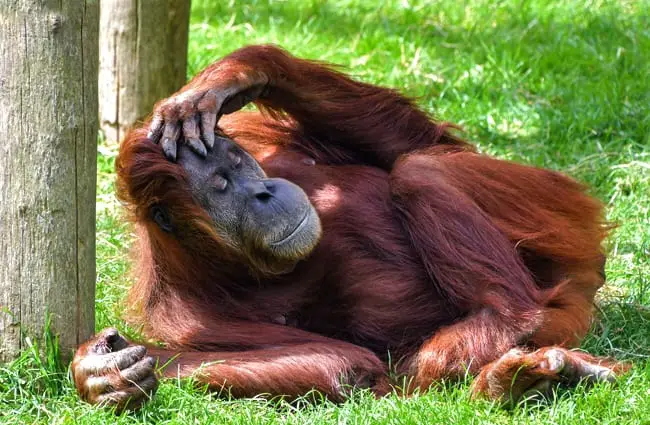
Orangutans are generally solitary animals, particularly adult males. They maintain large territories, which they defend from other males. Females live with their offspring, forming strong mother‑infant bonds. While largely solitary, orangutans are not entirely asocial. They communicate through a variety of vocalizations, including long calls given by dominant males, as well as visual displays and scent marking. These communications play a vital role in maintaining social boundaries and attracting mates. Flanges, the large cheek pads developed by dominant male orangutans, serve as visual signals of dominance and attract females.
Mating and Reproduction
Orangutans have a slow reproductive rate. Females reach sexual maturity around eight to ten years of age and give birth to a single infant every six to eight years. This low birth rate makes orangutans particularly vulnerable to population declines. The mother orangutan provides extensive care for her infant, nursing it for several years and teaching it essential survival skills. Infants remain dependent on their mothers for a long period, learning how to build nests, find food, and navigate the forest canopy.
Ecological Role and Interactions
Orangutans play a critical role in maintaining the health of their forest ecosystems. As frugivores, they disperse seeds throughout the forest, contributing to forest regeneration. By consuming fruits and leaves, they also influence plant community structure. They share their habitat with a variety of other animals, including proboscis monkeys, gibbons, and various bird and reptile species. Occasionally, orangutans will interact with other primates, sometimes engaging in playful or aggressive encounters. They also compete with other frugivores for food resources.
Orangutans and Humans: A Troubled Relationship
Historically, orangutans have been hunted for bushmeat and persecuted as agricultural pests. Today, the biggest threat to orangutan survival is habitat loss due to deforestation. The expansion of palm oil plantations is a major driver of deforestation, destroying vast areas of orangutan habitat. Orangutans are also sometimes captured for the pet trade, though this is illegal. Efforts to conserve orangutans include establishing protected areas, implementing sustainable forestry practices, and working with local communities to reduce deforestation.
Encountering Orangutans in the Wild
If you are fortunate enough to encounter an orangutan in the wild, it is crucial to maintain a safe distance and observe them from afar. Avoid making direct eye contact, as this can be perceived as a threat. Never offer them food, as this can alter their natural foraging behavior and make them dependent on humans. Report any sightings to local conservation authorities.
Caring for Orangutans in Captivity
Providing appropriate care for orangutans in captivity requires a deep understanding of their complex needs. Enclosures should be spacious and enriched with a variety of climbing structures, foraging opportunities, and puzzle feeders. Orangutans require a varied diet that mimics their natural diet in the wild. Zookeepers should provide opportunities for social interaction, while also respecting individual preferences. Avoiding anthropomorphism and recognizing their wild instincts are crucial for their wellbeing.
Interesting Facts
- Orangutans share 97% of their DNA with humans.
- They are capable of using and making tools, demonstrating their intelligence.
- Their name “orangutan” means “person of the forest” in Malay and Indonesian.
- They build nests every night, using branches and leaves.
- Male orangutans can develop distinctive throat pouches that they use to amplify their long calls.
The future of orangutans hangs in the balance. Without concerted conservation efforts, these magnificent apes may face extinction in the wild. By supporting sustainable practices, protecting their habitat, and raising awareness about their plight, we can help ensure that orangutans continue to thrive in the forests of Southeast Asia for generations to come.
![Closeup of a beautiful Red Angus cowPhoto by: U.S. Department of Agriculture [pubic domain]https://creativecommons.org/licenses/by/2.0/](https://animals.net/wp-content/uploads/2020/03/Red-Angus-4-238x178.jpg "Red Angus")


![Closeup of a beautiful Red Angus cowPhoto by: U.S. Department of Agriculture [pubic domain]https://creativecommons.org/licenses/by/2.0/](https://animals.net/wp-content/uploads/2020/03/Red-Angus-4-100x75.jpg "Red Angus")