Deep within the emerald embrace of Central and South American rainforests lives a creature of captivating mystery and charm: the Kinkajou. Often mistaken for a primate or a ferret, this nocturnal marvel is, in fact, a member of the raccoon family, Procyonidae, yet possesses a suite of unique adaptations that make it a true arboreal acrobat and an unsung hero of its ecosystem. Prepare to journey into the hidden world of Potos flavus, a creature whose life is as rich and complex as the jungle canopy it calls home.
Unveiling the Kinkajou: A Rainforest Enigma
Who is the Kinkajou?
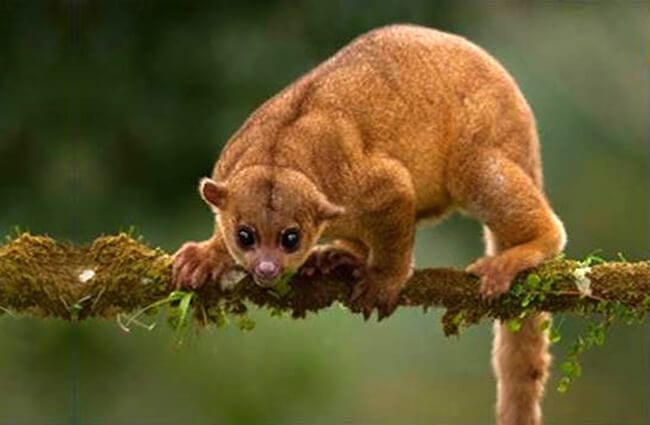
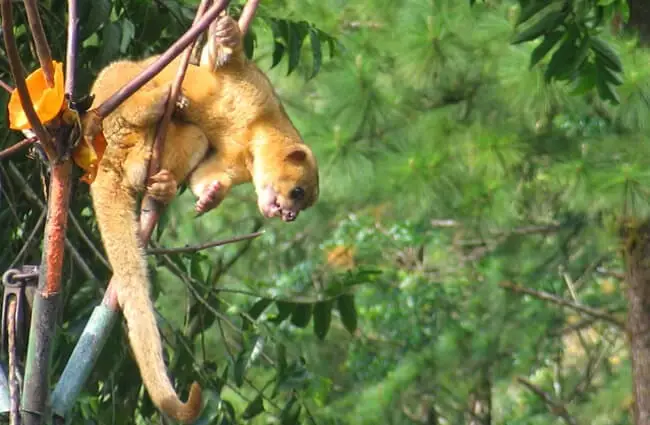
The Kinkajou, scientifically known as Potos flavus, is a medium-sized mammal renowned for its striking appearance and gentle demeanor. Its common name, “Kinkajou,” is thought to derive from an indigenous word, and it is also affectionately known as the “honey bear” due to its fondness for nectar and honey, and its bear-like fur. Physically, Kinkajous boast a round head, large eyes perfectly adapted for nocturnal vision, and small, rounded ears. Their fur is dense, soft, and typically golden-brown or grayish-brown, providing excellent camouflage amidst the tree branches. A defining feature is their long, prehensile tail, which is as long as their body and acts as a fifth limb, crucial for balance and gripping as they navigate the canopy.
Adult Kinkajous typically weigh between 3 to 7 pounds (1.4 to 3.2 kg) and measure about 16 to 22 inches (40 to 56 cm) in body length, with their tail adding another 16 to 22 inches. Their agile bodies and strong claws allow them to move with remarkable grace and speed through the trees, rarely descending to the forest floor.
Where Do Kinkajous Call Home? Habitat and Distribution
Kinkajous are creatures of the neotropical rainforests, thriving in the humid, dense canopies from southern Mexico, throughout Central America, and deep into South America, reaching as far south as Bolivia and parts of Brazil. Their preferred habitat includes tropical evergreen forests, dry deciduous forests, and even gallery forests along rivers. They are strictly arboreal, meaning they spend almost their entire lives in the trees, rarely touching the ground. This adaptation allows them to exploit a niche rich in fruits and nectar, while also providing refuge from ground predators. An animal lover hoping to spot a Kinkajou in the wild would need to venture into these dense forest environments, particularly at night, and look upwards into the tree branches, perhaps with the aid of a red-light flashlight to avoid disturbing them.
A Night Life: Behavior and Activity Patterns
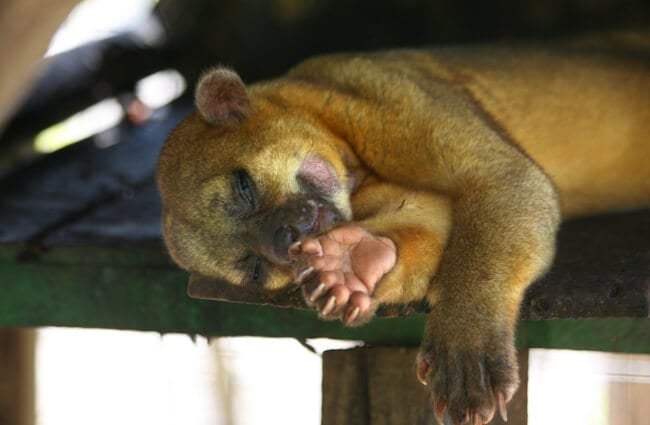
As strictly nocturnal animals, Kinkajous emerge from their tree hollows or dense vine tangles at dusk, beginning their foraging expeditions under the cover of darkness. Their large eyes are perfectly adapted for low-light conditions, and their keen sense of smell helps them locate ripe fruits and flowers. During the day, they curl up in tree cavities or dense foliage, often sleeping in groups, to conserve energy and avoid predators. While generally solitary foragers, Kinkajous are known to occasionally forage in small, loose groups, especially when a particularly abundant food source is found. Their movements through the canopy are fluid and deliberate, utilizing their prehensile tail for stability and their strong grip for climbing.
The Kinkajou’s Place in Nature: Ecology and Biology
What’s on the Menu? The Kinkajou Diet
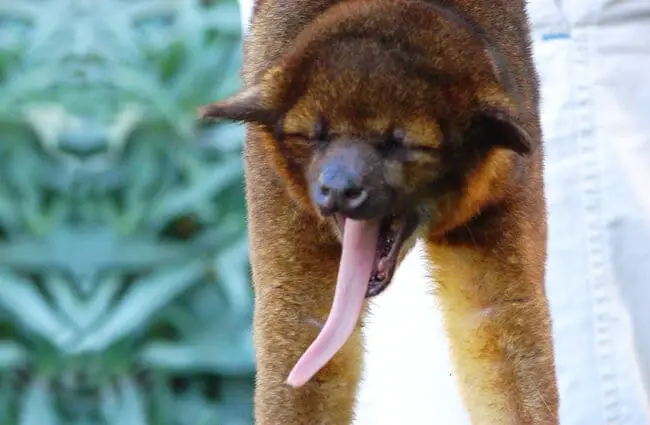
Despite their classification within the order Carnivora, Kinkajous are predominantly frugivorous, meaning their diet primarily consists of fruit. This makes them unique among their raccoon relatives. Their long, slender tongue, which can extend up to 5 inches (12 cm), is perfectly adapted for extracting nectar from flowers and soft pulp from ripe fruits. They are particularly fond of figs, mangoes, and bananas. Beyond fruits and nectar, Kinkajous are opportunistic feeders and will supplement their diet with insects, small vertebrates like frogs or lizards, and even bird eggs, especially when fruit is scarce. This varied diet highlights their adaptability and resourcefulness in the dynamic rainforest environment.
Family Ties: Mating and Reproduction
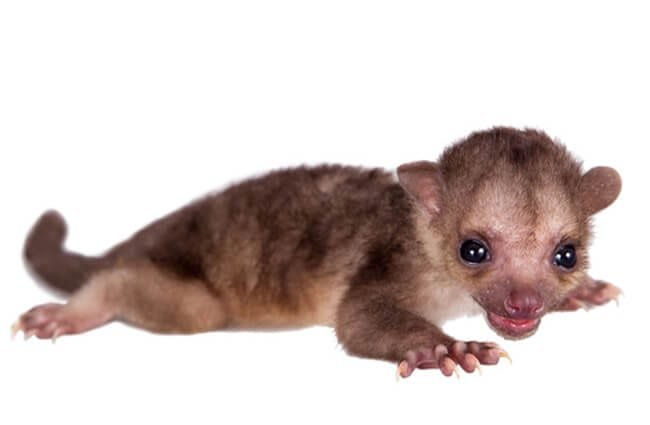
Kinkajous typically reach sexual maturity around 1.5 to 2 years of age. While they can breed year-round, there might be peaks in reproductive activity correlating with fruit availability. The gestation period lasts approximately 112 to 120 days, after which the female gives birth to a single offspring, or occasionally twins, in a tree hollow or a safe, secluded nest. The newborn Kinkajou is altricial, meaning it is born helpless, blind, and sparsely furred, weighing only about 5.5 to 7 ounces (150-200 grams). The mother is the primary caregiver, nursing and protecting her young. The young Kinkajou’s eyes open after about 7 to 10 days, and it begins to explore its surroundings and consume solid food around 7 to 8 weeks. It will stay with its mother for several months, learning essential foraging and survival skills before becoming independent. In captivity, Kinkajous can live for over 20 years, though their lifespan in the wild is generally shorter.
Evolutionary Journey: A Unique Lineage
The Kinkajou belongs to the family Procyonidae, which also includes raccoons, coatis, and ringtails. However, its evolutionary path has diverged significantly, leading to its highly specialized arboreal and frugivorous lifestyle. While sharing a common ancestor with other procyonids, the Kinkajou’s adaptations, such as its prehensile tail, long tongue, and nocturnal fruit-eating habits, highlight a unique evolutionary trajectory. Genetic studies suggest that Kinkajous diverged from other procyonids millions of years ago, evolving to fill a specific ecological niche in the rainforest canopy. This makes them a fascinating subject for aspiring zoologists interested in convergent evolution and ecological specialization.
Ecosystem Architects: Kinkajous and Their Environment
Kinkajous play a vital, often underestimated, role in the health of their rainforest ecosystem. Their primary diet of fruits and nectar makes them crucial seed dispersers and pollinators. As they move from tree to tree, feeding on ripe fruits, they ingest seeds which are later dispersed through their droppings, often far from the parent plant, aiding in forest regeneration. Similarly, when feeding on nectar, pollen adheres to their fur and is inadvertently transferred between flowers, facilitating pollination for various plant species. This makes them important contributors to the biodiversity and structural integrity of the rainforest. In terms of interaction with other animals, Kinkajous are prey for larger predators like jaguars, ocelots, and large raptors such as harpy eagles. They also compete with other frugivores, like monkeys and birds, for food resources, though their nocturnal habits help reduce direct competition.
Kinkajous and Humans: Coexistence and Care
Encountering a Kinkajou in the Wild: What to Do
For hikers, researchers, or animal lovers exploring Kinkajou habitats, an encounter with this elusive creature can be a truly memorable experience. If you are fortunate enough to spot a Kinkajou in the wild, particularly at night, the best course of action is to observe from a respectful distance. Kinkajous are generally shy and non-aggressive towards humans. Do not attempt to approach, touch, or feed the animal. Feeding wild animals can alter their natural behavior, make them dependent on human food sources, and potentially expose them to diseases. Simply enjoy the rare sighting, perhaps take a photograph without flash to avoid startling it, and allow the Kinkajou to continue its nocturnal activities undisturbed. Remember, their prehensile tail is not for grabbing, and while they have teeth, they are unlikely to bite unless provoked or feeling threatened.
Kinkajous in Captivity: A Zookeeper’s Guide
Caring for Kinkajous in a zoological setting requires specialized knowledge and dedication. Zookeepers must replicate their natural environment as closely as possible to ensure their well-being. Here are key considerations:
- Habitat Enrichment: A spacious, arboreal enclosure with plenty of climbing structures, branches, ropes, and platforms is essential. Tree hollows or nest boxes should be provided for daytime resting. Enrichment items like puzzle feeders, scent trails, and rotating toys help stimulate their natural foraging behaviors and prevent boredom.
- Diet: A balanced diet primarily consisting of fresh fruits (e.g., figs, papayas, bananas, mangoes), supplemented with commercial omnivore chow, vegetables, and occasional insect protein (e.g., crickets, mealworms). Nectar substitutes can also be offered. Avoid sugary human foods, excessive citrus, and anything with artificial sweeteners.
- Nocturnal Schedule: Maintain a nocturnal lighting schedule to allow for natural activity patterns. This often involves dim red lighting during visitor hours and complete darkness at night.
- Social Structure: While often solitary in the wild, Kinkajous can sometimes be housed in compatible pairs or small groups, especially if they are related. Careful introductions and monitoring are crucial.
- Veterinary Care: Regular veterinary check-ups are vital. Common health issues can include dental problems (due to diet), metabolic bone disease (if calcium/phosphorus balance is off), and obesity.
- Handling: Kinkajous can be prone to stress. Minimize direct handling unless necessary for medical examinations. Positive reinforcement training can be used for cooperative care behaviors.
It is important to note that Kinkajous are not suitable as household pets. Their complex dietary needs, nocturnal habits, strong climbing abilities, and potential for aggressive behavior when stressed make them challenging to care for outside of a professional zoological environment. The illegal pet trade also poses a significant threat to wild Kinkajou populations.
Kinkajous in Human Culture: More Than Just a Pet
While Kinkajous have gained some notoriety in recent years as exotic pets, their role in human culture extends beyond this controversial trend. In some indigenous cultures within their range, Kinkajous may feature in local folklore or be hunted for their meat or fur, though this is less common than for other species. Their elusive, nocturnal nature often lends them an air of mystery. For many, the Kinkajou represents the hidden wonders of the rainforest, a symbol of the rich biodiversity that thrives away from human eyes. Their unique appearance and gentle nature, when not threatened, often evoke curiosity and admiration, contributing to a broader appreciation for wildlife.
Fascinating Kinkajou Facts
Here is a huge list of interesting facts about Kinkajous that highlight their unique biology and ecological importance:
- Prehensile Tail: Their tail is fully prehensile, meaning it can grasp objects and branches, acting like a fifth limb. It is also used for balance and as a blanket when they sleep.
- Long Tongue: Kinkajous possess an incredibly long, slender tongue, capable of extending up to 5 inches, perfect for reaching nectar deep within flowers and extracting fruit pulp.
- Nocturnal Vision: Their large, forward-facing eyes are adapted for excellent night vision, allowing them to navigate the dark rainforest canopy with ease.
- “Honey Bear” Nickname: They earned this moniker due to their love for honey and nectar, which they expertly extract with their specialized tongues.
- Unique Vocalizations: Kinkajous communicate through a variety of sounds, including soft chitters, chirps, and a distinctive, loud, piercing scream when alarmed or defending territory.
- Arboreal Lifestyle: They spend almost their entire lives in trees, rarely descending to the forest floor.
- Dietary Anomaly: Despite being classified in the order Carnivora, Kinkajous are primarily frugivores, making them one of the few fruit-eating carnivores.
- Solitary Foragers: While they may sleep in groups, Kinkajous typically forage alone, though they might occasionally gather at abundant food sources.
- Excellent Climbers: Their strong claws and agile bodies make them superb climbers, capable of moving rapidly through the dense canopy.
- Ecological Role: They are vital seed dispersers and pollinators, contributing significantly to rainforest health and regeneration.
- Long Lifespan: In captivity, Kinkajous can live for over 20 years, a testament to their robust nature.
- Not a Primate: Despite their appearance and arboreal habits, they are not monkeys or primates, but rather members of the raccoon family.
- Scent Marking: Kinkajous use scent glands on their chest and throat to mark their territory, communicating with other Kinkajous.
The Kinkajou stands as a testament to the incredible diversity and specialization found within our planet’s ecosystems. From its unique evolutionary path to its crucial role as a pollinator and seed disperser, this “honey bear” of the rainforest is far more than just a cute face. Understanding and appreciating these fascinating creatures is the first step towards ensuring their continued survival in the wild. By supporting conservation efforts and respecting their natural habitats, we can help protect the Kinkajou and the vibrant rainforests they call home for generations to come.
![Closeup of a beautiful Red Angus cowPhoto by: U.S. Department of Agriculture [pubic domain]https://creativecommons.org/licenses/by/2.0/](https://animals.net/wp-content/uploads/2020/03/Red-Angus-4-238x178.jpg "Red Angus")



![Closeup of a beautiful Red Angus cowPhoto by: U.S. Department of Agriculture [pubic domain]https://creativecommons.org/licenses/by/2.0/](https://animals.net/wp-content/uploads/2020/03/Red-Angus-4-100x75.jpg "Red Angus")