Unveiling the Jaegers: Masters of the Skies
The name “Jaeger” evokes images of fierce aerial predators, and rightfully so. These remarkable seabirds, belonging to the skua family (Stercorariidae), are renowned for their bold, aggressive behavior and exceptional hunting skills. Though often overlooked, Jaegers play a vital role in the health of polar and subpolar ecosystems. This guide delves into the fascinating world of Jaegers, exploring their biology, behavior, ecology, and interactions with both the natural world and humankind.
What is a Jaeger? Understanding the Basics
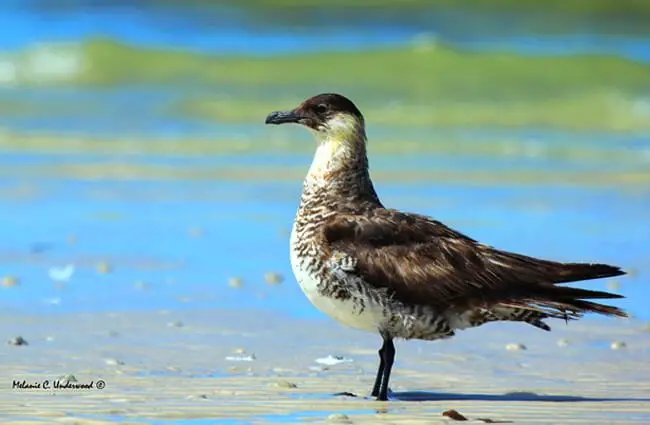
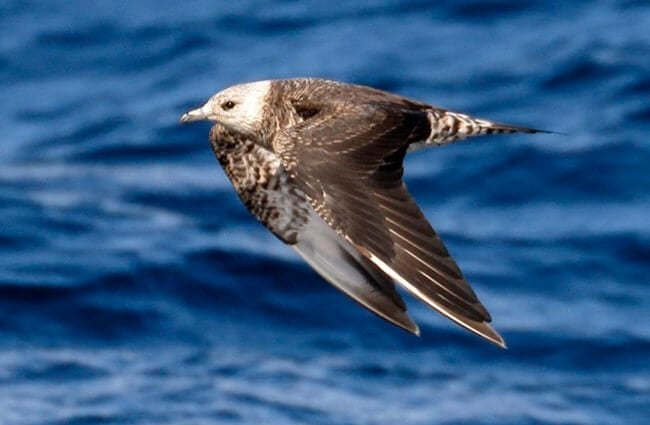
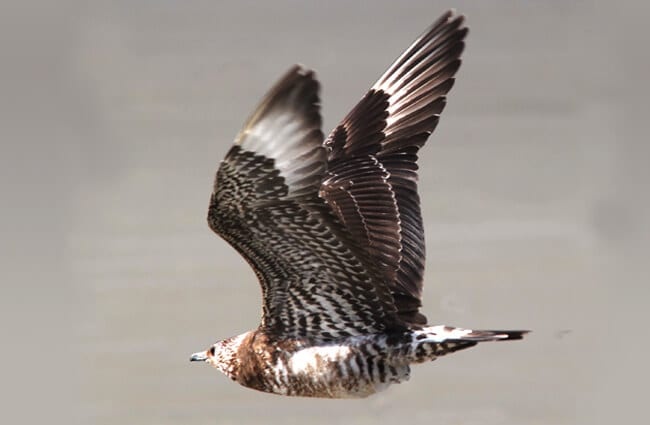
Jaegers are a type of skua, not gulls or terns, despite superficial similarities. They belong to the genus Stercorarius within the family Stercorariidae. While they are closely related to other skuas, the term “jaeger” is often used for the northern species. Jaegers generally breed further north than most skuas. There are three distinct species of jaeger: the Pomarine Jaeger, the Parasitic Jaeger, and the Long-tailed Jaeger. Each species exhibits unique characteristics in size, plumage, and behavior.
Pomarine Jaeger – the largest species, with a robust build and a distinct spoon-shaped tail. Parasitic Jaeger – medium-sized, known for its relentless pursuit of other birds to steal their catches. Long-tailed Jaeger – the smallest species, characterized by its long, streamer-like central tail feathers and elegant flight.
Habitat and Distribution
Jaegers are true circumpolar birds, breeding in the Arctic and subarctic regions of North America, Europe, and Asia. During the breeding season, they favor open tundra, rocky islands, and coastal areas. After breeding, they undertake long-distance migrations, traveling to the Southern Ocean, the North Atlantic, and even the tropical Pacific and Indian Oceans. Their migratory patterns are intrinsically linked to the seasonal availability of food.
Diet and Hunting Strategies
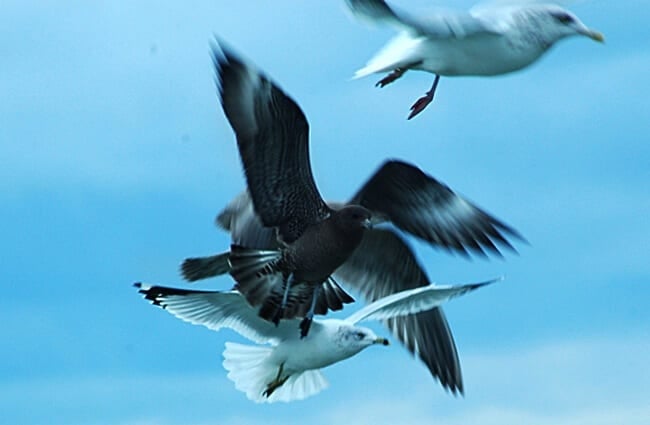
Jaegers are opportunistic predators with a varied diet. While fish and crustaceans form a significant portion of their intake, they are also known for their kleptoparasitic behavior – stealing food from other seabirds. This behavior is especially prominent in the Parasitic Jaeger, which actively harasses gulls, terns, and puffins, forcing them to drop their catches.
Beyond kleptoparasitism, jaegers are skilled hunters in their own right. They can dive into the water to catch fish, pursue prey in flight, and even scavenge for carrion. Their diet varies depending on species, location, and season. Pomarine Jaegers primarily feed on fish and squid during the breeding season, while Long-tailed Jaegers mainly consume fish and crustaceans.
Reproduction and Life Cycle
Jaegers are typically monogamous, forming long-term pair bonds. They arrive at their breeding grounds in late spring or early summer. Nests are simple scrapes on the ground, often lined with vegetation, feathers, or moss. A typical clutch consists of one to three eggs, which are incubated by both parents for approximately 22 to 28 days.
Chicks are precocial, meaning they are relatively well-developed at hatching and can move around independently. Both parents participate in feeding the young, providing them with fish, crustaceans, and other prey. Chicks fledge after approximately 40 to 50 days, but continue to rely on their parents for several weeks afterwards. Jaegers can live for more than 30 years in the wild.
Ecological Role and Interactions
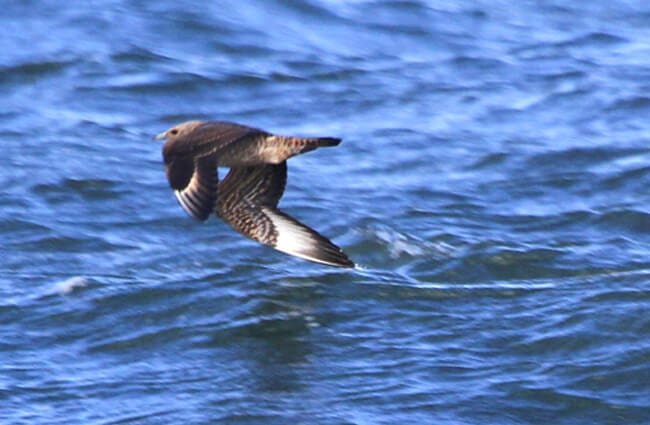
Jaegers are integral to the ecosystems they inhabit. As predators, they help regulate populations of fish, crustaceans, and other seabirds. Their kleptoparasitic behavior, while seemingly aggressive, can influence the foraging strategies of other seabirds. By forcing birds to defend their catches, jaegers encourage more efficient foraging.
Jaegers often nest near colonies of other seabirds, benefiting from the increased availability of prey. They may also compete with other predators for resources. Their presence can indicate the overall health of the ecosystem, serving as a bioindicator of environmental changes.
Jaegers and Human Interactions
Historically, jaegers were hunted for their feathers, which were used in traditional clothing and ornaments. Today, hunting is no longer a significant threat. The primary threats to jaegers are habitat loss, climate change, and pollution. Climate change is altering prey availability and disrupting breeding cycles. Pollution, particularly oil spills, can have devastating effects on their populations.
Jaegers in Culture and Folklore
In some cultures, jaegers are viewed as symbols of courage, resilience, and adaptability. Their bold, aggressive behavior has inspired folklore and legends. In certain coastal communities, jaegers are believed to be guardians of the sea, protecting sailors from harm. Their feathers are often incorporated into traditional crafts and ceremonies.
Identifying Jaeger Species: A Quick Guide
Distinguishing between jaeger species can be challenging, but here are key characteristics:
- Pomarine Jaeger – the largest species, robust build, spoon-shaped tail, dark cap in breeding plumage.
- Parasitic Jaeger – medium-sized, sleek body, long wings, distinct white patches on wings, persistent kleptoparasitic behavior.
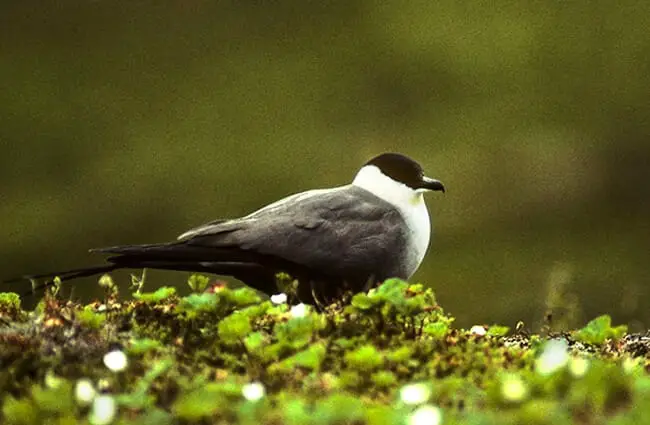
- Long-tailed Jaeger – the smallest species, elegant flight, long, streamer-like central tail feathers, slender body.
Encountering Jaegers in the Wild: What to Do
If you encounter a jaeger while hiking or birdwatching, observe it from a distance. Avoid approaching the bird or its nest, as this can cause stress and disrupt its breeding cycle. Be aware that jaegers can be protective of their nests and may exhibit aggressive behavior. If a jaeger approaches you, remain calm and slowly back away.
Caring for Jaegers in Captivity
Jaegers are rarely kept in captivity because of their large space requirements and complex behaviors. Providing a suitable environment would require large enclosures that mimic their natural habitat, with ample space for flight and foraging. A diet of fish, crustaceans, and other appropriate prey is essential. Enrichment is crucial to stimulate natural behaviors and prevent boredom. Regular veterinary care is essential to maintain health and well-being. While offering opportunities for kleptoparasitic behavior is not practical, providing varied food sources and enrichment can support normal activity.
Fascinating Jaeger Facts
- Jaegers can fly at speeds of up to 60 miles per hour.
- They have excellent eyesight, allowing them to spot prey from long distances.
- Some jaeger populations are declining due to habitat loss and climate change.
- The Long-tailed Jaeger undertakes one of the longest migrations of any bird species.
- Jaegers are known for their distinctive, piercing calls.
The jaeger, a captivating seabird, stands as a testament to the power of adaptation and the intricate web of life that connects all living things. By understanding their biology, behavior, and ecological role, we can better appreciate these magnificent creatures and work toward ensuring their survival for generations to come.
![Closeup of a beautiful Red Angus cowPhoto by: U.S. Department of Agriculture [pubic domain]https://creativecommons.org/licenses/by/2.0/](https://animals.net/wp-content/uploads/2020/03/Red-Angus-4-238x178.jpg "Red Angus")
![Closeup of a beautiful Red Angus cowPhoto by: U.S. Department of Agriculture [pubic domain]https://creativecommons.org/licenses/by/2.0/](https://animals.net/wp-content/uploads/2020/03/Red-Angus-4-100x75.jpg "Red Angus")