Imagine a creature that has witnessed the rise and fall of dinosaurs, survived multiple mass extinctions, and continues to thrive in our modern oceans. This is not a fantasy beast, but a very real, humble inhabitant of our coastal waters: the Horseshoe Crab. Often mistaken for a true crab, this ancient mariner is actually more closely related to spiders and scorpions, a testament to its unique evolutionary path. Join us on a journey to uncover the fascinating world of the Horseshoe Crab, a living fossil with a story spanning hundreds of millions of years.
Meet the Ancient Mariner: What is a Horseshoe Crab?
The Horseshoe Crab, despite its common name, is not a true crab. It belongs to an ancient group of arthropods called Xiphosura, a lineage that predates dinosaurs. There are four extant species of Horseshoe Crabs:
- The Atlantic Horseshoe Crab (Limulus polyphemus), found along the North American Atlantic coast and in the Gulf of Mexico.
- The Mangrove Horseshoe Crab (Carcinoscorpius rotundicauda), inhabiting the coasts of Southeast Asia.
- The Indo-Pacific Horseshoe Crab (Tachypleus gigas), also found in Southeast Asia.
- The Chinese Horseshoe Crab (Tachypleus tridentatus), found in East and Southeast Asia.
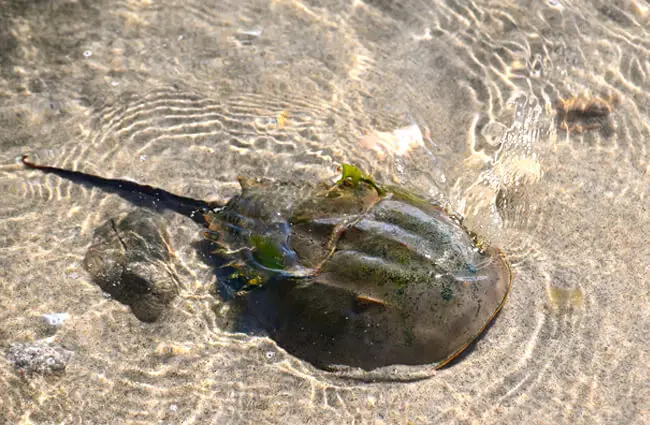
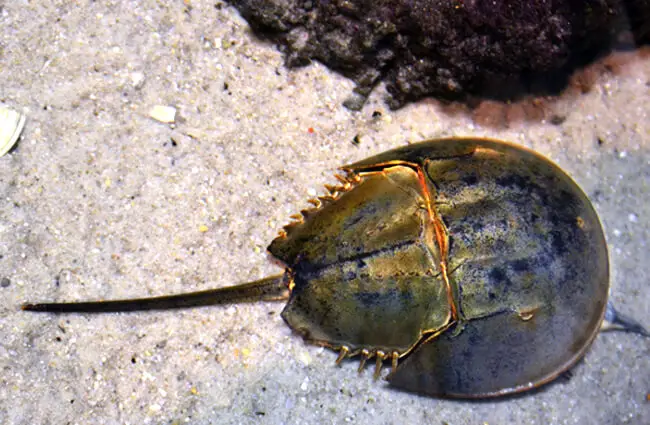
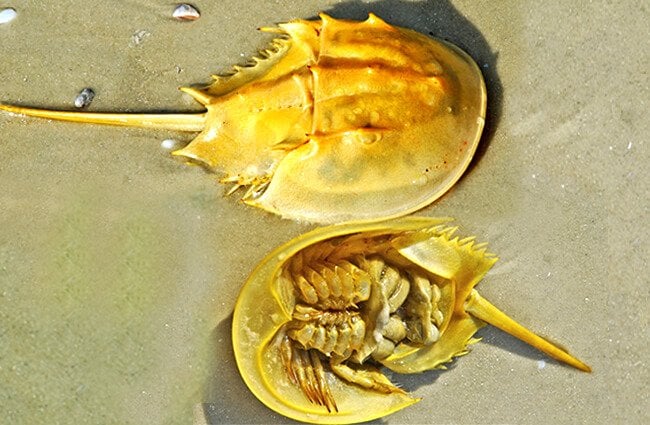
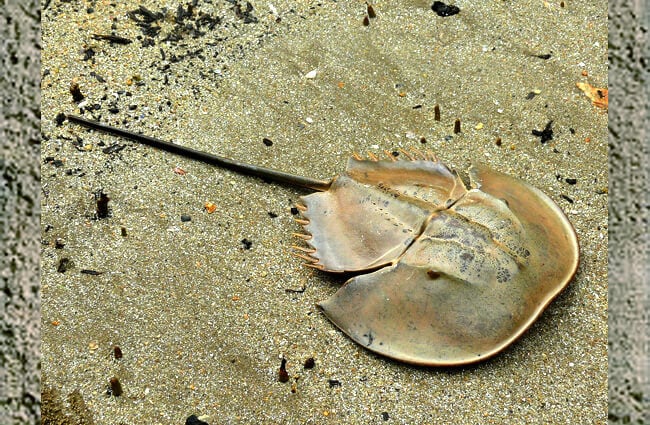
These creatures are characterized by their hard, horseshoe-shaped carapace, a long, spiky tail called a telson, and ten legs. Their appearance is truly prehistoric, a living echo from a time long past.
Where to Find Them: Habitats and Distribution
Horseshoe Crabs are primarily inhabitants of shallow coastal waters, estuaries, and sandy or muddy bottoms. Their preferred habitats include:
- Sandy Beaches: Especially during spawning season, they migrate to sandy intertidal zones.
- Mudflats: Rich in the small invertebrates they feed on.
- Estuaries: Brackish water environments provide a safe haven for juveniles.
- Coastal Shelves: Adults spend much of their time in deeper waters on the continental shelf.
If you are an animal lover hoping to spot a Horseshoe Crab in the wild, your best bet is to visit sandy beaches along the Atlantic coast of North America or the coasts of Southeast Asia during late spring and early summer. Look for them during high tides, especially around full and new moons, when they come ashore to spawn. They are often found partially buried in the sand or slowly moving along the waterline.
Encountering a Horseshoe Crab: What to Do
For hikers or beachgoers who encounter a Horseshoe Crab, it is important to remember they are harmless and vital to the ecosystem. Their long, pointed telson, or tail, often causes alarm, but it is not a stinger. It is used to help the crab right itself if it gets flipped upside down and to maneuver in the sand.
- Observe from a distance: Enjoy their unique appearance without disturbing them.
- Do not pick them up by the tail: This can injure them. If you must move one, gently pick it up by the sides of its carapace.
- Help if flipped: If you find a Horseshoe Crab upside down, especially on a hot day, gently flip it over. They can become stranded and perish if unable to right themselves.
- Report unusual sightings: If you see many stranded or injured crabs, consider reporting it to local wildlife authorities or conservation groups.
An Ancient Lineage: The Living Fossil
The evolutionary history of Horseshoe Crabs is truly remarkable. Their fossil record dates back over 450 million years, making them older than trees and dinosaurs. Early forms, such as Lunataspis aurora, show striking similarities to modern species, indicating an incredibly stable body plan that has changed little over geological timescales. This makes them a prime example of a “living fossil,” a term used for organisms that have remained morphologically unchanged for millions of years.
They are not crustaceans, but chelicerates, a subphylum of arthropods that also includes arachnids (spiders, scorpions, ticks, mites) and sea spiders. This ancient lineage highlights their unique position in the tree of life, offering scientists a window into the evolution of arthropods.
What’s on the Menu? The Horseshoe Crab Diet
Horseshoe Crabs are opportunistic bottom feeders. Their diet primarily consists of:
- Marine worms: Polychaetes are a favorite.
- Small mollusks: Clams and other bivalves.
- Crustaceans: Small crabs and other invertebrates.
- Detritus: Decaying organic matter found on the seafloor.
They use their chelicerae, a pair of pincer-like appendages near their mouth, to grasp food, which is then ground up by spines at the base of their walking legs before being ingested. They are not picky eaters, playing a crucial role in recycling nutrients on the seafloor.
![Horseshoe Crab Photo by: Gregory Breese, U.S. Fish and Wildlife Service Northeast Region [public domain] https://creativecommons.org/licenses/by-nd/2.0/](https://animals.net/wp-content/uploads/2020/01/Horseshoe-Crab-3-650x425.jpg)
The Annual Beach Ballet: Mating and Reproduction
The reproductive cycle of Horseshoe Crabs is one of nature’s most spectacular events. It typically occurs during late spring and early summer, coinciding with high tides during new and full moons.
- Migration to Shore: Adult Horseshoe Crabs migrate from deeper offshore waters to sandy beaches in the intertidal zone.
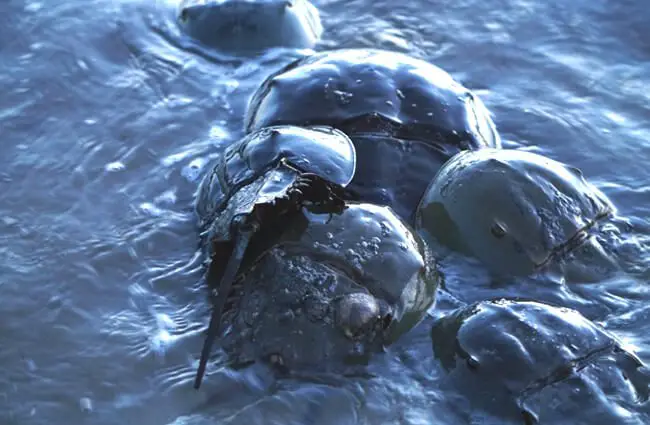
- Mating Ritual: Males, often smaller than females, attach themselves to the back of a female’s carapace using specialized claspers on their first pair of walking legs. This can create a chain of multiple males following a single female.
- Egg Laying: The female digs a nest in the sand, typically just below the high tide line, and lays thousands of tiny, green eggs. As she lays them, the male fertilizes them externally. A single female can lay between 60,000 and 120,000 eggs in multiple clutches over the spawning season.
- Incubation: The eggs are left buried in the sand to incubate. They are vulnerable to predation by shorebirds and fish, and also to environmental factors like erosion.
- Larval Stage: After approximately two to four weeks, depending on temperature, the eggs hatch into a larval stage known as a “trilobite larva” due to its resemblance to extinct trilobites. These larvae are free-swimming for a short period.
- Juvenile Development: Larvae then settle to the bottom in shallow, protected estuarine areas, molting multiple times as they grow. It takes about 9 to 12 years and numerous molts for a Horseshoe Crab to reach sexual maturity.
Ecosystem Engineers: Interactions with Other Animals
Horseshoe Crabs play a vital role in coastal ecosystems. Their eggs are a critical food source for a variety of animals, particularly migratory shorebirds. The Delaware Bay, for example, is a crucial stopover point for millions of Red Knots and other shorebirds that time their migration to coincide with the Horseshoe Crab spawning season, relying on the protein-rich eggs to fuel their long journeys.
Beyond their eggs, adult Horseshoe Crabs are prey for sea turtles, sharks, and some fish species. Their burrowing activities also help aerate the sediment, benefiting other benthic organisms. They are truly foundational species in their habitats.
Unique Biology: More Than Just a Shell
Beneath their ancient armor lies a fascinating array of biological adaptations.
- Blue Blood: Perhaps their most famous feature is their copper-based blue blood, which contains hemocyanin instead of hemoglobin. More importantly, their blood contains amoebocytes, which are crucial for the Limulus Amebocyte Lysate (LAL) test.
- Compound Eyes: Horseshoe Crabs possess multiple eyes. They have two large compound eyes on the top of their carapace, which are sensitive to light and movement. They also have several smaller simple eyes on their carapace and even photoreceptors on their tail, allowing them to detect light from almost every angle.
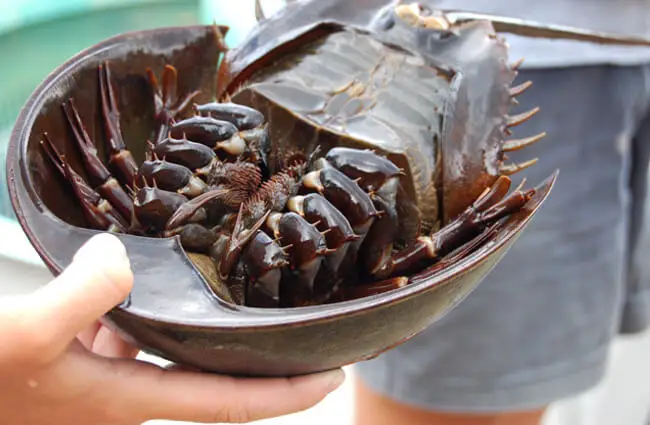
- Book Gills: Located on their underside, these five pairs of flap-like appendages are used for respiration and also assist in swimming, though they are not strong swimmers.
- Telson Function: As mentioned, the telson is not for stinging. It is a crucial tool for righting themselves if overturned and for navigating through sediment.
A Lifesaver: Horseshoe Crabs and Human Health
The interaction between Horseshoe Crabs and humans extends far beyond ecological observation. Their unique blue blood is indispensable to modern medicine. The LAL test, derived from their blood, is used globally to detect bacterial endotoxins in injectable drugs, vaccines, and medical devices. This test ensures the safety of countless medical products, preventing potentially fatal infections. While blood collection is done in a controlled manner, with crabs typically returned to the ocean, the demand for LAL has raised conservation concerns.
Beyond medicine, Horseshoe Crabs have also been used as bait in fisheries and as fertilizer in agriculture, though these practices are increasingly regulated due to conservation efforts.
Conservation Concerns and Threats
Despite their ancient resilience, Horseshoe Crabs face significant threats in the modern world:
- Habitat Loss: Coastal development, erosion, and pollution degrade their spawning and nursery grounds.
- Overharvesting: Historically, they were harvested for bait and fertilizer. While regulations are in place, illegal harvesting can still occur.
- Biomedical Bleeding: The demand for LAL blood means millions of crabs are collected annually, bled, and returned to the ocean. While efforts are made to minimize harm, a percentage of crabs do not survive the process or are weakened, impacting their reproductive success.
- Climate Change: Rising sea levels and altered coastal dynamics can impact their delicate spawning habitats.
Conservation efforts include habitat protection, fishing quotas, and the development of synthetic alternatives to LAL, which could reduce the reliance on wild populations.
Caring for Horseshoe Crabs in Captivity: A Zookeeper’s Guide
For zookeepers or aquarists caring for Horseshoe Crabs, providing an environment that mimics their natural habitat is crucial for their well-being.
Essential Tasks:
- Tank Setup: Provide a large tank with a soft, sandy substrate at least 4-6 inches deep for burrowing.
- Water Quality: Maintain stable salinity (typically 25-35 ppt for marine species), temperature (around 68-75°F or 20-24°C), and pH (7.8-8.4). Excellent filtration is essential to manage waste.
- Diet: Offer a varied diet of chopped clams, squid, shrimp, and marine worms. Feed small amounts regularly, observing consumption.
- Molting: Be aware that Horseshoe Crabs molt to grow. Provide plenty of space and ensure water quality is pristine during this vulnerable period. Do not disturb a molting crab.
- Observation: Regularly check for signs of stress, injury, or disease. Look for active burrowing and feeding behavior.
What to Avoid:
- Aggressive Tank Mates: Do not house with fish or invertebrates that might harass or prey on them, especially during molting.
- Sharp Objects: Ensure no sharp rocks or decorations are present that could damage their soft underside or carapace.
- Overfeeding: This can lead to poor water quality and health issues.
- Sudden Environmental Changes: Avoid rapid fluctuations in temperature, salinity, or pH.
- Handling by the Telson: Never pick up a Horseshoe Crab by its tail, as this can cause serious injury.
Fascinating Facts About Horseshoe Crabs
Here is a list of intriguing facts that highlight the unique nature of these ancient creatures:
- They have been around for over 450 million years, making them older than dinosaurs.
- Despite their name, they are not true crabs but are more closely related to spiders and scorpions.
- They have blue blood, which contains hemocyanin, a copper-based protein for oxygen transport.
- Their blood is vital for the biomedical industry, used to create the Limulus Amebocyte Lysate (LAL) test for detecting bacterial endotoxins.
- A single female can lay tens of thousands of eggs in one spawning season.
- Their eggs are a crucial food source for migratory shorebirds, particularly the Red Knot.
- They have ten eyes, including two large compound eyes, several simple eyes on their carapace, and photoreceptors on their tail.
- Their long, spiky tail, called a telson, is used to flip themselves over if they get stuck upside down, not to sting.
- They can grow up to two feet long, including their tail.
- Horseshoe Crabs molt their exoskeletons multiple times as they grow, shedding their old shell to reveal a new, larger one.
- They are found in temperate and tropical coastal waters of North America and Asia.
- They are bottom feeders, primarily eating worms, small mollusks, and detritus.
- Their larvae are sometimes called “trilobite larvae” due to their resemblance to extinct trilobites.
- They can survive out of water for extended periods, especially during spawning, but are vulnerable to desiccation.
- The Atlantic Horseshoe Crab (Limulus polyphemus) is the most studied species due to its biomedical importance.
Conclusion: Guardians of the Coast
The Horseshoe Crab is a living testament to resilience and adaptation, a creature that has navigated the vast currents of geological time with remarkable success. From their ancient origins to their indispensable role in modern medicine and coastal ecosystems, these armored marvels offer endless fascination. Understanding their biology, appreciating their ecological contributions, and actively participating in their conservation are crucial steps in ensuring that these guardians of the coast continue their epic journey for millions more years to come. Next time you walk a sandy beach, keep an eye out for these incredible survivors, and remember the profound story they carry within their ancient shells.
![Closeup of a beautiful Red Angus cowPhoto by: U.S. Department of Agriculture [pubic domain]https://creativecommons.org/licenses/by/2.0/](https://animals.net/wp-content/uploads/2020/03/Red-Angus-4-100x75.jpg "Red Angus")