
The Ocean’s Majestic Flyers: Unveiling the Enigmatic Eagle Ray
Imagine a creature that glides through the ocean with the grace of a bird in flight, its broad, wing-like fins propelling it effortlessly through the water. This is the Eagle Ray, a truly magnificent inhabitant of our planet’s marine realms. Far from the bottom-dwelling flatfish many associate with “rays,” these dynamic cartilaginous fish are acrobats of the open water, captivating divers and scientists alike with their distinctive appearance and intriguing behaviors. From their unique hunting strategies to their impressive migrations, Eagle Rays offer a window into the wonders of marine life, embodying both power and elegance.

A Glimpse of Grace: What is an Eagle Ray?
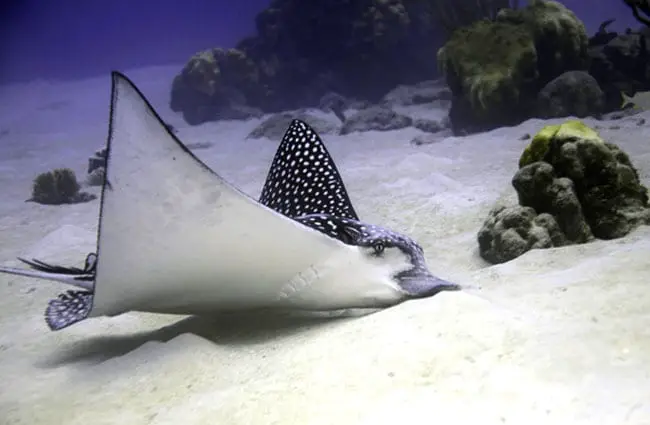
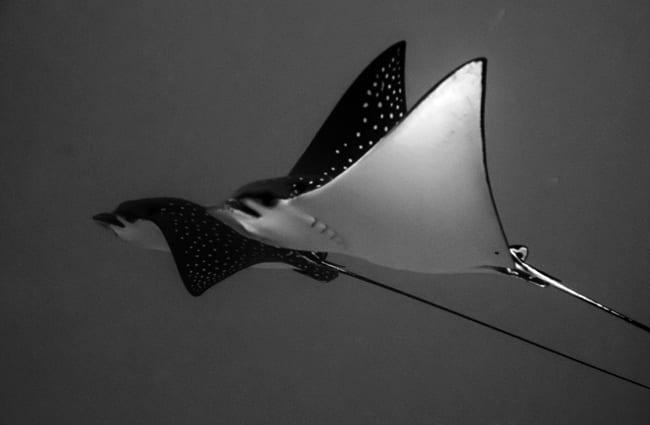
Eagle Rays belong to the family Myliobatidae, a group of cartilaginous fish closely related to sharks. They are easily distinguished from other rays by their flattened, disc-shaped bodies, which taper into a long, whip-like tail. Unlike their benthic cousins, Eagle Rays possess a distinct, prominent head with a duck-bill or shovel-shaped snout and eyes positioned on the sides of their head, allowing for a wide field of vision. Their most striking feature, however, is their pectoral fins, which have evolved into powerful, wing-like structures, enabling them to “fly” through the water column rather than simply undulate along the seabed.
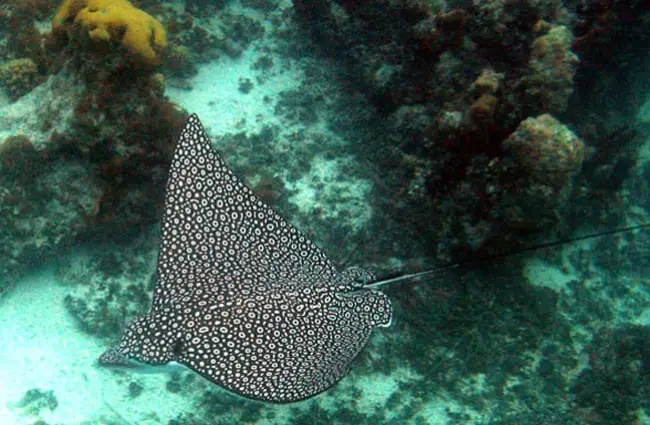
While several species exist, the Spotted Eagle Ray (Aetobatus narinari) is perhaps the most iconic, recognized by its dark dorsal surface adorned with a mesmerizing pattern of white spots or rings. These patterns are unique to each individual, much like a human fingerprint. These impressive creatures can reach a disc width of up to 3 meters (10 feet) and weigh over 200 kilograms (440 pounds), with tails often twice the length of their bodies, typically armed with several venomous barbs at the base.
Where the Ocean Meets the Sky: Eagle Ray Habitats
Eagle Rays are cosmopolitan inhabitants of tropical and warm temperate waters across the globe. Their preferred habitats are as diverse as their distribution, encompassing coastal areas, coral reefs, estuaries, and even the open ocean. They are frequently observed cruising over sandy flats, seagrass beds, and reef edges, often at depths ranging from the surface down to about 60 meters (200 feet), though they have been recorded much deeper. Their adaptability allows them to thrive in various environments, from the clear waters of the Caribbean to the vibrant reefs of the Indo-Pacific.
For those hoping to encounter these magnificent animals in the wild, understanding their habitat preferences is key. They are often seen in areas with strong currents, where they can effortlessly glide, or in shallow bays where they forage for food. Their presence is a strong indicator of a healthy marine ecosystem.
The Hunter of the Seabed: Eagle Ray Diet and Feeding Habits
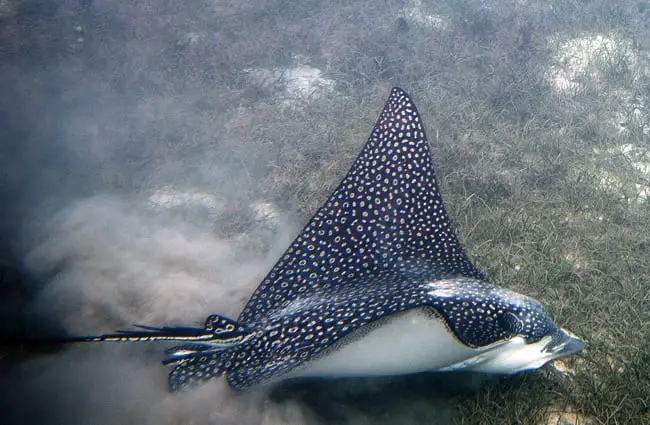
Despite their graceful appearance, Eagle Rays are formidable predators with a specialized diet. Their unique, shovel-shaped snout and powerful, plate-like teeth are perfectly adapted for their primary food source: benthic invertebrates. They are particularly fond of bivalves such as clams and oysters, as well as crustaceans like crabs and shrimp. Eagle Rays employ a fascinating feeding strategy, using their snout to dig into the sand or mud, unearthing buried prey. Once located, the prey is crushed by their robust dental plates, allowing the ray to consume the soft tissues and expel the shells.
This digging behavior, known as bioturbation, plays a significant ecological role. By disturbing the seabed, Eagle Rays help to aerate sediments and release nutrients, influencing the distribution and abundance of other marine organisms. Occasionally, they will also prey on small fish, demonstrating a versatile predatory capability.
A Dance of Life: Mating and Reproduction in Eagle Rays
The reproductive process of Eagle Rays is a fascinating example of ovoviviparity, a strategy common among many cartilaginous fish. This means that while eggs are produced internally, they hatch inside the mother’s uterus, and the pups develop, nourished by a yolk sac, until they are fully formed and ready for live birth. Courtship often involves a male following a female, sometimes biting her disc or fins to hold on during copulation. Fertilization is internal, and the gestation period can last up to a year.
When ready, the female gives birth to a small litter of fully developed pups, typically ranging from one to four, though larger litters have been observed. These miniature versions of the adults are immediately independent, equipped with the instincts and abilities to forage and survive on their own. There is no parental care after birth, a common trait among many elasmobranchs. This reproductive strategy, while producing fewer offspring than egg-laying species, increases the survival rate of each individual pup, as they are born larger and more developed.
Echoes of Ancient Seas: The Evolutionary Journey of Eagle Rays
Eagle Rays are part of a lineage that stretches back hundreds of millions of years. As cartilaginous fish, their skeletons are made of cartilage rather than bone, a primitive trait shared with sharks and chimaeras. Their evolutionary history places them within the superorder Batoidea, which includes all rays and skates. Fossil evidence suggests that rays diverged from sharks approximately 150 million years ago, with the Myliobatidae family, to which Eagle Rays belong, appearing later in the fossil record. Their unique adaptations, such as their pointed snout and wing-like pectoral fins, represent a successful evolutionary path towards a pelagic or semi-pelagic lifestyle, distinguishing them from their more bottom-dwelling ray relatives.
These adaptations allowed them to exploit different food sources and habitats, reducing competition and enabling them to become efficient, wide-ranging swimmers. Their streamlined bodies and powerful propulsion are testaments to millions of years of natural selection, perfecting their role as agile hunters and travelers of the marine environment.
Guardians of the Reef: Eagle Rays in the Ecosystem
Eagle Rays play a crucial role in the health and balance of marine ecosystems. As apex predators of benthic invertebrates, they help regulate populations of clams, oysters, and crustaceans, preventing any single species from dominating. Their foraging activities, as mentioned, contribute to bioturbation, which is vital for nutrient cycling and sediment health on the seafloor. This constant turning over of the substrate can also expose smaller organisms, making them available to other predators, thus influencing the broader food web.
While adult Eagle Rays have few natural predators due to their size and defensive barbs, juveniles can fall prey to large sharks, such as tiger sharks and great hammerheads. They also interact with cleaner fish, which remove parasites from their skin, highlighting the intricate web of symbiotic relationships within their habitats. Their presence is a sign of a thriving ecosystem, and their decline can have cascading effects on the delicate balance of marine life.
Rays and Humanity: Interactions and Cultural Footprints
Human interaction with Eagle Rays is multifaceted. For many, particularly divers and snorkelers, encountering an Eagle Ray is a highlight, a moment of awe and wonder as these graceful creatures glide past. This contributes significantly to marine tourism, providing economic benefits to coastal communities. However, Eagle Rays also face considerable threats from human activities. They are often caught as bycatch in various fisheries, particularly trawl and gillnet operations, which are not specifically targeting them. Their slow reproductive rate makes them particularly vulnerable to overfishing and population declines.
Conservation status varies by species, but many Eagle Ray populations are listed as Near Threatened or Vulnerable by the IUCN. While their venomous barb can deliver a painful sting, Eagle Rays are not aggressive and pose little threat to humans unless provoked or accidentally stepped on. Culturally, they may not hold the same deep historical significance as some other marine animals, but their impressive aerial breaches, where they leap clear out of the water, have certainly inspired wonder and storytelling among coastal communities and seafarers, cementing their place as one of the ocean’s most charismatic megafauna.
For the curious diver or observer: While Eagle Rays possess a venomous barb at the base of their tail, they are not aggressive. Encounters are typically peaceful, and stings are rare, usually occurring only if the ray feels directly threatened or is accidentally stepped on.
Encountering Eagle Rays in the Wild: A Guide for Enthusiasts
For animal lovers and aspiring zoologists eager to witness Eagle Rays in their natural habitat, a respectful and informed approach is essential. These magnificent creatures are often found in warm, clear coastal waters, making popular diving and snorkeling destinations prime locations. Look for them cruising gracefully over sandy bottoms, along reef edges, or even near the surface in open water. They are typically active during the day, making daytime excursions ideal for sightings.
- Where to look: Warm, clear coastal waters, especially around coral reefs, seagrass beds, and sandy flats. They are often seen cruising near the surface or gliding along the bottom. Popular spots include the Caribbean, parts of the Indo-Pacific, and the Gulf of Mexico.
- When to look: Daytime is best for sightings. They are active hunters during the day and can often be seen in groups, especially during mating season or when foraging.
- Observation tips: Maintain a respectful distance. Their natural curiosity might bring them closer, but never pursue or attempt to touch them. Sudden movements can startle them. Observe their natural behaviors, such as digging for food or gliding in formation.
- What to do if encountered: If you are a diver, snorkeler, or even a coastal hiker wading in shallow waters and encounter an Eagle Ray, the best course of action is to remain calm and observe from a distance. Do not attempt to touch, feed, or harass the animal. If you are in their path, slowly and calmly move away. Remember, they are generally docile and will only use their barb defensively if they feel directly threatened.
Caring for Captive Giants: Insights for Zookeepers
Caring for Eagle Rays in a captive environment presents unique challenges and requires specialized expertise from zookeepers. Their active, pelagic lifestyle necessitates expansive and meticulously designed habitats that mimic their natural environment as closely as possible.
- Habitat Design: Requires expansive, deep tanks with smooth surfaces to prevent injury to their delicate skin and fins. Ample open swimming space is paramount, allowing them to cruise without constantly turning. Corners should be rounded to prevent collisions.
- Water Quality: Strict maintenance of pristine marine water parameters, including temperature, salinity, pH, and dissolved oxygen, is critical for their health. Advanced filtration systems are essential to manage waste from their diet and ensure a stable environment.
- Dietary Management: A varied diet of high-quality seafood, often including clams, squid, and various fish, supplemented with vitamins and minerals, is necessary. Feeding techniques should encourage natural foraging behaviors, such as scattering food on the bottom or burying it slightly.
- Social Structure: While often solitary in the wild, they can be housed in groups in sufficiently large exhibits, requiring careful monitoring of individual interactions to prevent stress or aggression. Introducing new individuals must be done cautiously.
- Health Monitoring: Regular veterinary checks, observation for signs of stress or disease (such as lethargy, changes in appetite, or skin lesions), and careful handling during any necessary medical interventions are crucial. Minimizing stress during examinations is a priority.
- Enrichment: Providing environmental enrichment, such as varied substrates or currents, can stimulate natural behaviors and promote well-being in captivity.
Fascinating Facts About Eagle Rays
- They can leap completely out of the water, a spectacular behavior known as “breaching,” the purpose of which is still debated by scientists.
- Their unique snout helps them dig for prey buried in the sand, acting like a specialized shovel.
- Each Spotted Eagle Ray has a unique pattern of white spots or rings on its back, much like a human fingerprint, allowing for individual identification.
- They are highly migratory, covering vast distances across ocean basins in search of food and suitable breeding grounds.
- Their “wingspan” or disc width can reach up to 3 meters (10 feet) in some species, making them one of the larger ray species.
- Despite their size, they are incredibly agile and fast swimmers, capable of reaching impressive speeds.
- They are part of the Myliobatidae family, which includes the even larger manta rays, highlighting their close evolutionary relationship.
- Eagle Rays often swim in schools, sometimes numbering in the hundreds, creating breathtaking underwater spectacles.
Conclusion: The Future of the Ocean’s Flyers
The Eagle Ray stands as a testament to the incredible diversity and adaptability of marine life. From their graceful movements and specialized feeding habits to their vital role in maintaining healthy ocean ecosystems, these magnificent creatures are truly wonders of the deep. As we continue to explore and understand our oceans, the importance of protecting species like the Eagle Ray becomes ever clearer. Their vulnerability to human impacts, particularly habitat degradation and unsustainable fishing practices, underscores the urgent need for robust conservation efforts. By appreciating their beauty and understanding their ecological significance, we can all contribute to ensuring that these majestic flyers continue to grace our oceans for generations to come, inspiring future zoologists, delighting animal lovers, and maintaining the delicate balance of our blue planet.



![Closeup of a beautiful Red Angus cowPhoto by: U.S. Department of Agriculture [pubic domain]https://creativecommons.org/licenses/by/2.0/](https://animals.net/wp-content/uploads/2020/03/Red-Angus-4-100x75.jpg "Red Angus")