
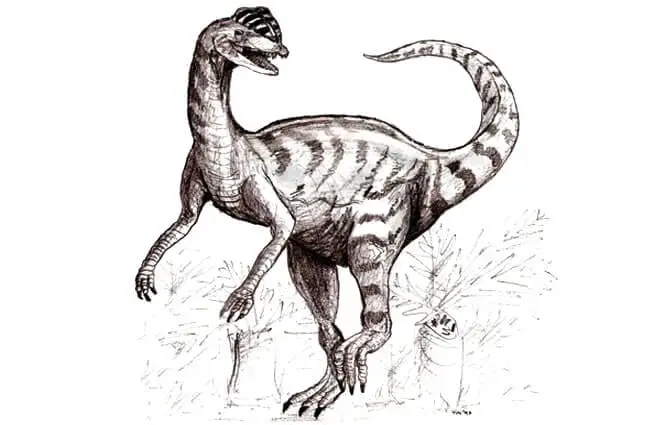
The early Jurassic period, roughly 193 to 189 million years ago, witnessed the rise of a fascinating predator, Dilophosaurus. Meaning “two crested lizard,” this dinosaur is instantly recognizable, not necessarily for its size, but for the pair of prominent crests adorning its skull. Though popularized in fiction with features not supported by fossil evidence, the real Dilophosaurus was a significant player in its ancient ecosystem, and paleontological discoveries continue to refine our understanding of this remarkable creature.
A Glimpse into Dilophosaurus
Basic Characteristics
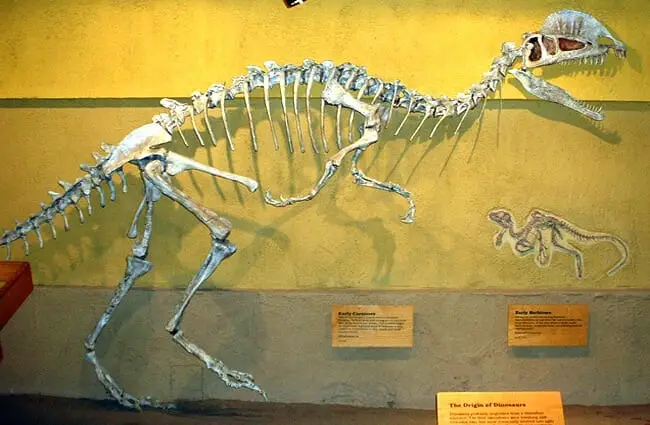
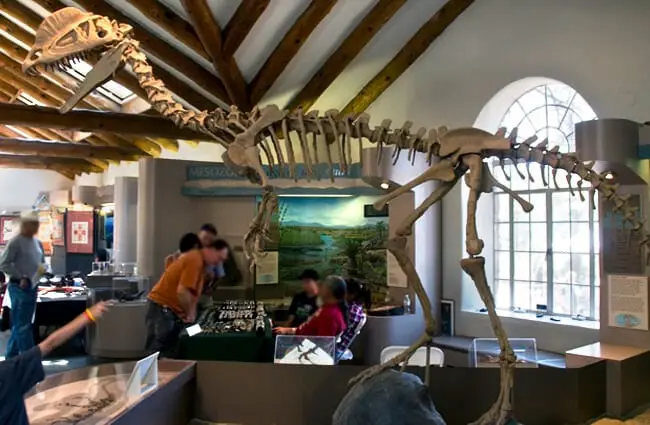
Dilophosaurus was a relatively large theropod, estimated to reach lengths of 6 to 7 meters (20 to 23 feet). While not as massive as later Jurassic giants like Allosaurus or Tyrannosaurus rex, it was still a formidable predator. Its most defining feature, the pair of thin, curved crests atop its skull, remains a subject of scientific debate, explored further below. Fossils indicate a lightly built dinosaur, suggesting it was a fast and agile hunter. It possessed powerful legs and three clawed toes on each foot, ideal for pursuit and grasping prey. Its arms, though shorter, were likely used for holding struggling victims.
Discovery and Fossil Record
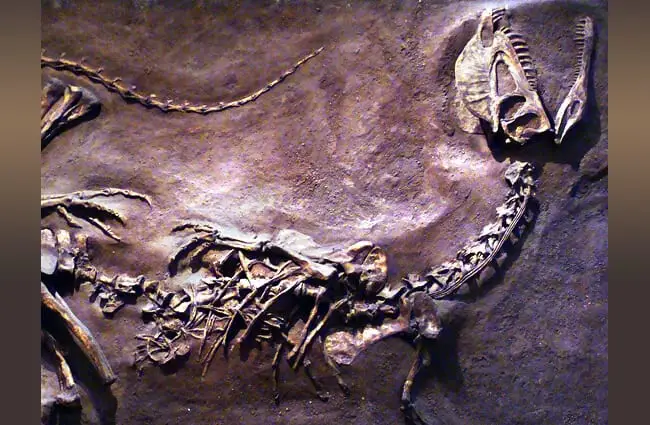
The first Dilophosaurus fossils were discovered in 1940 in Arizona, and the dinosaur was formally described and named by Samuel Welles in 1940. Since then, additional fossil material, including more complete skulls and postcranial remains, has been unearthed in Arizona and in the Morrison Formation of Utah and Colorado. These discoveries have revealed a broader range of Dilophosaurus characteristics than initially known. Notably, the Morrison Formation fossils suggest regional variations in crest size and shape, hinting at potential differences between populations.
Habitat and Paleoecology
Geographic Distribution
Fossil evidence indicates that Dilophosaurus roamed the southwestern regions of what is now North America, primarily Arizona, Utah, and Colorado, during the Early Jurassic period. The landscape at that time was vastly different from today, consisting of semi‑arid environments with lush fern and conifer forests alongside meandering rivers and floodplains. This environment provided ample opportunity for both predator and prey to thrive.
Diet and Hunting Strategies
As a theropod, Dilophosaurus was undoubtedly carnivorous. Its teeth were serrated, ideal for tearing flesh. The exact prey of Dilophosaurus remains a topic of investigation, but paleontologists believe it likely preyed upon smaller dinosaurs, early mammals, and reptiles. The lightly built frame and powerful legs suggest it was an active hunter, likely ambushing prey or pursuing them in short bursts. It is important to note that the Morrison Formation, where many Dilophosaurus fossils are found, also contains evidence of early sauropods. While a fully grown sauropod would have been beyond the reach of Dilophosaurus, juveniles or sick individuals may have been vulnerable.
The Crests: Function and Mystery
The Enigma of the Cranial Ornamentation
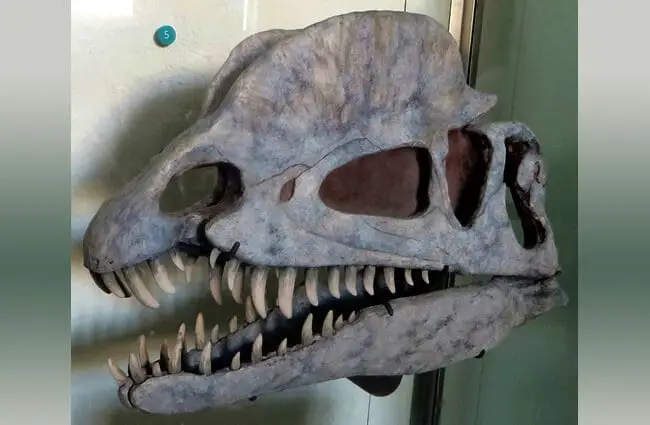
The most striking feature of Dilophosaurus is the pair of thin, curved crests extending from the top of its skull. The crests were bony structures formed by the nasal bones and were likely covered by skin. The purpose of these crests has been a subject of much debate. Several hypotheses have been proposed.
- Sexual Selection: The crests may have served as a visual display to attract mates. Larger or more brightly colored crests could have indicated a healthier, more desirable individual.
- Species Recognition: The unique shape of the crests could have helped Dilophosaurus individuals recognize members of their own species.
- Thermoregulation: The thin, vascularized crests may have played a role in regulating body temperature, dissipating heat or absorbing sunlight.
- Display and Communication: The crests could have been used in non-sexual displays, such as establishing dominance or warding off rivals.
Current evidence leans toward sexual selection as the most probable explanation, though it is possible that the crests served multiple functions. Regional variations in crest size and shape also support the idea that they were important for species recognition.
Evolutionary History and Relationships
Phylogenetic Position
Dilophosaurus occupies an important position in the theropod family tree. It is generally considered to be a basal tetanuran, a group that includes many of the most famous carnivorous dinosaurs, such as Allosaurus, Tyrannosaurus rex, and modern birds. However, its exact placement within the tetanuran lineage is still debated. Some studies suggest it may be closely related to Ceratosaurus, while others place it closer to the allosaurids.
Early Jurassic Predator
Dilophosaurus existed during a time of ecological recovery following the Triassic‑Jurassic extinction event. This period saw the rise of new dinosaur groups, and Dilophosaurus was one of the dominant predators in its environment. Its evolutionary success suggests it was well‑adapted to the conditions of the Early Jurassic period. Its existence highlights the adaptability of theropods and their role in shaping the dinosaur ecosystem.
Dilophosaurus and the Modern World
Encounters in the Wild (A Cautionary Note)
It is vital to state unequivocally that Dilophosaurus is extinct. There have been no credible reports of living Dilophosaurus, and any such claims should be treated with extreme skepticism. Encountering a large, predatory dinosaur would be incredibly dangerous. This section is purely hypothetical, for educational purposes only.
If, hypothetically, one were to encounter a Dilophosaurus (which is impossible), the following precautions would be essential: maintain a safe distance, avoid direct eye contact, and slowly back away. Running would likely trigger a predatory response. Seek immediate shelter and contact local authorities.
Caring for a Dilophosaurus in Captivity (A Theoretical Exercise)
Keeping a Dilophosaurus in captivity would be an immense challenge. The following are some theoretical considerations:
- Enclosure: A massive, secure enclosure would be required, with high walls and robust fencing.
- Diet: A constant supply of fresh meat, including whole carcasses, would be essential.
- Enrichment: Providing stimulating activities, such as large bones, puzzle feeders, and opportunities for hunting and stalking, would be crucial for its well‑being.
- Safety: Strict safety protocols would be needed to protect both the dinosaur and the staff.
Cultural Impact
In the film, Dilophosaurus is depicted as a smaller dinosaur with a frill and the ability to spit venom, which is not supported by fossil evidence. Despite these inaccuracies, the movie popularized Dilophosaurus and sparked public interest in paleontology. This cinematic depiction, while not scientifically accurate, has cemented Dilophosaurus as a cultural icon.
Dilophosaurus remains a captivating subject for paleontologists and dinosaur enthusiasts alike. Its unique anatomy, ecological role, and cultural significance continue to inspire research and imagination. As new fossil discoveries are made, our understanding of this fascinating dinosaur will undoubtedly continue to evolve, enriching our knowledge of the prehistoric world.
![Closeup of a beautiful Red Angus cowPhoto by: U.S. Department of Agriculture [pubic domain]https://creativecommons.org/licenses/by/2.0/](https://animals.net/wp-content/uploads/2020/03/Red-Angus-4-238x178.jpg "Red Angus")

![Closeup of a beautiful Red Angus cowPhoto by: U.S. Department of Agriculture [pubic domain]https://creativecommons.org/licenses/by/2.0/](https://animals.net/wp-content/uploads/2020/03/Red-Angus-4-100x75.jpg "Red Angus")