Deep within the ocean’s twilight zone, a creature of ancient lineage glides through the dark, its lobed fins propelling it with an almost prehistoric grace. This is the Coelacanth, a fish once thought extinct for millions of years, only to resurface in a dramatic rediscovery that captivated the scientific world and continues to fuel our fascination with the mysteries of the deep. Often hailed as a “living fossil,” the Coelacanth offers an unparalleled window into the evolutionary past, challenging our understanding of life’s persistence and adaptation.
The Coelacanth: A Living Fossil’s Enduring Mystery
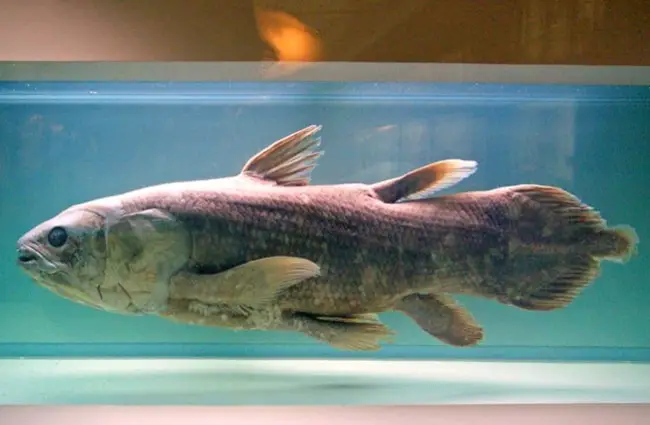
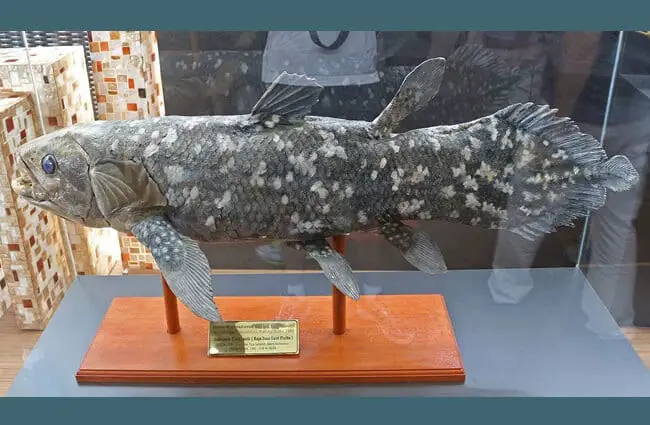
The Coelacanth (pronounced SEE-la-kanth) is not just any fish; it is a marvel of biological tenacity. Belonging to the order Coelacanthiformes, these remarkable animals are the last surviving members of a lineage that thrived during the Devonian period, over 400 million years ago. Their most striking feature, and the reason for their “living fossil” moniker, is their remarkable resemblance to their fossilized ancestors, showing very little morphological change over vast geological timescales.
Currently, two extant species of Coelacanth are recognized: the West Indian Ocean Coelacanth (Latimeria chalumnae) and the Indonesian Coelacanth (Latimeria menadoensis). While visually similar, genetic studies have confirmed their distinct identities, highlighting the potential for even more undiscovered populations in the vast, unexplored depths of our oceans.
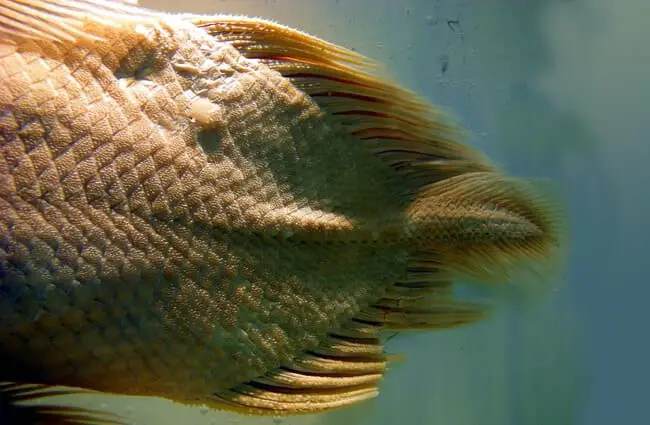
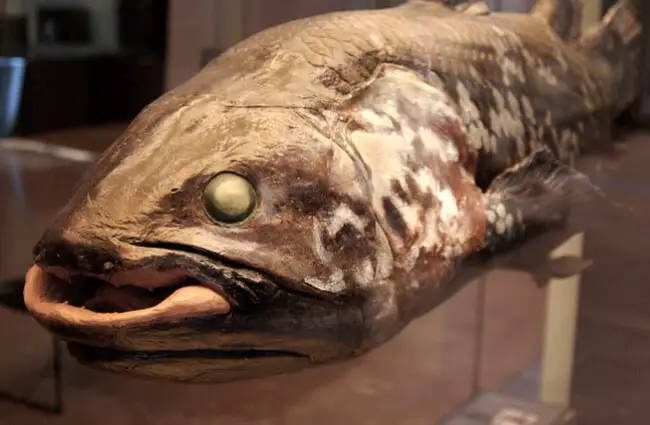
Physically, Coelacanths are unmistakable. They are large, robust fish, typically growing up to 2 meters (6.5 feet) in length and weighing around 90 kilograms (200 pounds). Their bodies are covered in distinctive, rough cosmoid scales, which are unique among living fish. Perhaps their most iconic feature are their paired, fleshy, lobed fins, which move in an alternating pattern, reminiscent of a four-legged animal walking. This unique fin structure has long intrigued scientists, suggesting a potential evolutionary link to the earliest land vertebrates.
A Deep Dive into Coelacanth Habitat and Lifestyle
Coelacanths are creatures of the deep, inhabiting cold, dark waters far from the sunlit surface. Their preferred habitat consists of rocky slopes, submarine canyons, and volcanic caves or lava tubes at depths typically ranging from 100 to 400 meters (330 to 1,300 feet). These specific environments provide the stable temperatures, low light, and shelter they require.
The West Indian Ocean Coelacanth is primarily found off the coasts of the Comoros Islands, South Africa, Tanzania, Mozambique, and Madagascar. The Indonesian Coelacanth, as its name suggests, is found in the waters off Sulawesi, Indonesia. These isolated, deep-sea environments are crucial for their survival, protecting them from surface predators and human disturbance.
The Coelacanth’s diet consists mainly of other deep-sea fish and cephalopods. They are thought to be opportunistic ambush predators, using their large mouths and powerful jaws to capture prey that ventures too close. Their slow metabolism and ability to drift with currents suggest a low-energy hunting strategy, perfectly adapted to their nutrient-scarce environment.
Observations of Coelacanths in their natural habitat reveal fascinating behaviors. They are primarily nocturnal, spending their days resting in the shelter of caves and emerging at night to hunt. While often observed individually, they sometimes aggregate in these caves, though the exact social dynamics of these gatherings are not fully understood. Their unique fin movements allow them to hover, drift, and even “walk” along the seabed, a testament to their ancient adaptations.
Unraveling the Coelacanth’s Evolutionary Saga
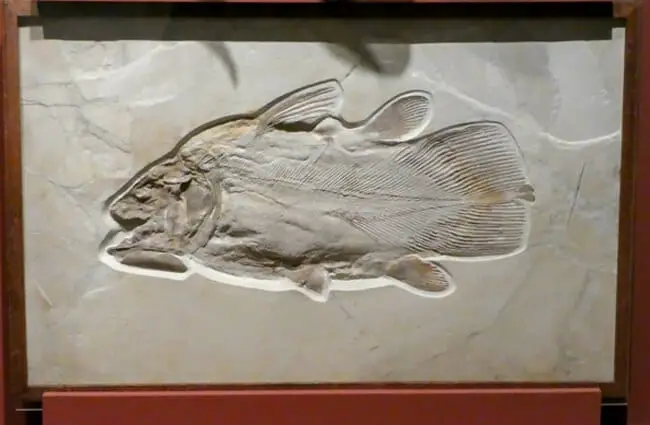
The evolutionary history of the Coelacanth is a compelling narrative of survival. Its lineage dates back to the Devonian period, a time when life was rapidly diversifying in the oceans. Coelacanths belong to the Sarcopterygii, or lobe-finned fish, a group that also includes lungfish and, crucially, the ancestors of all tetrapods, the four-limbed vertebrates that eventually colonized land.
For millions of years, Coelacanths were known only through their fossil record, which appeared to end about 66 million years ago, coinciding with the Cretaceous-Paleogene extinction event. Scientists believed they had vanished from the Earth, a relic of a bygone era. This belief was shattered in 1938 when a specimen was caught off the coast of South Africa by a local fisherman and brought to the attention of Marjorie Courtenay-Latimer, a curator at the East London Museum. Her immediate recognition of its scientific importance, despite its unusual appearance, led to its identification by ichthyologist J.L.B. Smith, who named it Latimeria chalumnae in her honor.
The rediscovery of the Coelacanth was one of the most significant zoological finds of the 20th century, akin to finding a living dinosaur. It earned the Coelacanth the title of “living fossil” because of its remarkable morphological stasis. Unlike many other lineages that undergo significant evolutionary changes over millions of years, the Coelacanth has retained many primitive features, offering a direct link to ancient fish forms and providing invaluable insights into the early evolution of vertebrates.
The Private Lives of Coelacanths: Reproduction and Development
The reproductive strategy of the Coelacanth is as unique as its appearance. Unlike most fish that lay eggs externally, Coelacanths are ovoviviparous. This means that fertilization is internal, and the eggs develop inside the mother’s body, hatching internally before the young are born live. This method of reproduction is rare among fish and suggests a significant investment in a smaller number of offspring, a common strategy for species in stable, deep-sea environments.
The gestation period for Coelacanths is remarkably long, estimated to be around 13 months, one of the longest known for any fish. During this time, the developing embryos are nourished by a large yolk sac. When born, the young Coelacanths are fully formed miniatures of the adults, measuring about 30 to 40 centimeters (12 to 16 inches) in length. This advanced stage at birth significantly increases their chances of survival in the challenging deep-sea environment, as they are immediately capable of fending for themselves.
There is no evidence of parental care after birth. The young Coelacanths are thought to disperse into the deep, beginning their solitary lives. The slow growth rate and late sexual maturity of Coelacanths, coupled with their unique reproductive strategy, make them particularly vulnerable to population declines, underscoring the importance of conservation efforts.
Coelacanths in the Web of Life and Human Culture
In its deep-sea realm, the Coelacanth occupies a specific ecological niche. As a relatively large, slow-moving predator, it likely plays a role in regulating populations of smaller deep-sea fish and cephalopods. However, due to the extreme depths and limited research, its precise contribution to the overall deep-sea ecosystem remains an area of ongoing study. Its interactions with other animals are likely limited, given the sparse nature of deep-sea life and its preference for sheltered habitats.
The interaction between Coelacanths and humans has been a complex one, primarily driven by scientific curiosity and, unfortunately, accidental catches. The species is critically endangered, largely due to bycatch from deep-sea fishing operations, particularly those targeting sharks. While Coelacanth meat is generally considered unpalatable due to its oily, waxy texture, its scientific value has led to a black market for specimens, further threatening its survival. Conservation efforts are paramount, focusing on protecting their habitats and reducing bycatch.
Culturally, the Coelacanth has transcended its biological significance to become an icon. It symbolizes persistence, the unexpected, and the vast unknowns that still lie hidden in our world. Its story has inspired countless documentaries, books, and scientific discussions, cementing its place as one of the most famous and enigmatic creatures on Earth. It serves as a powerful reminder of the importance of marine conservation and the potential for incredible discoveries that still await us.
Fascinating Facts and Practical Insights for Enthusiasts
A Treasure Trove of Coelacanth Facts
- Unique Skull Joint: Coelacanths possess an intracranial joint, a hinged connection in their skull that allows them to open their mouths exceptionally wide to swallow large prey. This feature is unique among living vertebrates.
- Electroreception: They have a rostral organ in their snout, a specialized sensory system believed to detect weak electrical fields, aiding them in locating prey in the dark depths.
- Slow Metabolism and Longevity: Coelacanths have an incredibly slow metabolism, contributing to their long lifespan, estimated to be up to 100 years or more.
- Oil-Filled Swim Bladder: Unlike most bony fish that use gas-filled swim bladders for buoyancy, the Coelacanth’s swim bladder is filled with oil, a primitive adaptation that helps them maintain neutral buoyancy without needing to regulate gas pressure at varying depths.
- “Walking” Fins: Their paired lobed fins move in an alternating, limb-like fashion, leading to the popular description of them “walking” through the water or along the seabed.
For the Aspiring Zoologist: Deeper Understanding
For those aspiring to delve deeper into marine biology, the Coelacanth offers a wealth of research opportunities. Studying this species presents significant challenges due to its deep-sea habitat and rarity. Research often involves specialized submersibles, remotely operated vehicles (ROVs), and sophisticated acoustic tracking technologies. Genetic studies have been particularly insightful, revealing its phylogenetic position and the slow rate of its molecular evolution. Understanding its unique physiology, from its osmoregulation to its sensory systems, provides critical data for comparative biology and evolutionary studies. Conservation biology is another vital area, focusing on population monitoring, habitat protection, and mitigating bycatch.
Seeking the Elusive Coelacanth in the Wild
For the dedicated animal lover hoping to encounter a Coelacanth in its natural habitat, it is important to understand the extreme challenges involved. These fish live in deep, often inaccessible waters.
- Where to Look: The primary locations are the Comoros Islands, off the coast of South Africa (particularly the Sodwana Bay Canyon), Tanzania, Mozambique, Madagascar, and the waters around Sulawesi, Indonesia.
- How to Find: Direct observation requires highly specialized deep-sea submersibles capable of reaching depths of several hundred meters. These expeditions are extremely costly and rare, typically undertaken by scientific research teams. Casual encounters are virtually impossible for recreational divers or even advanced technical divers.
- Ethical Considerations: Any attempt to find or observe Coelacanths must prioritize their conservation. Disturbing their habitat or attempting to interact with them can cause undue stress to an already critically endangered species.
Encountering a Coelacanth: What to Do
While an encounter with a Coelacanth in the wild is extraordinarily rare for anyone outside of a specialized scientific expedition, knowing how to react is crucial.
- Observe from a Distance: If by some remote chance a Coelacanth is sighted, maintain a significant distance. Do not approach, chase, or attempt to interact with the animal.
- Do Not Touch or Disturb: Physical contact can harm the fish, remove its protective mucus layer, and cause severe stress.
- Document and Report: If possible and without disturbing the animal, take photographs or video. Immediately report the sighting to local marine authorities, conservation organizations, or research institutions. Provide precise location details, depth, and any observable behaviors.
- Prioritize the Animal’s Safety: The Coelacanth’s well-being is paramount. Your actions should ensure its undisturbed continuation of natural behavior.
Caring for Coelacanths in Captivity: A Zookeeper’s Guide
It is important to note that Coelacanths have never been successfully kept in captivity for any significant period. Their specific deep-sea requirements make them incredibly challenging, if not impossible, to maintain outside their natural environment. Any Coelacanth brought to the surface quickly succumbs to the changes in pressure, temperature, and light. Therefore, the following are hypothetical considerations for a zookeeper, based on what is known about their natural habitat:
- Essential Tasks:
- Replicate Deep-Sea Environment: This would involve an immense, high-pressure aquarium system capable of maintaining constant temperatures between 15-20°C (59-68°F), complete darkness or very low red light, and high water quality with specific mineral compositions.
- Specialized Diet: Providing a diet of deep-sea fish and cephalopods, mimicking their natural prey, delivered in a way that stimulates natural hunting behaviors.
- Habitat Structure: Creating a complex environment with artificial caves, ledges, and rocky substrates to provide shelter and mimic their natural resting places.
- Constant Monitoring: Continuous, non-invasive monitoring of water parameters, fish health, and behavior using remote sensors and cameras.
- What to Avoid:
- Warm Water and Bright Lights: These are lethal to Coelacanths.
- Shallow Tanks: The pressure differential would be fatal.
- Stress and Disturbance: Minimize human presence, loud noises, and sudden movements around the enclosure.
- Incompatible Tank Mates: Any other species would need to be carefully selected to avoid predation or competition in such a specialized environment.
- Handling: Physical handling should be avoided at all costs due to their fragility and susceptibility to stress.
The Enduring Legacy of the Coelacanth
The Coelacanth remains one of the ocean’s most profound enigmas. Its very existence challenges our assumptions about evolution and extinction, reminding us that the natural world still holds countless secrets. As we continue to explore the deep oceans, the Coelacanth stands as a powerful symbol of the ancient past, a living testament to the resilience of life, and a critical reminder of our responsibility to protect the fragile ecosystems that harbor such extraordinary creatures. Its story is far from over, and with continued research and dedicated conservation, this magnificent “living fossil” will hopefully continue its silent vigil in the deep for generations to come.
![Closeup of a beautiful Red Angus cowPhoto by: U.S. Department of Agriculture [pubic domain]https://creativecommons.org/licenses/by/2.0/](https://animals.net/wp-content/uploads/2020/03/Red-Angus-4-238x178.jpg "Red Angus")
![Closeup of a beautiful Red Angus cowPhoto by: U.S. Department of Agriculture [pubic domain]https://creativecommons.org/licenses/by/2.0/](https://animals.net/wp-content/uploads/2020/03/Red-Angus-4-100x75.jpg "Red Angus")