Introducing the Resilient Chukar Partridge
The Chukar Partridge, a captivating game bird hailing from Eurasia, has etched its presence across diverse landscapes, captivating both ornithologists and outdoor enthusiasts. Known for its striking plumage, remarkable adaptability, and engaging behaviors, the Chukar presents a fascinating subject for study and observation. This article delves into the comprehensive world of the Chukar, exploring its biology, ecology, behaviors, and interactions within its environment, and its relationship with humans.
Basic Biology and Identification
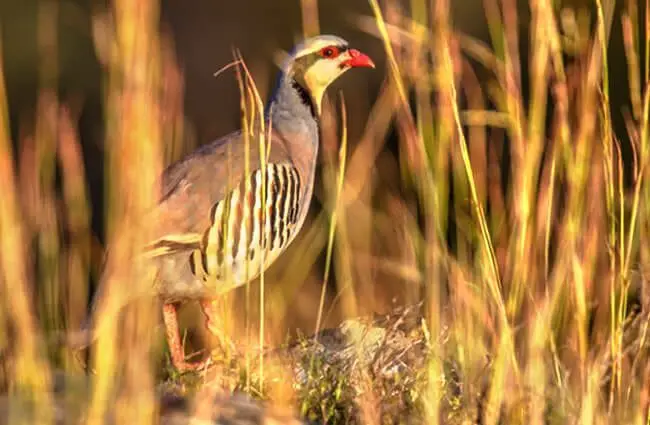
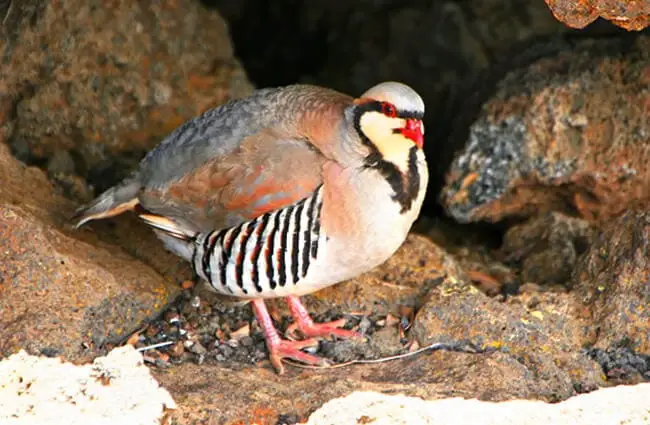
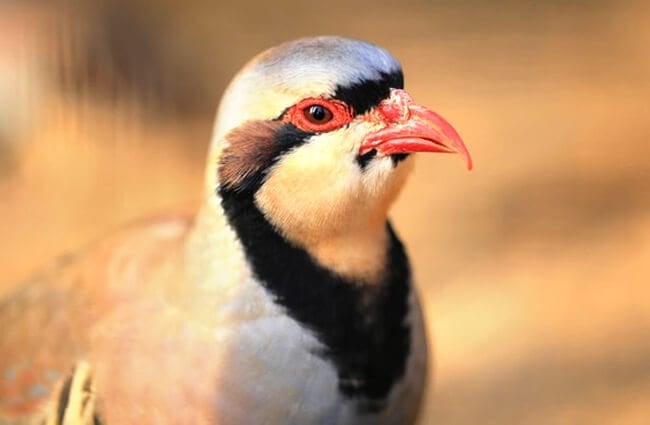
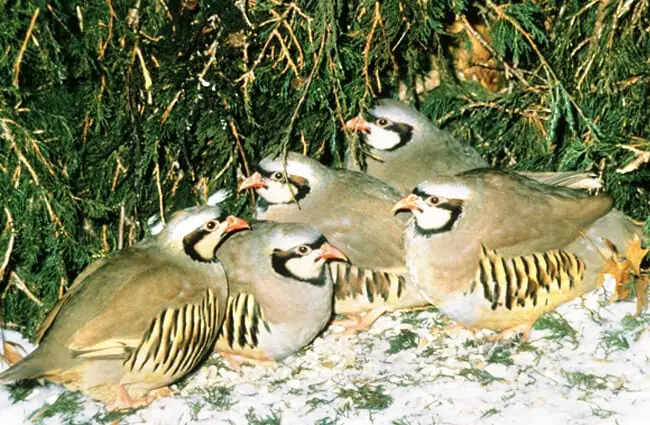
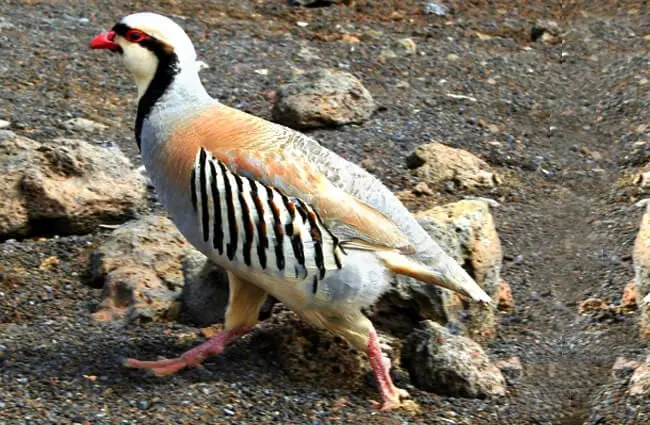
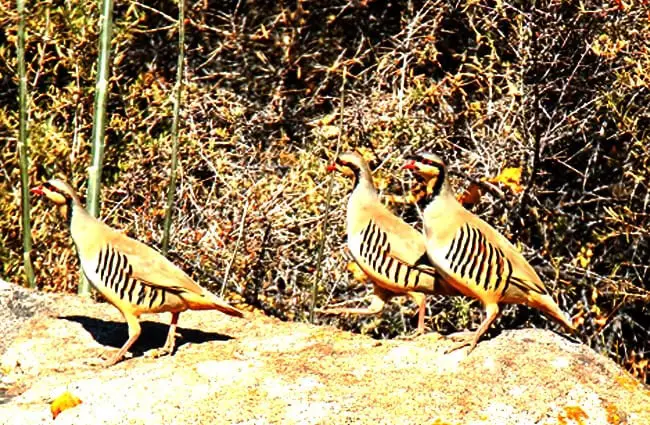
The Chukar (Alectoris chukar) is a relatively large bird, typically measuring between 13 to 15 inches in length. Its most defining characteristic is its striking coloration. The face and throat are black, sharply contrasting with a grey-brown body. A prominent black band extends from the forehead through the eye and continues along the sides of the neck. The flanks display intricate patterns of black and white streaks, providing excellent camouflage against rocky terrain. The legs are a reddish-brown color, and the beak is stout and adapted for foraging on seeds and insects.
Physical Characteristics
- Size: 13 to 15 inches in length
- Weight: Approximately 1.5 to 2.5 pounds
- Plumage: Grey-brown body, black face and throat, barred flanks
- Distinguishing Features: Black band through the eye
Habitat and Distribution
Originally native to Asia, stretching from Turkey to western China, the Chukar has been successfully introduced to numerous locations worldwide, including North America, New Zealand, and Hawaii. Its adaptability allows it to thrive in a variety of habitats, but it particularly favors rugged, rocky hillsides, steep slopes, and arid grasslands. They are often found at elevations ranging from sea level to over 10,000 feet. The presence of sparse vegetation for cover and access to water sources are also crucial factors in their habitat selection.
Preferred Habitats:
- Rugged, rocky hillsides
- Steep slopes
- Arid grasslands
- Sparse vegetation for cover
Diet and Foraging Behavior
Chukars are omnivorous birds with a diet that varies seasonally and based on availability. Seeds constitute a significant portion of their diet, especially during the colder months. They also consume a wide range of invertebrates, including insects, larvae, and snails, particularly during the breeding season when protein requirements are higher for egg production and chick development. They forage by scratching at the ground with their strong feet, searching for seeds and insects. They also consume leaves and berries when available. Water is crucial, and Chukars will regularly visit springs, streams, or puddles to drink.
Reproduction and Life Cycle
The Chukar breeding season typically occurs in the spring. These birds are generally monogamous, forming pairs that may last for several breeding seasons. The female lays a clutch of 8 to 14 eggs in a shallow depression scraped into the ground, often concealed amongst rocks or vegetation. Incubation lasts approximately 23 to 24 days, primarily carried out by the female. The chicks are precocial, meaning they are relatively well-developed at hatching and can leave the nest shortly after. They are covered in downy plumage and follow their mother closely, learning to forage for food. Chicks fledge, or develop flight feathers, at around 21 to 28 days old.
Key Reproductive Facts:
- Mating System: Generally monogamous
- Clutch Size: 8 to 14 eggs
- Incubation Period: 23 to 24 days
- Fledging Period: 21 to 28 days
Chukar and the Ecosystem
Chukars play a role in seed dispersal, consuming seeds and depositing them in new locations through their droppings. They are also prey for a variety of predators, including raptors (hawks and eagles), coyotes, foxes, and snakes. Their presence contributes to the overall biodiversity of the ecosystems they inhabit. Furthermore, they can influence vegetation patterns through their foraging activities. The presence or absence of Chukars can also serve as an indicator of habitat quality and environmental health.
Chukar and Human Interactions
The Chukar is a popular game bird, widely pursued by hunters in many regions. Sustainable hunting practices are essential to ensure the long‑term health of Chukar populations. Introduced populations sometimes face challenges related to habitat loss, predation, and competition with other bird species. Conservation efforts may involve habitat restoration, predator control, and responsible hunting regulations. Chukars have also become a symbol of wilderness and outdoor recreation for many people.
Advanced Insights for Aspiring Ornithologists
The genetic diversity within Chukar populations is an area of ongoing research. Studies suggest that distinct genetic lineages exist between different introduced populations, highlighting the importance of maintaining genetic variation. The impact of climate change on Chukar populations is another critical area of investigation. Changes in precipitation patterns and temperature can affect habitat suitability and breeding success. Furthermore, the Chukar’s vocalizations, consisting of a distinctive “chuk‑chuk” call, are used for communication and territorial defense. Understanding the nuances of these vocalizations can provide insights into their social behavior.
Encountering Chukars in the Wild & Captive Care
If encountering Chukars while hiking, observe them from a distance and avoid disturbing their behavior. Keep pets leashed and do not attempt to approach or feed them. In captive settings, such as zoos or game farms, Chukars require spacious enclosures that mimic their natural habitat, including rocky areas, shrubs, and dust‑bathing sites. Their diet should consist of a balanced mix of seeds, grains, insects, and greens. Regular veterinary check‑ups are essential to ensure their health and well‑being. Avoid overcrowding and provide enrichment activities to stimulate their natural behaviors.
Final Thoughts
The Chukar Partridge stands as a testament to the resilience and adaptability of avian life. From its captivating plumage to its intriguing behaviors, the Chukar continues to fascinate and inspire. By understanding its biology, ecology, and interactions with its environment, we can appreciate its significance and work towards ensuring its long‑term survival.
![Closeup of a beautiful Red Angus cowPhoto by: U.S. Department of Agriculture [pubic domain]https://creativecommons.org/licenses/by/2.0/](https://animals.net/wp-content/uploads/2020/03/Red-Angus-4-238x178.jpg "Red Angus")
![Closeup of a beautiful Red Angus cowPhoto by: U.S. Department of Agriculture [pubic domain]https://creativecommons.org/licenses/by/2.0/](https://animals.net/wp-content/uploads/2020/03/Red-Angus-4-100x75.jpg "Red Angus")