
The Ocean’s Azure Arrow: Unveiling the Secrets of the Blue Marlin
Deep within the vast, blue expanse of the world’s oceans, a creature of unparalleled power and grace reigns supreme. The Blue Marlin, a living torpedo of muscle and speed, captivates the imagination of anglers, scientists, and ocean enthusiasts alike. With its distinctive spear-like bill and iridescent blue hues, this magnificent fish is more than just a trophy catch; it is a vital component of marine ecosystems and a testament to the wonders of evolution. Join us on a journey to explore the life, habits, and profound impact of the Blue Marlin, from its ancient origins to its modern-day interactions with humanity.
A Glimpse into Their World: Habitat and Distribution
The Blue Marlin, scientifically known as Makaira nigricans, is a truly cosmopolitan species, gracing the warm, tropical, and subtropical waters of the Atlantic, Pacific, and Indian Oceans. These highly migratory fish prefer the open ocean, far from coastal shelves, typically inhabiting depths ranging from the surface down to approximately 150 meters, though they can dive much deeper in pursuit of prey. Their preferred temperature range is generally above 22 degrees Celsius, which dictates their extensive seasonal migrations across ocean basins. In the Atlantic, they are found from the Gulf of Mexico and the Caribbean Sea all the way to the coast of West Africa and even into the Mediterranean. Pacific populations span from the coasts of North and South America to the waters surrounding Japan, Australia, and many Pacific islands. The Indian Ocean sees them in abundance from East Africa to Indonesia and Australia.
These pelagic wanderers are often associated with areas of high productivity, such as oceanic fronts, current convergences, and seamounts, where prey congregates. Their movements are not random; they follow the warm currents and the abundance of food, undertaking some of the longest migrations of any marine animal. Understanding these migratory patterns is crucial for conservation efforts, as it highlights the need for international cooperation to protect this wide-ranging species.
Physical Prowess: Anatomy and Adaptations
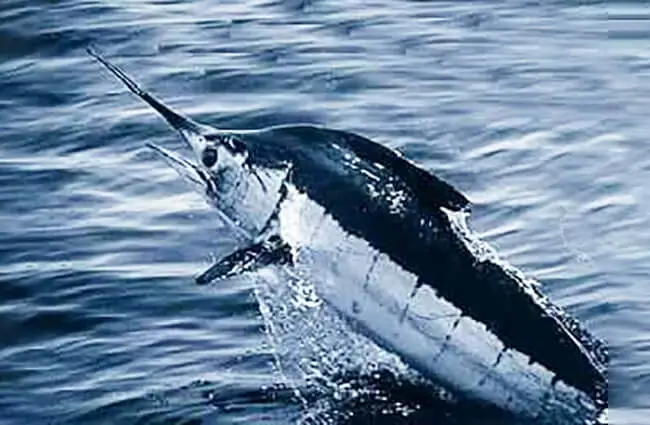
The Blue Marlin is built for speed and power. Its body is elongated and robust, tapering to a powerful caudal peduncle that supports a large, crescent-shaped tail fin, perfectly designed for propulsion. The most striking feature is its long, pointed upper jaw, forming a distinctive bill, which is round in cross-section. This bill is not just for show; it is a formidable weapon used to slash and stun prey. Dorsally, their coloration is a brilliant cobalt blue, fading to a silvery white on their belly, often adorned with faint, vertical blue stripes that may appear or disappear depending on their excitement or stress levels. This countershading provides excellent camouflage in the open ocean, making them difficult to spot from above or below.
Adult Blue Marlins can reach impressive sizes, with females typically growing larger than males. The largest recorded specimens have exceeded 5 meters in length and weighed over 900 kilograms, though individuals over 400 kilograms are considered exceptionally large. Their eyes are relatively large, providing excellent vision, and their lateral line system is highly developed, allowing them to detect subtle vibrations in the water, crucial for hunting in the vast, featureless open ocean. Their streamlined body, retractable dorsal and anal fins, and powerful musculature all contribute to their ability to reach speeds estimated to be over 80 kilometers per hour in short bursts, making them one of the fastest fish in the sea.
What’s on the Menu? Diet and Hunting Strategies
As apex predators, Blue Marlins have a diverse and opportunistic diet, primarily consisting of other pelagic fish and cephalopods. Their menu includes a variety of species such as tuna, mackerel, dorado (mahi-mahi), flying fish, and squid. They are not picky eaters and will consume whatever prey is abundant in their feeding grounds. Their hunting strategy is a spectacle of speed and precision. They often slash through schools of fish with their bill, stunning or injuring multiple individuals before circling back to consume them. This method allows them to efficiently incapacitate prey without expending excessive energy in individual chases.
Blue Marlins are solitary hunters for the most part, though they may occasionally be observed in loose aggregations when prey is particularly abundant. They are visual predators, relying on their keen eyesight to locate prey in the clear oceanic waters. Their incredible speed allows them to ambush fast-moving fish, while their powerful bill helps them subdue larger, more formidable prey. The presence of Blue Marlins is often an indicator of a healthy and productive marine ecosystem, as they sit at the top of a complex food web.

The Circle of Life: Reproduction and Early Stages
The reproductive cycle of the Blue Marlin is a fascinating display of oceanic life. Spawning typically occurs in warm, tropical waters during the summer months, often in specific areas known as spawning grounds, such as the Gulf of Mexico, the Caribbean, and equatorial regions of the Pacific. Females are highly fecund, capable of releasing millions of eggs in a single spawning event. These eggs are pelagic, meaning they float freely in the open ocean, drifting with the currents.
Fertilization is external, with males releasing sperm into the water to fertilize the eggs. The eggs hatch into tiny larvae, which are initially planktonic and vulnerable to predation. These larvae undergo rapid growth and development, quickly transitioning from their planktonic stage to juvenile fish. Growth rates are remarkably fast, allowing them to quickly escape the most vulnerable stages of their life cycle. Sexual maturity is reached relatively early for such a large fish, typically around 2 to 4 years of age for males and 3 to 6 years for females, though this can vary by region. The rapid growth and high fecundity are adaptations to compensate for the high mortality rates experienced during their early life stages in the vast and dangerous open ocean.
Deeper Dives: Ecology and Evolution
Architects of the Ecosystem: Role and Interactions
As apex predators, Blue Marlins play a critical role in maintaining the health and balance of pelagic ecosystems. By preying on a wide variety of fish and cephalopods, they help regulate populations of their prey species, preventing overgrazing or dominance by any single species. This top-down control has cascading effects throughout the food web, influencing the abundance and distribution of many other marine organisms. Their presence indicates a robust and functioning ecosystem, rich in biodiversity.
Blue Marlins interact with other large pelagic predators, such as sharks and other billfish species, often competing for similar food resources. While adult Blue Marlins have few natural predators due to their size and speed, juvenile marlins can fall prey to larger sharks, orcas, and other large predatory fish. They also host a variety of parasites, both internal and external, which are a natural part of their ecological interactions and contribute to the overall biodiversity of the ocean. Their extensive migrations also serve to connect different oceanic regions, facilitating nutrient cycling and potentially influencing the distribution of other species.
Tracing Their Ancestry: A Brief Evolutionary Journey
The evolutionary history of billfish, including the Blue Marlin, is a fascinating tale rooted in the ancient oceans. Billfish belong to the family Istiophoridae, which, along with the swordfish family Xiphiidae, forms the order Istiophoriformes. Fossil evidence suggests that the ancestors of modern billfish emerged during the Eocene epoch, approximately 56 to 34 million years ago. Early billfish forms, such as Palaeorhynchus, already possessed elongated rostrums, indicating that the distinctive bill evolved early in their lineage.
The evolution of the bill is thought to be an adaptation for hunting fast-moving prey in the open ocean, allowing these predators to efficiently stun and capture fish. Over millions of years, various lineages diversified, leading to the different species of marlins, sailfish, and spearfish we see today. The Blue Marlin’s lineage represents a highly successful adaptation to a pelagic, predatory lifestyle, characterized by extreme speed, large size, and wide distribution. Their evolutionary success is a testament to the effectiveness of their specialized anatomy and behaviors in the challenging environment of the open ocean.
Blue Marlin and Humanity: A Complex Relationship
Cultural Canvas: Marlin in Human Lore and Sport
The Blue Marlin holds a significant place in human culture, particularly in coastal communities and among sport fishing enthusiasts. Its immense size, power, and acrobatic leaps when hooked have made it one of the most sought-after game fish in the world. The pursuit of marlin has inspired countless tales of adventure and endurance, most famously immortalized in Ernest Hemingway’s novel The Old Man and the Sea, where the struggle between Santiago and a giant marlin symbolizes the human spirit’s resilience against nature’s might. This literary masterpiece cemented the marlin’s image as a symbol of strength, challenge, and the untamed wilderness of the ocean.
Marlin fishing tournaments are major events in many parts of the world, drawing participants and spectators from across the globe. These events contribute significantly to local economies but also raise important questions about conservation. Beyond sport, the marlin’s striking appearance has made it a popular motif in art, jewelry, and cultural iconography, representing speed, freedom, and the majesty of the sea.
The Human Touch: Conservation and Challenges
Despite their widespread distribution, Blue Marlin populations face significant threats, primarily from human activities. Commercial fishing, both targeted and as bycatch in tuna and swordfish fisheries, is a major concern. Their migratory nature means they cross international boundaries, making coordinated conservation efforts essential but challenging. Overfishing can deplete populations, disrupting the delicate balance of the marine ecosystem where they play a crucial role.
Habitat degradation, ocean pollution, and climate change also pose long-term threats. Plastic pollution, for instance, can be ingested by marlins or their prey, leading to injury or death. Changes in ocean temperature and currents due to climate change can alter their migratory routes and the distribution of their prey, impacting their feeding and spawning success. Conservation efforts include international fishing regulations, catch limits, and the promotion of “catch and release” practices in sport fishing to minimize mortality. Organizations worldwide are working to research marlin populations, understand their movements, and advocate for sustainable fishing practices to ensure the future of this iconic species.
Encountering a Giant: Practical Insights
Where to Find Them: Tips for Wildlife Enthusiasts
For the dedicated animal lover or aspiring zoologist hoping to observe a Blue Marlin in its natural habitat, patience and preparation are key. These are open-ocean dwellers, so coastal sightings are rare. The best chances are found in areas known for their deep-sea fishing charters, particularly during the peak marlin seasons. Popular destinations include:
- The Hawaiian Islands
- The Caribbean (e.g., Dominican Republic, Puerto Rico)
- The Pacific coast of Central America (e.g., Costa Rica, Panama)
- The Gulf Stream off the southeastern United States
- The Azores and Canary Islands in the Atlantic
- Parts of Australia and Indonesia
Observing them typically requires a boat trip into deep, pelagic waters. Look for signs of baitfish activity, diving seabirds, or changes in water temperature or color, which can indicate productive feeding grounds. While spotting them actively hunting is a thrill, remember that these are wild animals in a vast ocean, and sightings are never guaranteed. Responsible wildlife viewing means maintaining a respectful distance and minimizing disturbance.
What to Do if You Encounter One
For ocean enthusiasts, boaters, or divers who might encounter a Blue Marlin in the wild, the experience can be awe-inspiring. Here is what to do:
- Maintain Distance: Blue Marlins are powerful predators. While generally not aggressive towards humans, their sheer size and speed mean accidental collisions could be dangerous. Keep a safe and respectful distance.
- Observe Quietly: If you are lucky enough to see one, observe it without disturbing its natural behavior. Avoid sudden movements or loud noises.
- Do Not Approach or Harass: Never attempt to touch, feed, or chase a wild Blue Marlin. This can stress the animal and alter its natural behavior.
- Report Sightings (if applicable): In some regions, marine research organizations appreciate reports of large pelagic species sightings, especially if the animal appears distressed or entangled.
- Be Aware of Fishing Gear: If you are boating in areas where marlin fishing occurs, be mindful of fishing lines and gear in the water.
Remember, the goal is to witness these magnificent creatures in their natural state, contributing to their well-being through non-invasive observation.
Caring for a Colossus: Considerations for Zookeepers
Keeping Blue Marlins in captivity is an exceptionally rare and challenging endeavor, primarily due to their immense size, high-speed swimming requirements, and specialized pelagic lifestyle. Most public aquariums do not attempt to house adult Blue Marlins, as the necessary tank dimensions and environmental conditions are almost impossible to replicate. However, for a hypothetical zookeeper tasked with caring for a Blue Marlin, the following considerations would be paramount:
- Enclosure Requirements:
- Massive Scale: An enclosure would need to be truly colossal, likely hundreds of thousands, if not millions, of gallons, with a circular or oval design to prevent the fish from hitting walls and to allow continuous swimming.
- Depth and Openness: Significant depth is crucial to accommodate their diving behaviors and provide ample vertical space.
- Water Quality: Pristine, open-ocean quality water is essential, requiring advanced filtration, oxygenation, and temperature control systems to mimic their natural habitat (22-28 degrees Celsius).
- Diet and Feeding:
- High-Quality Prey: A diet of fresh, whole fish (tuna, mackerel, squid) in large quantities would be necessary to meet their high metabolic demands.
- Nutritional Supplements: Vitamin and mineral supplements would be critical to ensure a balanced diet, preventing deficiencies common in captive environments.
- Feeding Strategy: Feeding would need to be carefully managed to avoid stress and ensure all nutritional needs are met, potentially involving specialized feeding devices or techniques.
- Behavioral Enrichment:
- Simulating Prey: While challenging, methods to simulate hunting opportunities or provide novel stimuli would be important to prevent boredom and encourage natural behaviors.
- Social Structure: Understanding their solitary nature would guide decisions on whether to house multiple individuals, which is generally not recommended for adults due to potential aggression and space constraints.
- Health Monitoring and Veterinary Care:
- Regular Checks: Constant monitoring for signs of stress, injury, or disease is vital.
- Specialized Equipment: Veterinary procedures would require highly specialized equipment and expertise due to the animal’s size and aquatic environment.
- Stress Reduction: Minimizing handling and stress during any medical intervention would be a top priority.
- What to Avoid:
- Small or Rectangular Tanks: These are completely unsuitable and would lead to injury and death.
- Poor Water Quality: Fluctuations in parameters or inadequate filtration would be detrimental.
- Inadequate Diet: Insufficient quantity or quality of food would lead to malnutrition.
- Overcrowding: Housing too many individuals would cause stress and aggression.
- Sudden Changes: Rapid changes in environment, diet, or routine should be avoided.
Ultimately, the ethical and practical challenges of keeping Blue Marlins in captivity mean that most conservation efforts focus on protecting them in their natural ocean environment, where they truly belong.
Fascinating Facts About the Blue Marlin
- Gender Dimorphism: Female Blue Marlins grow significantly larger than males, a common trait among many predatory fish species.
- Color Changing: They can rapidly change the intensity of their blue stripes and overall coloration, often darkening when excited or stressed, a phenomenon known as “flashing.”
- Bill Function: The bill is primarily used for stunning prey, not for spearing it directly. They slash through schools of fish, then circle back to eat the incapacitated individuals.
- Warm-Blooded Trait: Like some other large pelagic fish (tuna, swordfish), Blue Marlins possess a specialized circulatory system that allows them to warm their brains and eyes, enhancing their hunting capabilities in deeper, colder waters.
- Leaping Acrobats: When hooked by anglers, Blue Marlins are renowned for their spectacular aerial displays, leaping high out of the water in an attempt to dislodge the hook.
- Long-Distance Migrators: Individual Blue Marlins have been tracked migrating thousands of kilometers across entire ocean basins.
- Fast Growers: They exhibit incredibly fast growth rates, reaching large sizes in just a few years.
- Top Predator: They sit at the very top of the pelagic food web, playing a crucial role in maintaining ecosystem balance.
- Longevity: While growth is fast, they can live for a considerable time, with some individuals estimated to live over 20 years.
- Scientific Name: Makaira nigricans translates roughly to “black dagger,” referring to their dark coloration and bill.
The Blue Marlin stands as a powerful symbol of the ocean’s wild beauty and immense power. From its ancient evolutionary roots to its vital role in marine ecosystems and its profound impact on human culture, this magnificent billfish continues to inspire awe and demand our respect. Understanding and protecting the Blue Marlin is not just about preserving a single species; it is about safeguarding the health of our global oceans for generations to come. May these azure arrows continue to streak through the depths, a testament to the enduring majesty of the natural world.
![Closeup of a beautiful Red Angus cowPhoto by: U.S. Department of Agriculture [pubic domain]https://creativecommons.org/licenses/by/2.0/](https://animals.net/wp-content/uploads/2020/03/Red-Angus-4-238x178.jpg "Red Angus")

![Closeup of a beautiful Red Angus cowPhoto by: U.S. Department of Agriculture [pubic domain]https://creativecommons.org/licenses/by/2.0/](https://animals.net/wp-content/uploads/2020/03/Red-Angus-4-100x75.jpg "Red Angus")