
Deep within the emerald canopies of Southeast Asia, a creature of peculiar charm and captivating mystery thrives. It is an animal often mistaken for a bear, sometimes called a cat, yet it is neither. This is the Binturong, a magnificent arboreal mammal known for its striking appearance, unique habits, and perhaps most famously, its distinctive scent reminiscent of freshly buttered popcorn. As a zoologist who has spent years unraveling the secrets of the natural world, the Binturong stands out as a true marvel, a testament to evolution’s boundless creativity.
Unveiling the Binturong: Basic Biology and Identity
What Exactly is a Binturong?
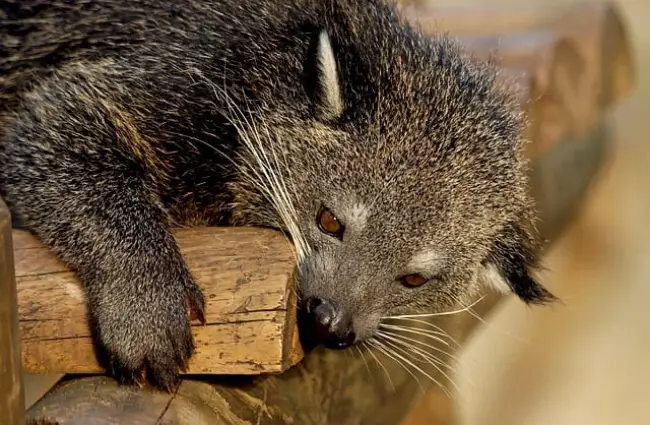
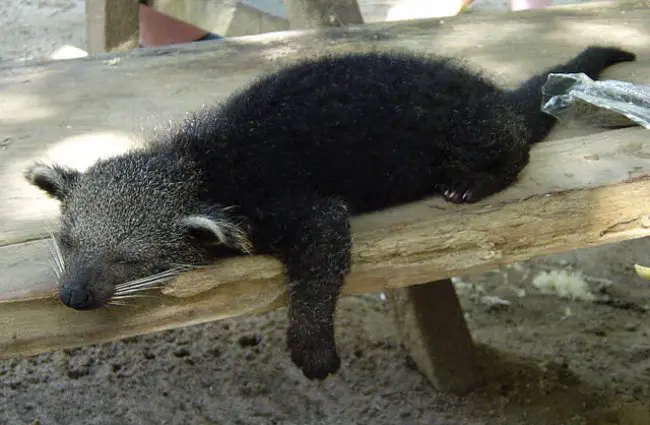
The Binturong, scientifically known as Arctictis binturong, is a fascinating member of the Viverridae family, which also includes civets and genets. Despite its common moniker, “bearcat,” it shares no direct lineage with bears or cats. Its robust body, shaggy black fur, long bushy tail, and small, rounded ears topped with tufts of hair give it a bear-like appearance, while its agility in trees and retractable claws might suggest feline traits. However, the Binturong occupies its own unique branch on the tree of life, a testament to convergent evolution where similar forms arise independently.
A Glimpse into Their Ancestry: Evolutionary Journey
The Viverridae family, to which the Binturong belongs, represents some of the most ancient lineages of carnivores, with their evolutionary roots tracing back tens of millions of years. Binturongs are thought to have diverged from other viverrids quite early, developing specialized adaptations for their arboreal, omnivorous lifestyle. Their unique prehensile tail, a feature rare among Old World mammals, is a prime example of this evolutionary specialization, allowing them to navigate the complex forest canopy with remarkable dexterity. This ancient lineage and their distinct adaptations make them a subject of great interest for evolutionary biologists studying mammalian diversification in tropical environments.
Life in the Canopy: Habitat and Lifestyle
Where the Binturong Roams: Geographical Distribution
Binturongs are native to the tropical rainforests and deciduous forests of Southeast Asia. Their range extends across a broad swathe of the continent, including countries such as Bangladesh, Bhutan, Cambodia, China (Yunnan province), India, Indonesia (Sumatra, Java, Borneo, and other islands), Laos, Malaysia, Myanmar, Nepal, the Philippines (Palawan), Thailand, and Vietnam. They prefer dense, humid forests, often near water sources, and can be found from sea level up to elevations of about 2,600 meters.
An Arboreal Acrobat: Their Forest Home
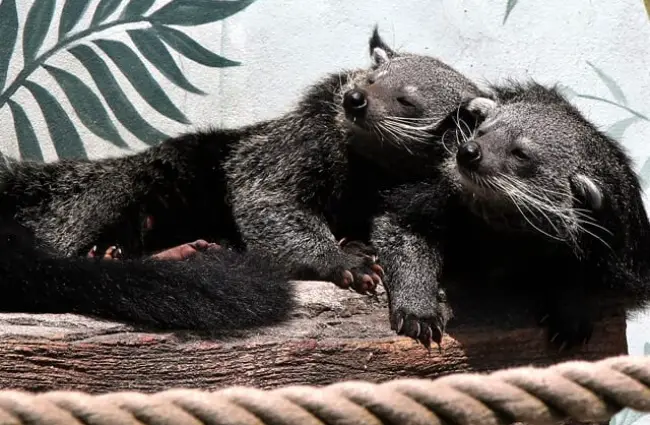
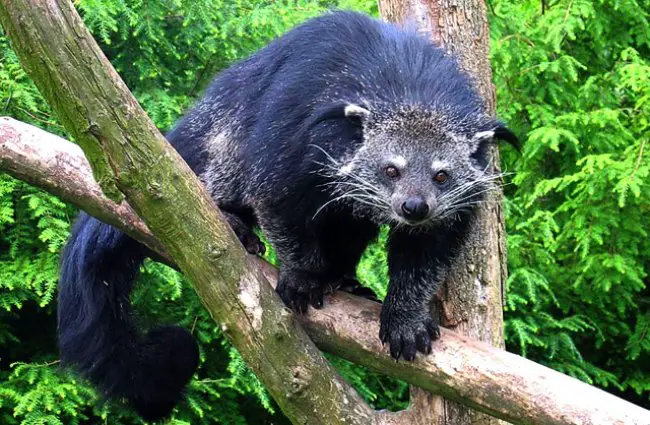
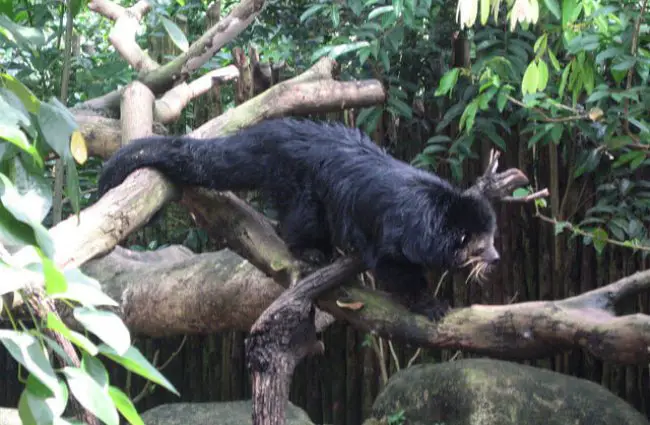
Primarily nocturnal and arboreal, Binturongs spend most of their lives high in the trees. Their powerful limbs, semi-retractable claws, and especially their remarkable prehensile tail, which can be as long as their body, are perfectly adapted for navigating the complex three-dimensional world of the forest canopy. The tail acts as a fifth limb, providing balance and support, and can even be used to grasp branches while climbing or descending headfirst. While agile in the trees, Binturongs are relatively slow and deliberate movers, not known for rapid leaps or chases. They often rest during the day, curled up in tree hollows or dense foliage, emerging at dusk to forage.
The Binturong’s Menu: Diet and Foraging Habits
An Omnivore’s Delight: What They Eat
The Binturong is a true omnivore, with a diet that reflects its opportunistic nature and the bounty of its forest home. While primarily frugivorous, meaning fruits make up a significant portion of their diet, they are not averse to supplementing their meals with other items. Their diet includes:
- Fruits: Figs are a particular favorite, but they consume a wide variety of tropical fruits.
- Small Animals: Birds, rodents, insects, and even fish are hunted when the opportunity arises.
- Eggs: Bird nests are often raided for their protein-rich contents.
- Carrion: They will scavenge on dead animals, playing a role in forest clean-up.
- Leaves and Shoots: Occasionally consumed, especially when other food sources are scarce.
Their strong jaws and teeth are well-suited for crushing fruits and small bones, making them efficient foragers across different food types.
A Crucial Role: Seed Dispersal and Ecosystem Health
The Binturong’s dietary habits make it an invaluable contributor to the health and regeneration of its forest ecosystem. By consuming a wide array of fruits, Binturongs ingest seeds, which are then dispersed throughout the forest in their droppings. This process, known as zoochory, is vital for the propagation of many plant species, helping to maintain forest diversity and structure. Without effective seed dispersers like the Binturong, many tree species would struggle to reproduce and colonize new areas, potentially leading to a decline in forest health.
The Circle of Life: Mating and Reproduction
Courtship and Family Life
Binturongs are generally solitary animals, but they come together for mating. They do not have a strict breeding season, and reproduction can occur year-round, though there may be peaks in certain months depending on location and food availability. After a gestation period of approximately 74 to 90 days, a female Binturong typically gives birth to a litter of one to three cubs, though litters of up to six have been recorded. The cubs are born blind and helpless, weighing only about 150 grams. They are entirely dependent on their mother for the first few months of their lives.
Slow and Steady: Reproductive Strategy
The mother Binturong provides all parental care, nursing her young and protecting them in a tree hollow or den. The cubs open their eyes after about 10 to 14 days and begin to explore their surroundings within a few weeks. They are weaned at around 6 to 8 weeks but may stay with their mother for several months, learning essential survival skills like climbing and foraging. Binturongs reach sexual maturity between two and a half to three years of age. This relatively slow reproductive rate, coupled with increasing threats to their habitat, makes their populations particularly vulnerable to decline.
Binturongs and Their World: Interactions and Ecological Impact
Neighbors in the Forest: Interactions with Other Animals
In their dense forest habitat, Binturongs interact with a variety of other species. As primarily nocturnal and arboreal creatures, their direct interactions with ground-dwelling predators are limited, but they may face threats from large raptors, pythons, and larger carnivores like leopards or clouded leopards, especially when young or vulnerable. They compete for food resources with other frugivores and omnivores, such as civets, monkeys, and hornbills. Their role as seed dispersers highlights a mutualistic relationship with many plant species, underscoring their integral position within the forest food web.
Keystone Species? Their Role in the Ecosystem
While not a classic “keystone species” in the same vein as an apex predator, the Binturong’s significant contribution to seed dispersal makes it an important ecological engineer. By facilitating the regeneration of forest trees, they help maintain the structural integrity and biodiversity of their habitat. The loss of Binturong populations could lead to cascading effects on plant communities, potentially altering forest composition and impacting other species that rely on those plants for food and shelter. Their presence is a strong indicator of a healthy, functioning forest ecosystem.
Binturongs and Humanity: Culture, Conservation, and Coexistence
Whispers in Folklore: Cultural Significance
Compared to some other charismatic megafauna, the Binturong has a relatively limited presence in human folklore and cultural narratives. However, in some indigenous communities within its range, it may be recognized for its unique appearance or nocturnal habits. Its distinctive “popcorn smell,” produced by scent glands near its tail, is used for communication and territorial marking, and while not a direct cultural contribution, it is certainly a memorable aspect of its interaction with humans who encounter it. This unique scent is due to the compound 2-acetyl-1-pyrroline, the same chemical responsible for the aroma of popcorn and toasted bread.
Encounters in the Wild: What to Do
For the avid animal lover or aspiring zoologist hoping to spot a Binturong in its natural habitat, patience and respect are paramount. Binturongs are elusive, nocturnal, and well-camouflaged. They are best sought in dense rainforests of Southeast Asia, particularly at night, using red-light flashlights to minimize disturbance. Look for signs of their presence, such as droppings containing seeds or claw marks on trees. If an encounter occurs:
- Maintain Distance: Observe from a respectful distance. Binturongs are generally shy and non-aggressive, but like any wild animal, they can defend themselves if threatened.
- Be Quiet: Avoid loud noises or sudden movements that could startle the animal.
- Do Not Feed: Never offer food to wild animals. This can alter their natural foraging behavior and make them dependent on humans.
- Appreciate: Consider yourself fortunate to witness such a rare and unique creature in its natural environment.
The Human Touch: Threats and Conservation Efforts
Sadly, the Binturong is currently listed as “Vulnerable” by the IUCN Red List, with populations declining across its range. The primary threats to its survival are:
- Habitat Loss and Fragmentation: Deforestation for agriculture (especially palm oil plantations), logging, and human settlements destroy their forest homes.
- Illegal Wildlife Trade: Binturongs are hunted for their meat, traditional medicine, and increasingly, for the exotic pet trade. Their docile nature as cubs makes them appealing, but they are challenging to care for as adults.
- Human-Wildlife Conflict: In some areas, they may be persecuted for raiding poultry or fruit crops, though this is less common than for other species.
Conservation efforts include protecting their forest habitats, combating illegal wildlife trade, and raising awareness about their ecological importance. Establishing protected areas, sustainable forestry practices, and community engagement programs are crucial for the Binturong’s long-term survival.
Fascinating Facts About the Binturong
Here are some intriguing tidbits about this remarkable creature:
- The Binturong is the only Old World carnivore with a prehensile tail.
- Their scientific name, Arctictis binturong, roughly translates to “bear-weasel” and “bear-cat” respectively, reflecting the confusion surrounding its classification.
- The popcorn-like scent is produced by glands under their tail and is used for scent marking territory and communication.
- They can live for over 20 years in captivity, though their lifespan in the wild is typically shorter.
- Despite being carnivores, Binturongs are quite clumsy on the ground and prefer to stay in the trees.
- Their long, coarse fur is often tipped with white or grey, giving them a grizzled appearance.
- Binturongs have excellent night vision, crucial for their nocturnal foraging.
Beyond the Wild: Binturongs in Captivity
The Zookeeper’s Handbook: Caring for Binturongs
Caring for Binturongs in a zoological setting requires a deep understanding of their natural history and specific needs. Zookeepers perform a variety of tasks to ensure their well-being:
- Diet Management: A varied diet is essential, mimicking their omnivorous nature. This typically includes a high-quality omnivore chow, a wide assortment of fresh fruits (e.g., apples, bananas, grapes, figs), vegetables (e.g., sweet potato, corn), and occasional protein sources like cooked chicken, eggs, or insects. Dietary supplements may be added to ensure complete nutrition.
- Enclosure Design: As arboreal animals, Binturongs require spacious enclosures with ample climbing structures, such as sturdy branches, ropes, and platforms at various heights. Hiding spots, like elevated nest boxes or dense foliage, are crucial for their comfort and security during the day.
- Environmental Enrichment: To prevent boredom and encourage natural behaviors, enrichment is vital. This includes:
- Food Puzzles: Hiding food in puzzle feeders or scattered throughout the enclosure.
- Scent Enrichment: Introducing novel scents (e.g., spices, perfumes, other animal scents) to stimulate their keen sense of smell.
- Climbing Opportunities: Regularly changing branch configurations or adding new climbing elements.
- Substrate Changes: Providing different substrates for digging or exploring.
- Social Housing: While generally solitary in the wild, Binturongs can often be housed in pairs or small family groups in captivity, especially if introduced at a young age. Careful observation of individual temperaments is necessary.
- Health Monitoring: Regular veterinary check-ups, weight monitoring, and observation of behavior are crucial for early detection of health issues. Common concerns can include dental problems, obesity, and age-related conditions.
Common Pitfalls: What to Avoid in Captive Care
To ensure the best possible welfare for captive Binturongs, zookeepers must avoid several common mistakes:
- Inadequate Climbing Structures: A lack of vertical space and climbing opportunities can lead to muscle atrophy, boredom, and stress.
- Poor Diet: An unbalanced diet, especially one too high in sugar from excessive fruit or lacking in essential nutrients, can lead to obesity, dental issues, and other health problems.
- Lack of Enrichment: Without sufficient mental and physical stimulation, Binturongs can develop stereotypic behaviors or become lethargic.
- Improper Social Grouping: Forcing incompatible individuals together can lead to aggression and stress.
- Over-handling: While some Binturongs can become habituated to human presence, excessive handling can be stressful and should be minimized, especially for those not accustomed to it.
For the Aspiring Zoologist: Deeper Insights and Research Avenues
Unanswered Questions: Areas for Future Study
Despite their unique appeal, Binturongs remain relatively understudied compared to many other large mammals. This presents numerous opportunities for aspiring zoologists to contribute valuable knowledge:
- Behavioral Ecology: Detailed studies on their social structure, communication methods (beyond scent marking), and foraging strategies in different habitats.
- Genetics and Population Dynamics: Genetic analyses to understand population connectivity, genetic diversity, and the impact of habitat fragmentation on gene flow. This is crucial for effective conservation planning.
- Reproductive Biology: Further research into their reproductive cycles, hormonal profiles, and factors influencing breeding success, both in the wild and in captivity.
- Dietary Specifics: More precise analyses of their diet across different seasons and geographical locations to understand their role in seed dispersal and potential dietary shifts due to environmental changes.
- Disease Ecology: Investigation into diseases affecting wild Binturong populations and their potential for zoonotic transmission.
Conservation Challenges: A Call to Action
The Binturong’s vulnerable status underscores the urgent need for continued conservation efforts. Aspiring zoologists can play a vital role in addressing these challenges by:
- Conducting Field Research: Contributing to the scientific understanding of Binturong populations, behavior, and ecological needs.
- Engaging in Conservation Education: Raising public awareness about the Binturong and the threats it faces, particularly regarding the illegal pet trade and palm oil consumption.
- Supporting Protected Areas: Working with conservation organizations to establish and manage protected habitats.
- Developing Sustainable Solutions: Collaborating with local communities to find sustainable livelihoods that reduce pressure on Binturong habitats.
Conclusion: A Future for the Forest’s Furred Friend
The Binturong, with its distinctive appearance, arboreal prowess, and charming popcorn scent, is a true gem of Southeast Asia’s rainforests. It is a creature that challenges our classifications and enriches our understanding of biodiversity. From its vital role as a seed disperser to its unique evolutionary journey, the Binturong is a testament to the intricate web of life. Protecting this enigmatic “bearcat” means safeguarding not just a single species, but an entire ecosystem. Through continued research, dedicated conservation, and a collective appreciation for its unique place in the natural world, we can ensure that the Binturong continues to thrive, its popcorn-scented presence gracing the forest canopy for generations to come.
![Closeup of a beautiful Red Angus cowPhoto by: U.S. Department of Agriculture [pubic domain]https://creativecommons.org/licenses/by/2.0/](https://animals.net/wp-content/uploads/2020/03/Red-Angus-4-238x178.jpg "Red Angus")

![Closeup of a beautiful Red Angus cowPhoto by: U.S. Department of Agriculture [pubic domain]https://creativecommons.org/licenses/by/2.0/](https://animals.net/wp-content/uploads/2020/03/Red-Angus-4-100x75.jpg "Red Angus")