
Unveiling the “Canary of the Sea”: The Enigmatic Beluga Whale
In the vast, icy expanses of the Arctic and sub-Arctic, a creature of unparalleled charm and vocal prowess glides through the frigid waters. Known affectionately as the “Canary of the Sea,” the Beluga Whale, or Delphinapterus leucas, captivates with its striking white coloration, expressive face, and an astonishing repertoire of sounds. More than just an iconic Arctic resident, the Beluga is a marvel of adaptation, a vital component of its ecosystem, and a subject of enduring fascination for scientists, indigenous communities, and animal lovers alike. This comprehensive guide delves into the world of the Beluga, from its unique biology and behavior to its interactions with humans and its crucial role in the polar environment.
Physical Characteristics: A Study in Arctic Adaptation
The Beluga Whale possesses several distinctive features that set it apart from other cetaceans and perfectly equip it for life in the icy north.
- Size and Weight: These medium-sized whales typically reach lengths of 13 to 20 feet (4 to 6.1 meters) and can weigh between 2,000 to 3,000 pounds (907 to 1,361 kilograms). Males are generally larger than females.
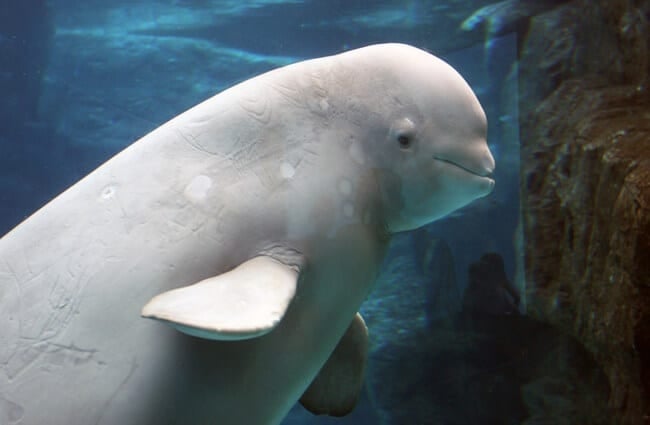
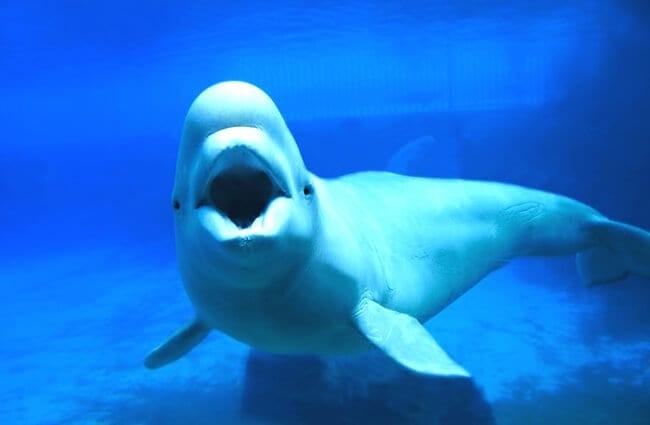
- Coloration: Perhaps their most iconic trait is their pure white skin as adults. Calves are born a dark grey or brownish hue, gradually lightening over several years until they achieve their characteristic pristine white, providing excellent camouflage amidst sea ice.
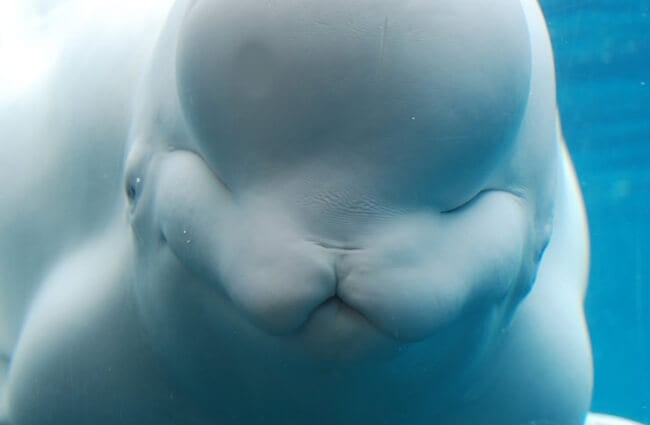
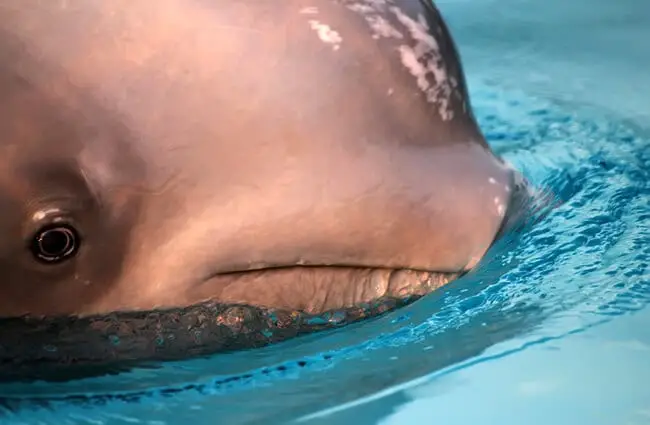
- Distinctive Melon: The Beluga’s forehead features a prominent, bulbous organ called a “melon.” This fatty, deformable structure is crucial for echolocation, allowing the whale to navigate and hunt in murky or dark waters by focusing sound waves. The melon’s flexibility also contributes to the Beluga’s remarkably expressive “face.”
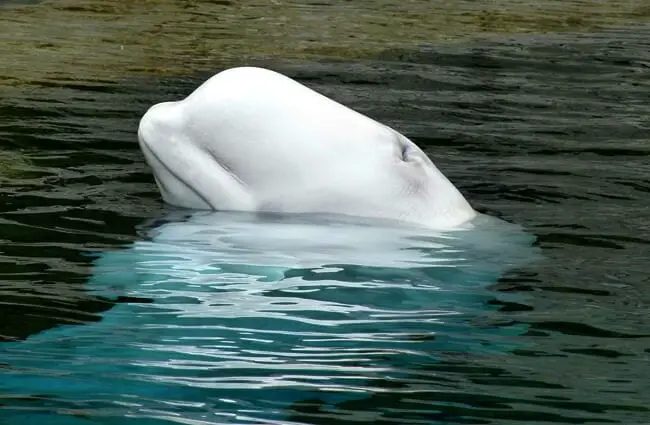
- Flexible Neck: Unlike most whales, whose neck vertebrae are fused, the Beluga possesses unfused neck vertebrae. This unique adaptation grants them the ability to turn their heads from side to side, a distinct advantage when maneuvering through complex ice formations or scanning their surroundings.
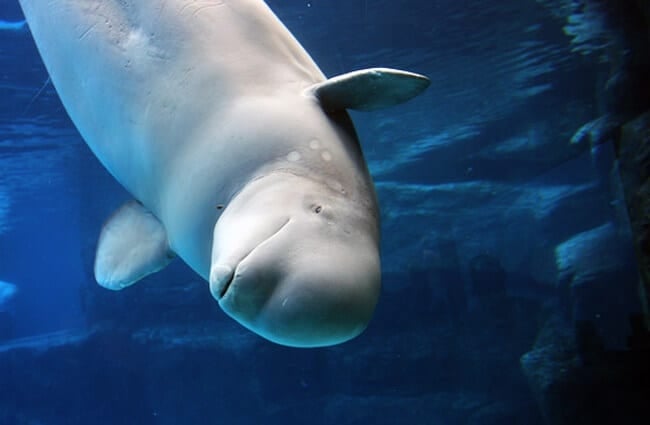
- Lack of Dorsal Fin: Instead of a dorsal fin, Belugas have a tough, ridged dorsal ridge. This absence is another adaptation for their icy habitat, preventing damage when swimming under or rubbing against ice sheets.
Where to Find Them: Beluga Whale Habitat and Distribution
Beluga Whales are true Arctic specialists, thriving in the cold, nutrient-rich waters of the northern hemisphere. Their distribution spans the Arctic and sub-Arctic regions, primarily in coastal areas, shallow bays, estuaries, and even venturing into freshwater rivers.
- Key Regions: Significant populations are found off the coasts of Alaska, Canada, Greenland, and Russia. They inhabit waters around the Arctic Ocean, Bering Sea, Beaufort Sea, Hudson Bay, and the Gulf of St. Lawrence.
- Seasonal Movements: While some populations are year-round residents of certain areas, many undertake seasonal migrations. They often move into warmer, shallower estuaries and river mouths during the summer months for calving and feeding, then return to deeper, ice-covered waters in winter, utilizing polynyas (areas of open water surrounded by ice) and cracks in the ice to breathe.
- Finding Belugas in the Wild: For the dedicated animal lover hoping to spot these magnificent creatures, the best opportunities arise during their summer migrations. Look for them in the mouths of large Arctic rivers and shallow coastal bays. Observing from elevated shorelines or taking guided boat tours in designated areas can increase chances. Always prioritize responsible wildlife viewing, maintaining a respectful distance and minimizing disturbance.
What’s on the Menu: Beluga Whale Diet and Foraging
Belugas are opportunistic feeders with a diverse diet, reflecting the varied prey available in their Arctic environment. They are known to be bottom feeders, often diving to considerable depths to root out their meals.
- Primary Food Sources: Their diet includes a wide array of fish such as cod, salmon, herring, capelin, and Arctic char. They also consume various invertebrates, including crustaceans (shrimp, crabs) and cephalopods (squid, octopus).
- Hunting Techniques: Belugas employ their sophisticated echolocation to locate prey in dark or turbid waters. Once prey is identified, they use suction feeding, drawing water and food into their mouths, and their small, peg-like teeth are used for grasping rather than chewing. Their flexible necks also aid in navigating complex underwater terrain to find hidden prey.
A Deeper Dive into Beluga Biology and Ecology
The Beluga’s Family Tree: Evolution and Taxonomy
The Beluga Whale belongs to the suborder Odontoceti, the toothed whales, and is the sole member of the genus Delphinapterus within the family Monodontidae. Its closest living relative is the equally unique Narwhal. Evolutionary evidence suggests that the Monodontidae family diverged from other toothed whales millions of years ago, adapting specifically to the challenges of the Arctic environment. Their adaptations, such as the lack of a dorsal fin, thick blubber layer, and specialized echolocation, are testaments to a long history of thriving in extreme cold and ice-covered seas.
Life Cycle and Reproduction: The Next Generation of Whales
Beluga Whales exhibit a fascinating reproductive strategy tailored to their Arctic existence, characterized by strong social bonds and extended parental care.
- Mating Season: Mating typically occurs in the spring, often in offshore waters.
- Gestation Period: Belugas have a remarkably long gestation period, lasting approximately 14 to 15 months.
- Calving: Births usually take place in the summer months, often in warmer, shallower coastal waters or estuaries, which provide a safer environment for the vulnerable newborns. Calves are born dark grey or brownish, weighing around 175 pounds (80 kg) and measuring about 5 feet (1.5 meters) long.
- Parental Care: A strong mother-calf bond is evident, with calves nursing for up to two years, sometimes even longer. They remain closely associated with their mothers and often other females in the pod for several years, learning essential survival skills.
- Social Structure: Belugas are highly social animals, living in dynamic groups called pods. These pods can range from a few individuals to hundreds, especially during migrations or when congregating in summering grounds. Social structures often include nursery groups of mothers and calves, as well as groups of adult males.

The Arctic’s Vocalists: Communication and Echolocation
The moniker “Canary of the Sea” is well-earned. Belugas produce an astonishing array of sounds, including clicks, whistles, trills, squeals, chirps, and bell-like tones. These vocalizations serve multiple critical functions:
- Communication: They use a complex vocal language to communicate within their pods, maintaining cohesion, signaling danger, and coordinating activities.
- Echolocation: Their high-frequency clicks are used for echolocation, allowing them to create a detailed sonic map of their surroundings. This is indispensable for navigating through dark, ice-covered, or turbid waters and for locating prey. The flexible melon plays a key role in directing these sound beams.
Belugas in the Ecosystem: Interactions and Importance
As a prominent Arctic predator, the Beluga Whale plays a significant role in its ecosystem, influencing and being influenced by other species.
- Prey: Belugas are an important part of the Arctic food web, consuming a wide variety of fish and invertebrates, thereby helping to regulate these populations.
- Predators: While adult Belugas are formidable, they do face natural predators. Polar bears are known to hunt Belugas trapped in ice, and Orcas (killer whales) are also significant predators, particularly of younger or isolated individuals.
- Role in Arctic Health: Belugas are considered an indicator species for the health of the Arctic marine environment. Their populations and health can reflect broader changes in the ecosystem, such as climate change impacts, pollution levels, and prey availability.
Belugas and Humanity: A Complex Relationship
Cultural Significance and Human Interaction
The Beluga Whale has long held a special place in human culture, particularly among indigenous peoples of the Arctic.
- Indigenous Cultures: For millennia, communities like the Inuit have hunted Belugas for sustenance, utilizing their meat, blubber, and skin. Beyond practical uses, Belugas often feature in traditional stories, art, and spiritual beliefs, representing resilience and the bounty of the Arctic. Traditional knowledge of Beluga behavior and migration patterns is extensive and invaluable.
- Modern Culture: In contemporary society, Belugas are popular attractions in aquariums and marine parks worldwide, where their intelligence, playful nature, and vocalizations charm millions. They frequently appear in documentaries, children’s books, and popular media, symbolizing the beauty and fragility of the Arctic.
Conservation Status and Threats
While some Beluga populations are stable, others face significant threats, leading to varying conservation statuses across their range. The species as a whole is listed as “Least Concern” by the IUCN, but several distinct populations are classified as “Endangered” or “Depleted.”
- Threats:
- Climate Change: The most pervasive threat, leading to rapid loss of sea ice, which impacts Beluga habitat, migration routes, and access to prey. Changes in ocean temperature and currents also affect their food sources.
- Pollution: Belugas are susceptible to various forms of pollution, including industrial contaminants (PCBs, heavy metals) that accumulate in their blubber, affecting their immune and reproductive systems. Noise pollution from shipping, oil and gas exploration, and military activities can disrupt their communication and echolocation, leading to stress and displacement.
- Shipping and Industrial Development: Increased human activity in the Arctic, driven by melting ice, brings more vessel traffic, potential for oil spills, and habitat destruction from coastal development.
- Overhunting: Historically, some populations were severely depleted by commercial whaling. Today, hunting is largely regulated and managed by indigenous communities for subsistence, but illegal hunting or unsustainable quotas could still pose a threat to vulnerable populations.
Encountering a Beluga in the Wild: What to Do
For hikers, boaters, or anyone fortunate enough to encounter a Beluga Whale in its natural habitat, responsible behavior is paramount to ensure the safety of both humans and whales.
- Observe from a Distance: Always maintain a respectful and safe distance. Use binoculars or telephoto lenses for closer views. Never approach a whale directly or attempt to herd it.
- Do Not Disturb: Avoid making loud noises, sudden movements, or chasing the animals. Never attempt to feed, touch, or swim with wild Belugas. Such actions can habituate them to humans, making them vulnerable, and can be dangerous.
- Report Strandings or Injuries: If you encounter a stranded, injured, or distressed Beluga, do not attempt to intervene yourself. Immediately contact local wildlife authorities, conservation organizations, or marine mammal rescue networks. Provide precise location details and observations.
- Boating Etiquette: If in a boat, operate at a slow, no-wake speed when in areas where Belugas are present. Avoid sudden changes in direction or speed. Give them ample space, especially mothers with calves.
Caring for Belugas in Captivity: A Zookeeper’s Perspective
Caring for Beluga Whales in zoological settings is a complex and demanding task that requires specialized knowledge and dedication to animal welfare.
- Essential Tasks:
- Diet: Zookeepers must provide a meticulously balanced diet of high-quality, varied fish (e.g., herring, capelin, squid), supplemented with vitamins and minerals to ensure optimal nutrition. Feeding schedules are carefully managed.
- Water Quality: Maintaining pristine water quality is paramount. This involves continuous monitoring of temperature, salinity, pH, and filtration systems to replicate their natural environment and prevent disease.
- Enrichment: Belugas are highly intelligent and social. Zookeepers implement extensive enrichment programs, including varied toys, puzzle feeders, training sessions that stimulate their minds and bodies, and opportunities for social interaction within their pod.
- Veterinary Care: Regular preventative veterinary check-ups, diagnostic tests, and immediate medical attention for any health concerns are crucial. This includes routine blood work, physical examinations, and dental care.
- Social Structure: Ensuring a healthy social environment is vital. Zookeepers manage pod dynamics, facilitate positive interactions, and prevent isolation, as Belugas thrive in social groups.
- What to Avoid:
- Isolation: Belugas are highly social; prolonged isolation can lead to stress and behavioral issues.
- Stagnant Environment: A lack of environmental enrichment and mental stimulation can result in boredom, repetitive behaviors, and reduced welfare.
- Poor Water Quality: Inadequate filtration or monitoring can quickly lead to bacterial infections and other serious health problems.
- Inappropriate Diet: Feeding an unbalanced or low-quality diet will lead to nutritional deficiencies and long-term health complications.
- Over-handling or Stress: While training and veterinary procedures are necessary, zookeepers strive to minimize unnecessary interventions and create a low-stress environment for the whales.
Beluga Whale Fun Facts: Did You Know?
Beyond their scientific importance, Belugas are full of captivating quirks and abilities:
- They are nicknamed the “Canary of the Sea” due to their incredibly diverse vocalizations.
- Belugas are one of the only whale species with a truly flexible neck, allowing them to turn their heads.
- They can swim backward, a rare feat among whales, aided by their flexible neck and lack of a dorsal fin.
- Beluga calves are born dark and gradually turn white as they mature, a process that can take up to seven years.
- Their distinctive melon is not rigid; it can change shape as the whale produces different sounds for echolocation.
- Belugas can live for a surprisingly long time, with some individuals reaching 50 to 60 years in the wild.
- They are one of the few cetaceans capable of living in both saltwater and freshwater, often venturing far up rivers.
- Their upturned mouth line often gives them the appearance of perpetually “smiling,” adding to their endearing charm.
The Enduring Charm of the Beluga Whale
The Beluga Whale stands as a testament to nature’s ingenuity, a creature perfectly sculpted by the demands of the Arctic. From its iconic white skin and flexible neck to its complex vocalizations and social structures, every aspect of its biology tells a story of adaptation and survival. As we continue to explore and understand these magnificent “canaries of the sea,” their presence serves as a powerful reminder of the delicate balance of the Arctic ecosystem and the urgent need for conservation efforts. Protecting the Beluga Whale means safeguarding not just a species, but an entire, vibrant, and increasingly vulnerable polar world.
![Closeup of a beautiful Red Angus cowPhoto by: U.S. Department of Agriculture [pubic domain]https://creativecommons.org/licenses/by/2.0/](https://animals.net/wp-content/uploads/2020/03/Red-Angus-4-238x178.jpg "Red Angus")



![Closeup of a beautiful Red Angus cowPhoto by: U.S. Department of Agriculture [pubic domain]https://creativecommons.org/licenses/by/2.0/](https://animals.net/wp-content/uploads/2020/03/Red-Angus-4-100x75.jpg "Red Angus")