The aerial acrobatics and charming presence of the House Martin are a welcome sight across vast swathes of the Northern Hemisphere. These small birds, masters of flight, are more than just a pretty face. Their story, interwoven with human history and ecological importance, is a fascinating one. This comprehensive guide delves into the world of the House Martin, exploring its biology, behavior, and its place within the natural world.
A Closer Look at the House Martin
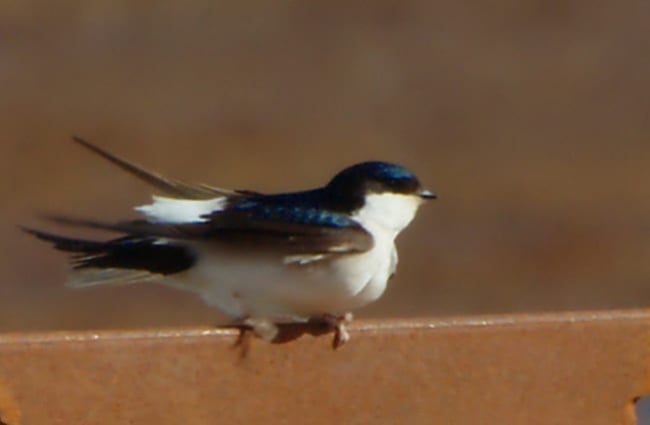
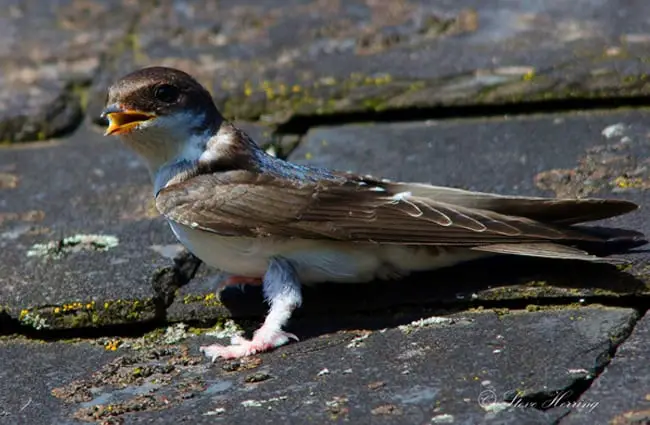
The House Martin, Delichon urbicum, is a member of the swallow family, easily distinguished by its dark blue upperparts, white rump, and a chestnut throat. Slightly smaller than its close relative the Barn Swallow, it measures roughly 12 to 13 centimeters in length with a wingspan of around 26 to 32 centimeters. This compact size, coupled with long, pointed wings, allows for exceptional maneuverability in flight. House Martins are widespread, breeding across Europe and Asia and migrating to Africa and Southern Asia for the winter.
Habitat and Distribution
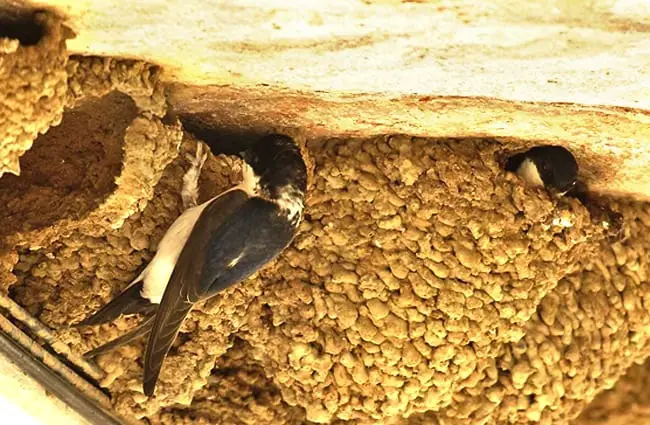
True to its name, the House Martin has a strong affinity for human settlements. Historically, they nested in caves and rock crevices, but over centuries they’ve adapted to utilizing buildings as nesting sites. They are commonly found nesting under eaves, bridges, and other sheltered structures. This adaptation allows them to thrive in close proximity to people. The species prefers open landscapes, often near water bodies, providing a plentiful supply of insects. Their breeding range extends across much of Europe and temperate parts of Asia. Migration patterns vary depending on the population’s location, but generally they winter in sub‑Saharan Africa and South Asia.
Diet and Foraging Behavior
House Martins are aerial insectivores, meaning they catch their prey on the wing. Their diet consists primarily of small flying insects such as aphids, flies, and mosquitoes. They are skilled fliers, capable of twisting and turning mid‑air to capture even the smallest prey. They often forage in flocks, taking advantage of concentrated insect swarms. This foraging behavior plays a vital role in controlling insect populations, benefiting agriculture and reducing the nuisance of biting insects. Their foraging altitude can vary, but they typically hunt relatively low to the ground.
Life Cycle and Reproduction
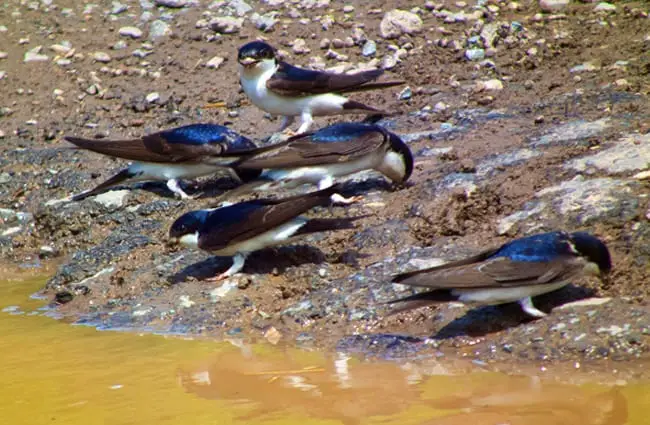
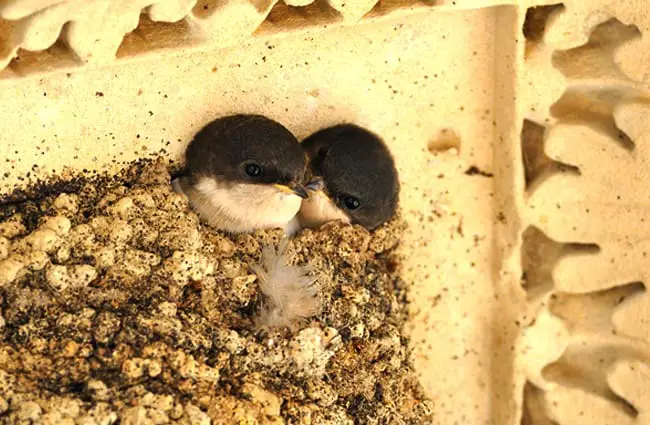
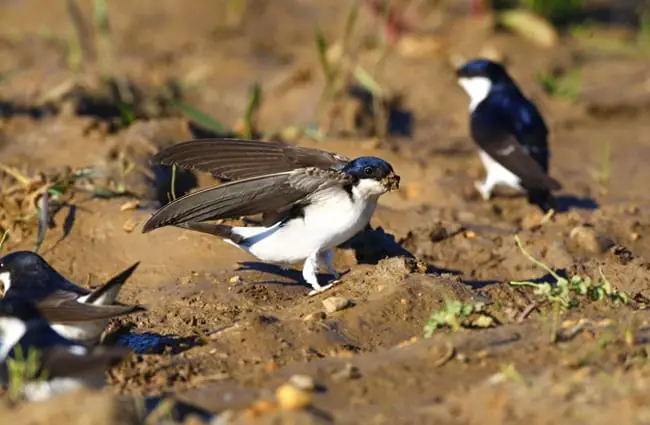
House Martins are monogamous birds, often pairing for life. Breeding season typically begins in late spring or early summer, coinciding with the peak abundance of insects. The pair works together to build a closed cup‑shaped nest constructed from mud pellets, reinforced with grass, straw, and saliva. The nest‑building process is a fascinating display of cooperative behavior.
Nesting and Raising Young
The female typically lays between three and six eggs, which are incubated for around 14 to 18 days. Both parents participate in incubation duties. Once hatched, the young are altricial, meaning they are born helpless and completely dependent on their parents. The parents diligently feed their chicks regurgitated insects, providing them with the nourishment they need to grow rapidly. Fledging, the moment the chicks leave the nest, occurs around 18 to 22 days after hatching. Even after fledging, the young birds continue to rely on their parents for a short period before becoming fully independent.
Evolutionary History and Genetics
The evolutionary history of the House Martin is intertwined with its adaptation to human presence. While its ancestors likely nested in natural cavities, the species gradually shifted its nesting habits as human settlements expanded. This adaptation demonstrates remarkable behavioral plasticity and co‑evolution. Genetic studies reveal distinct populations across its range, with varying levels of genetic diversity. These studies help researchers understand the species’ population structure and evolutionary potential.
Ecological Role and Interactions
House Martins play an important role in their ecosystems. As insectivores, they help regulate insect populations, benefiting agriculture and reducing the spread of diseases. They also serve as prey for birds of prey such as falcons and hawks. Their nests provide shelter for other small birds and insects. Competition for nesting sites can occur with other species, such as Barn Swallows and House Sparrows. However, these interactions are typically minimal.
House Martins and Humans
Historically, their nesting habits were often welcomed because they were seen as beneficial pest controllers. However, in recent times, some of their nests have been viewed as a nuisance, leading to removal or destruction. Conservation efforts are vital to protect the species in regions where its populations are declining.
Conservation Status and Threats
House Martin populations have declined significantly in many parts of Europe over the past few decades. Several factors contribute to this decline, including habitat loss, pesticide use, climate change, and a shortage of mud for nest building due to increased urbanization and changes in agricultural practices. Conservation efforts focus on protecting nesting sites, promoting sustainable agriculture, and mitigating the impacts of climate change. Providing artificial nesting structures can also help boost populations in areas where natural nesting sites are limited.
Observing House Martins in the Wild
If you’re lucky enough to encounter House Martins in the wild, observe them from a distance to avoid disturbing them. Look for their distinctive nests under eaves, bridges, and other sheltered structures. Listen for their characteristic chattering calls. Be mindful of their nesting sites and avoid any activities that could damage them. Reporting sightings to local bird monitoring organizations can help contribute to conservation efforts.
Caring for House Martins in Captivity
Caring for House Martins in captivity requires specialized knowledge and facilities. They need a large aviary with plenty of space for flight. The aviary should be equipped with nesting structures such as ledges or platforms made of natural materials. Their diet should consist of live insects such as mealworms, crickets, and flies. Providing a source of clean water is essential. It is important to avoid overcrowding and ensure that the birds have access to a variety of enrichment activities to stimulate their natural behaviors. Captive breeding programs can play a vital role in conserving the species.
Fascinating Facts
- House Martins can travel thousands of miles during their annual migrations.
- They are incredibly agile fliers, capable of catching insects on the wing with remarkable precision.
- Their nests are constructed from hundreds of mud pellets, each carefully collected and applied.
- They often return to the same nesting site year after year.
- House Martins are highly social birds, often nesting in colonies.
The House Martin, a tiny ambassador of the summer months, is a testament to the beauty and resilience of the natural world. By understanding its biology, behavior, and conservation needs, we can help ensure that this charming bird continues to grace our skies for generations to come.
![Closeup of a beautiful Red Angus cowPhoto by: U.S. Department of Agriculture [pubic domain]https://creativecommons.org/licenses/by/2.0/](https://animals.net/wp-content/uploads/2020/03/Red-Angus-4-238x178.jpg "Red Angus")
![Closeup of a beautiful Red Angus cowPhoto by: U.S. Department of Agriculture [pubic domain]https://creativecommons.org/licenses/by/2.0/](https://animals.net/wp-content/uploads/2020/03/Red-Angus-4-100x75.jpg "Red Angus")