Introducing the Kea: New Zealand’s Clever Alpine Parrot
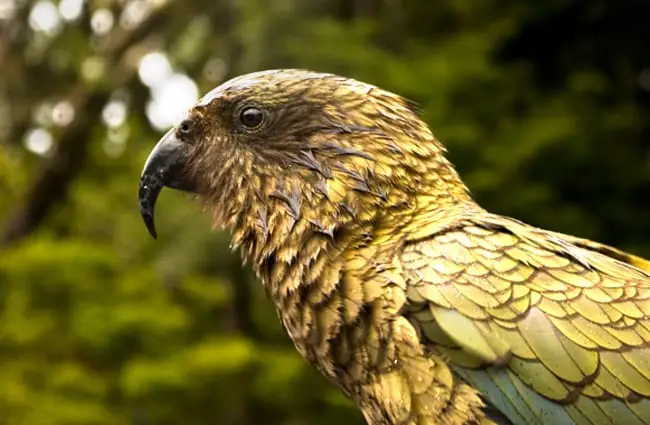
The kea (Nestor notabilis) is a large parrot native to the forested and alpine regions of New Zealand’s South Island. Often described as the “clown of the mountains,” this highly intelligent and inquisitive bird is renowned for its playful, mischievous, and often destructive behavior. More than just a pretty face, the kea plays a significant role in its ecosystem and has a complex history intertwined with both the environment and human interaction.
Habitat and Distribution
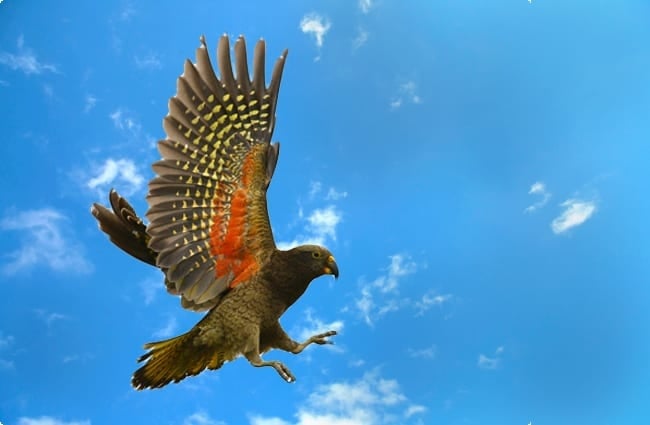
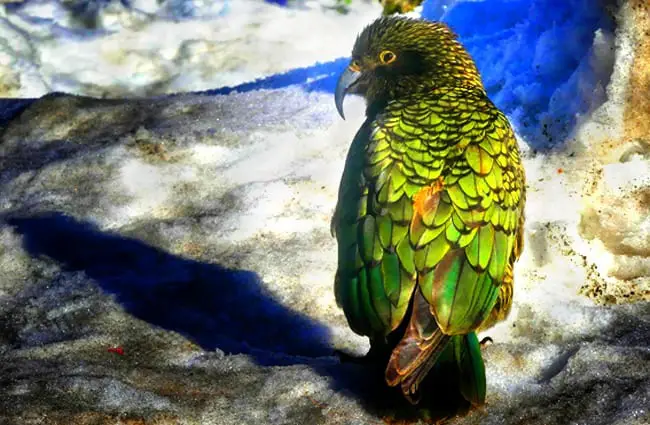
The kea is found primarily in New Zealand’s South Island. They inhabit mountainous regions, especially beech forests, subalpine shrublands, and grasslands at elevations between about 1,200 m and 3,000 m. They rarely occur near sea level. Their altitudinal range is thus limited to the alpine zone, rather than spanning the entire range of elevations. The current estimated population is between 4,000 and 6,000 individuals, although numbers can fluctuate with food availability and breeding success. They are most commonly observed in areas such as Arthur’s Pass, Fiordland, and Mount Cook National Parks.
Evolutionary History
The kea belongs to the parrot family Psittacidae and is one of two surviving species in the genus Nestor, the other being the kaka. These parrots are thought to have diverged from a common ancestor around 60 million years ago, during the Paleocene epoch. New Zealand’s long isolation allowed this lineage to evolve unique characteristics. Fossil evidence suggests that kea once had a broader distribution across the North and South Islands, but the species adapted to an alpine lifestyle relatively recently, driven by the opportunities in a niche environment with fewer competitors.
Diet and Feeding Behavior
Unlike many parrots that primarily feed on seeds and fruits, kea are omnivorous and opportunistic. Their diet is incredibly diverse, including berries, fruits, roots, leaves, insects, carrion, and even the fat and gristle of sheep. This adaptability is key to their survival in the harsh alpine environment. They are famed for their “destructive testing” of human property, often dismantling cars, tents, and other equipment—not necessarily to eat it, but to investigate its components. This behavior is believed to be a form of intellectual stimulation and exploration.
Social Behavior and Communication
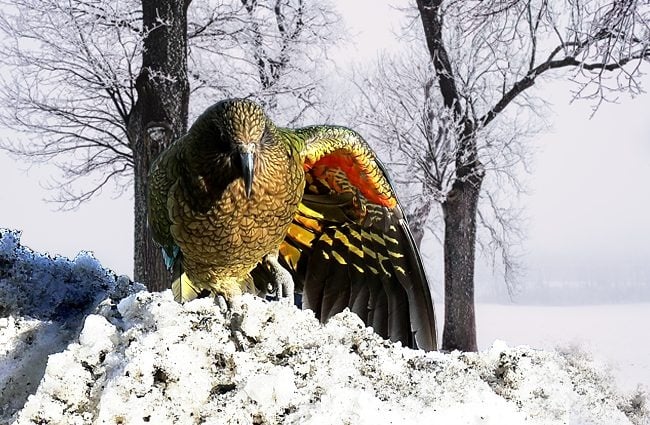
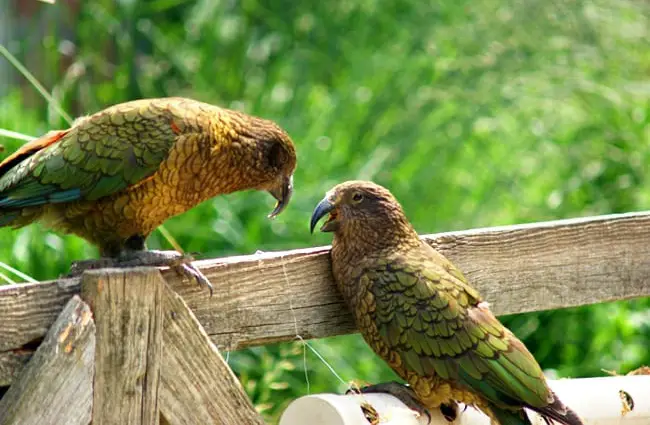
Kea are highly social birds, often found in flocks known as “bands” that can range from a few individuals to over a hundred. These bands exhibit complex social hierarchies and engage in playful interactions such as aerial chases and mock fights. Communication is achieved through a variety of vocalizations, including screeches, whistles, and clicks. They also use body language and facial expressions to convey meaning. Kea are renowned for their vocal mimicry, sometimes imitating the sounds of other birds, animals, or even human speech.
Mating and Reproduction
Kea are generally monogamous, forming long‑term pair bonds that can last for many years. Breeding season typically occurs from late winter to early summer (August to January). Nests are built in tree hollows, rock crevices, or burrows. The female lays between two and four eggs, which she incubates for about three to four weeks. Both parents participate in raising the chicks, providing food and protection. Young kea fledge after approximately 70 to 75 days, but they remain dependent on their parents for several months afterward.
Ecological Role and Interactions with Other Animals
Kea play an important role in their ecosystem as seed dispersers, pollinators, and scavengers. Their foraging activities help to maintain the health and diversity of plant communities. They also contribute to nutrient cycling by scavenging on carrion. Kea interact with a variety of other animals, including other bird species, lizards, and mammals. They sometimes compete with other birds for food and nesting sites and have been observed preying on small lizards and insects. Their scavenging behavior can benefit other scavengers, such as crows and ravens.
Kea and Humans: A Complex Relationship
Historically, kea were considered pests by farmers and pastoralists because they would sometimes attack sheep. This led to widespread persecution and bounty schemes. However, attitudes towards kea have changed in recent years as their intelligence and ecological importance have become more widely recognized. Today, kea are legally protected in New Zealand. Tourism also plays a role, with many visitors eager to observe these unique birds in their natural habitat. It is crucial to maintain a responsible approach to tourism to minimize disturbance to kea populations.
Encountering Kea in the Wild: What to Do
If you encounter kea while hiking or camping, remember that they are inquisitive and opportunistic. Do not feed them, as this can alter their natural foraging behavior and make them dependent on humans. Secure your belongings, particularly food and shiny objects, as kea are known to investigate and dismantle anything that catches their attention. Keep a safe distance and avoid direct eye contact. Appreciate them from afar and respect their wild nature. Report any unusual behavior or injuries to the Department of Conservation.
Kea in Captivity: Care and Management
Caring for kea in captivity requires a specialized approach to meet their complex behavioral and nutritional needs. Large aviaries with plenty of space for flight and exploration are essential. Providing a variety of enrichment items, such as puzzle feeders, climbing structures, and destructible toys, is crucial to stimulate their intelligence and prevent boredom. A varied diet consisting of fruits, vegetables, seeds, nuts, insects, and meat should be provided. Regular veterinary care and monitoring of their physical and mental health are also important. Avoid providing items that could be easily swallowed or pose a safety hazard. Encourage natural foraging behaviors by hiding food items around the aviary.
Interesting Facts about Kea
- Kea have a unique hyoid bone structure that allows them to produce a wide range of vocalizations.
- They are one of the few parrot species that are known to hunt other animals.
- Kea have a high brain‑to‑body mass ratio, indicating a high level of intelligence.
- They are capable of problem‑solving and tool use.
- Kea can live up to 20 years in captivity, but in the wild they typically live around 10 years.
The Future of the Kea
While kea are currently protected, they still face a number of threats, including habitat loss, predation by introduced mammals, and climate change. Ongoing conservation efforts—such as predator control, habitat restoration, and public awareness campaigns—are essential to ensure the long‑term survival of this remarkable species. Further research into their behavior, ecology, and genetics will also play a crucial role in informing effective conservation strategies. The kea’s future depends on a continued commitment to understanding and protecting this unique and intelligent parrot.
![Closeup of a beautiful Red Angus cowPhoto by: U.S. Department of Agriculture [pubic domain]https://creativecommons.org/licenses/by/2.0/](https://animals.net/wp-content/uploads/2020/03/Red-Angus-4-238x178.jpg "Red Angus")
![Closeup of a beautiful Red Angus cowPhoto by: U.S. Department of Agriculture [pubic domain]https://creativecommons.org/licenses/by/2.0/](https://animals.net/wp-content/uploads/2020/03/Red-Angus-4-100x75.jpg "Red Angus")