
The ocean depths hold countless marvels, and among the most striking is the barracuda. Often misunderstood and sometimes feared, this sleek, torpedo-shaped predator is a true marvel of marine engineering. From its formidable appearance to its crucial role in the marine ecosystem, the barracuda captivates scientists and enthusiasts alike. Let us dive into the world of this fascinating fish, exploring its life, habits, and its place in the grand tapestry of ocean life.
Meet the Barracuda: A Glimpse into its World
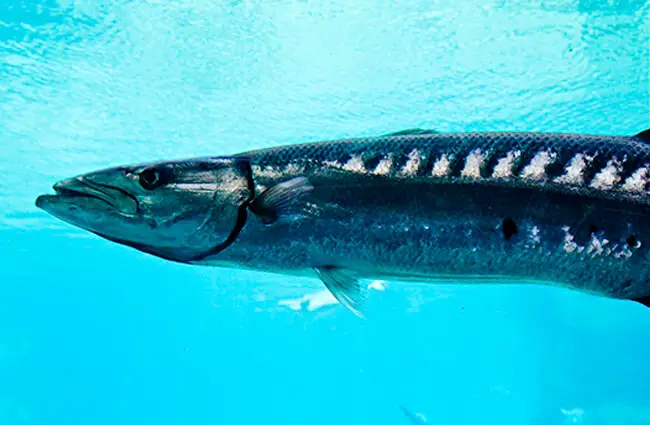
Barracudas belong to the family Sphyraenidae, a group of ray-finned fish renowned for their elongated bodies and fearsome jaws. These powerful marine predators are instantly recognizable by their distinctive silver scales, often adorned with dark markings, and their prominent, pointed heads. They are built for speed and precision, perfectly adapted to their role as apex hunters in various marine environments.
Where Barracudas Call Home: Habitat and Distribution
Barracudas are widespread inhabitants of tropical and subtropical oceans around the globe. Their preferred habitats include coastal waters, coral reefs, seagrass beds, and open ocean environments. They are often found lurking near structures such as shipwrecks, jetties, and reef edges, using these as ambush points to surprise unsuspecting prey. While some species prefer deeper waters, many barracudas are commonly observed in relatively shallow areas, making them accessible to divers and snorkelers.
The Barracuda’s Menu: Diet and Hunting Strategies
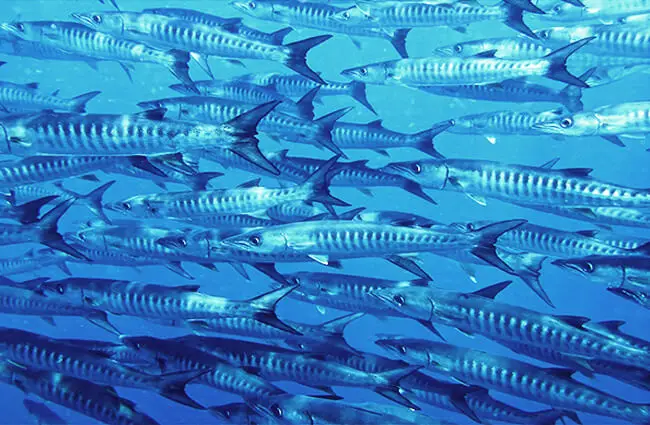
As formidable carnivores, barracudas primarily feed on a variety of fish. Their diet includes smaller reef fish, anchovies, mullets, grunts, and even cephalopods like squid. They are opportunistic predators, often employing a “sit and wait” ambush strategy, remaining motionless before launching a lightning-fast strike. Their incredible speed, combined with their powerful jaws and razor-sharp teeth, makes them highly efficient hunters. Some species, particularly younger barracudas, may hunt in schools, herding prey before attacking.
Interaction with Humans: Understanding the Barracuda
Despite their intimidating appearance, barracudas are generally not aggressive towards humans. Most encounters are benign, with the fish showing curiosity rather than hostility. However, incidents, though rare, can occur. These often involve mistaken identity, where a barracuda might confuse shiny objects, jewelry, or even a swimmer’s hand with a struggling fish, especially in murky water. It is always wise to avoid wearing reflective items when swimming or diving in barracuda habitats and to refrain from provoking or feeding these wild animals.
Diving Deeper: Anatomy, Behavior, and Life Cycle
To truly appreciate the barracuda, one must examine its intricate biology and fascinating behaviors.
Physical Characteristics and Adaptations
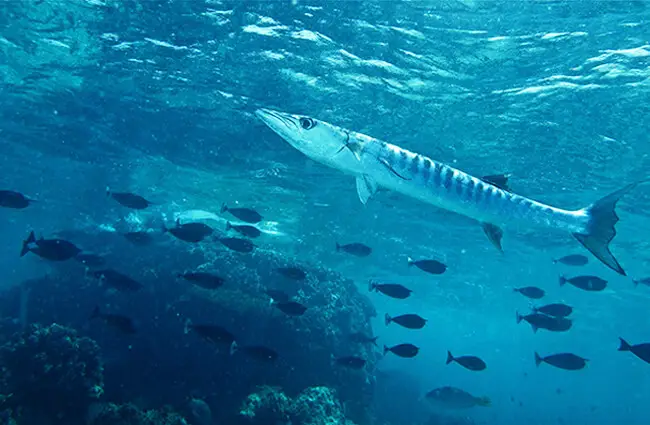
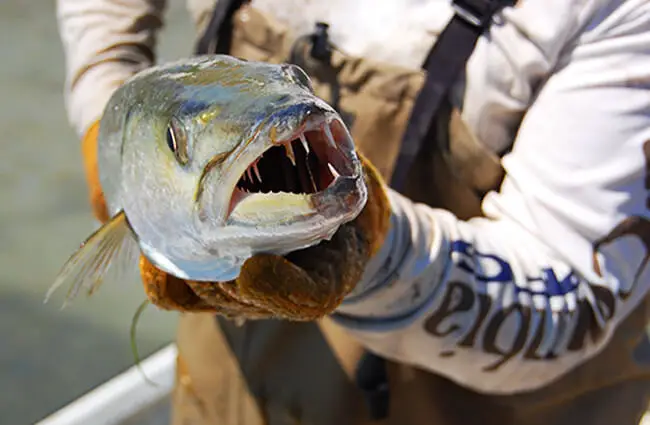
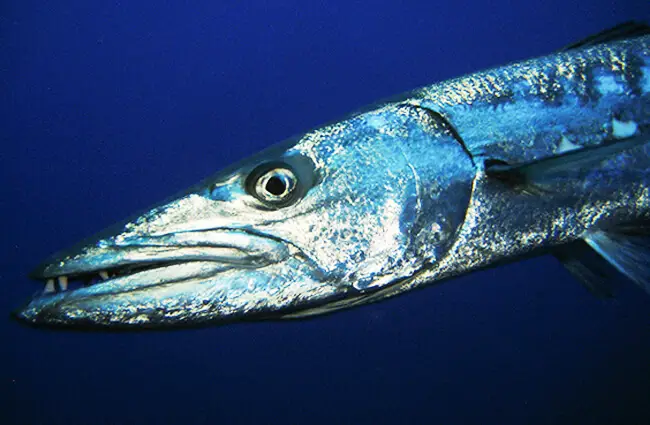
The barracuda’s body is a testament to natural selection, honed for speed and predation. Its elongated, fusiform (spindle-shaped) body is perfectly hydrodynamic, allowing it to cut through water with minimal resistance. The two dorsal fins are widely separated, with the first typically having five strong spines and the second having one spine and nine soft rays. The caudal fin (tail fin) is deeply forked, providing powerful propulsion. Perhaps the most striking feature is its mouth, armed with two rows of sharp, fang-like teeth. The outer row consists of small, cutting teeth, while the inner row features larger, dagger-like teeth used to impale and hold prey. These teeth are constantly replaced throughout the barracuda’s life.
Behavior and Social Structure
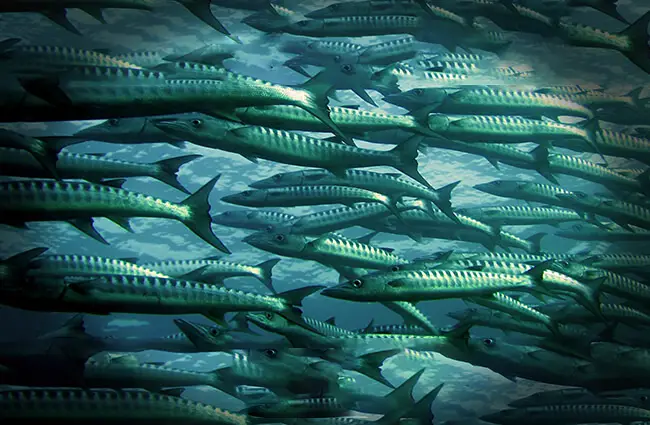
While often portrayed as solitary hunters, barracudas exhibit a range of social behaviors depending on their species and age. Younger barracudas frequently form large schools, offering safety in numbers and enhancing hunting efficiency. As they mature, many species, particularly the Great Barracuda (Sphyraena barracuda), become more solitary, patrolling their territories alone. Their hunting technique is a marvel of efficiency: they can accelerate from a standstill to incredible speeds in mere seconds, ambushing prey with a sudden burst of energy. Their keen eyesight and lateral line system, which detects vibrations in the water, further aid in locating prey, even in low light conditions.
Reproduction and Life Cycle
The reproductive process of barracudas typically involves external fertilization. Spawning usually occurs in open water, often near reefs or seagrass beds. Females release thousands of tiny eggs into the water column, which are then fertilized by the male’s sperm. The eggs are pelagic, meaning they float freely in the ocean currents, developing into larvae. These larvae are planktonic, drifting with the currents and feeding on microscopic organisms. As they grow, they develop into juvenile barracudas, seeking shelter in seagrass beds or mangrove estuaries, which provide protection from larger predators and abundant food sources. They mature relatively quickly, reaching reproductive age within a few years, and can live for over a decade in the wild.
Evolutionary History
The barracuda lineage stretches back millions of years, with fossil records indicating their presence in ancient oceans. Early barracuda forms shared many characteristics with their modern descendants, including their elongated bodies and predatory dentition. Their evolutionary success can be attributed to their highly efficient body plan and hunting strategies, which have remained largely unchanged over geological timescales. They represent a prime example of convergent evolution, where distinct lineages develop similar adaptations to fill similar ecological niches, showcasing the power of natural selection in shaping life forms.
Ecosystem Contribution and Interactions with Other Animals
Barracudas play a vital role in maintaining the health and balance of marine ecosystems. As apex predators, they help regulate populations of smaller fish, preventing overgrazing of coral reefs and seagrass beds. By preying on weaker or slower individuals, they contribute to the overall health and genetic fitness of prey populations. They are also part of the food chain themselves, with larger marine predators such as sharks and dolphins occasionally preying on barracudas, especially younger or injured individuals. Their presence is an indicator of a healthy and thriving marine environment.
Barracudas in Human Culture and Captivity
Beyond their ecological significance, barracudas have also carved a niche in human culture and present unique challenges in captive environments.
Cultural Significance and Human Interaction
In many coastal cultures, the barracuda is a symbol of power, speed, and sometimes danger. It features in local folklore, fishing tales, and even culinary traditions. As a popular game fish, it attracts anglers worldwide, contributing to local economies. However, it is important to note that larger barracudas can accumulate ciguatera toxin from their diet, making their consumption risky in certain regions. This highlights the complex relationship between humans and these powerful marine creatures, balancing admiration with caution.
Caring for Barracudas in Captivity
Keeping barracudas in aquariums is a challenging endeavor, typically reserved for large public aquariums due to their size, predatory nature, and specific environmental needs. Zookeepers caring for barracudas must adhere to stringent protocols:
- Tank Size: Barracudas require immense tank space to accommodate their active swimming habits and potential growth. A large, elongated tank mimicking their natural open water environment is crucial.
- Water Quality: Pristine water conditions are paramount. This involves rigorous filtration, regular water testing, and maintaining stable temperature, salinity, and pH levels consistent with their natural tropical marine habitat.
- Diet: A varied diet of high-quality, whole fish (e.g., mackerel, squid, silversides) is essential. Care must be taken to ensure the food is free of parasites and toxins. Feeding techniques should mimic natural hunting behaviors where possible, and keepers must be cautious of the barracuda’s powerful bite.
- Enrichment: While barracudas are primarily predatory, providing environmental enrichment such as varied rock formations or currents can stimulate natural behaviors.
- Compatibility: Barracudas are highly predatory and generally cannot be housed with smaller fish. Tank mates must be carefully selected to be large enough to avoid predation and robust enough to withstand the barracuda’s presence.
- Health Monitoring: Regular observation for signs of stress, injury, or disease is critical. Due to their speed and power, handling barracudas for medical examination requires specialized techniques and equipment to ensure the safety of both the animal and the staff.
Fascinating Facts About Barracudas
Here are some intriguing tidbits about these ocean speedsters:
- Barracudas can reach speeds of up to 25 miles per hour (40 kilometers per hour) in short bursts.
- The Great Barracuda is the largest species, capable of growing over 6 feet (1.8 meters) in length and weighing more than 100 pounds (45 kilograms).
- Their eyes are adapted for excellent vision, particularly in low light, aiding their crepuscular (dawn and dusk) hunting forays.
- Some barracuda species exhibit countershading, with a dark back and a light belly, providing camouflage from both above and below.
- They are known for their “flash” hunting technique, where they rapidly change direction and speed to disorient prey.
- Barracudas have a remarkable ability to regenerate lost or broken teeth, ensuring their predatory tools are always sharp.
- Despite their fearsome reputation, many barracuda species are quite shy and will avoid human interaction.
Conclusion: Appreciating the Ocean’s Silver Streak
The barracuda, with its formidable jaws and sleek physique, is far more than just a feared predator. It is a finely tuned marvel of evolution, a critical component of marine ecosystems, and a creature that inspires both awe and respect. Understanding its biology, behavior, and ecological role allows us to appreciate the intricate balance of ocean life and reinforces the importance of conserving these magnificent silver streaks of the sea. Whether encountered in the wild, studied in an aquarium, or researched for a paper, the barracuda continues to offer endless insights into the wonders of our blue planet.
![Closeup of a beautiful Red Angus cowPhoto by: U.S. Department of Agriculture [pubic domain]https://creativecommons.org/licenses/by/2.0/](https://animals.net/wp-content/uploads/2020/03/Red-Angus-4-238x178.jpg "Red Angus")

![Closeup of a beautiful Red Angus cowPhoto by: U.S. Department of Agriculture [pubic domain]https://creativecommons.org/licenses/by/2.0/](https://animals.net/wp-content/uploads/2020/03/Red-Angus-4-100x75.jpg "Red Angus")