Unveiling the Ocean’s Radiant Hunter: The Magnificent Sun Star
Deep beneath the waves, where sunlight struggles to penetrate, lies a creature of surprising beauty and formidable predatory skill: the Sun Star. Far from being a mere decorative inhabitant of the seabed, these multi-armed marvels are vital components of their marine ecosystems, showcasing an ancient lineage and a fascinating array of adaptations. Often mistaken for their more common five-armed relatives, Sun Stars stand out with their numerous arms and vibrant hues, truly living up to their celestial name.
What is a Sun Star? A Glimpse into its Unique Anatomy
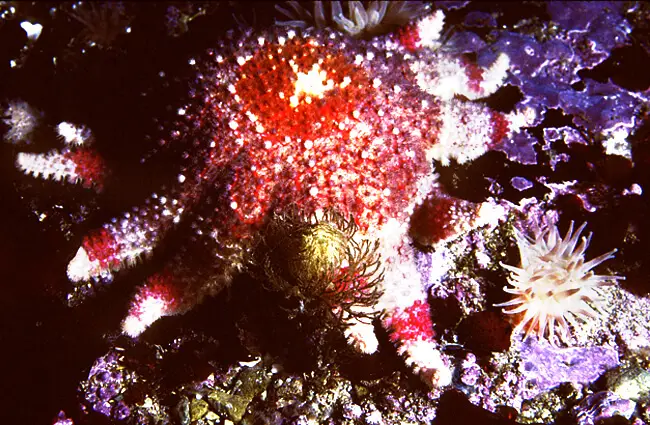
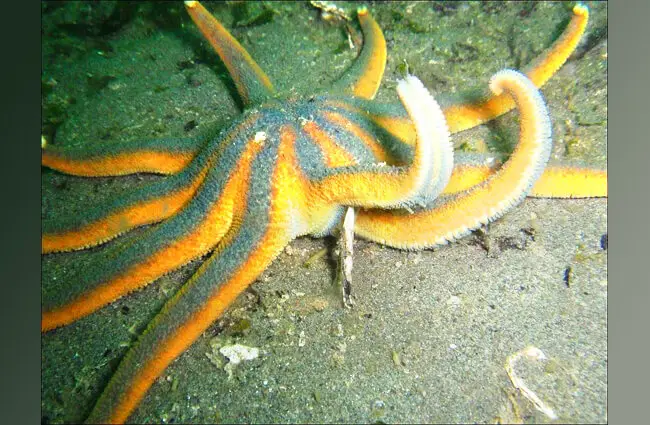
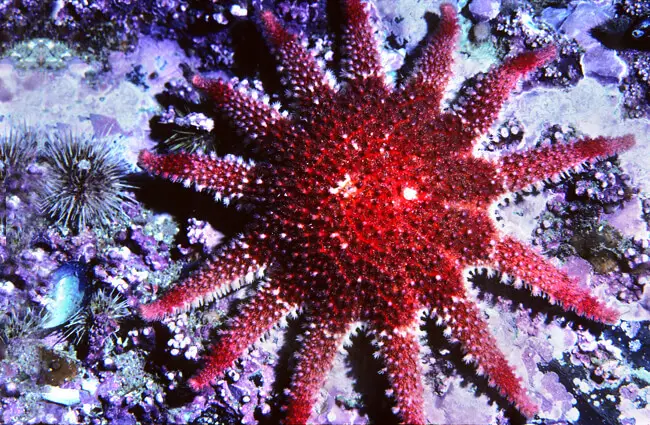
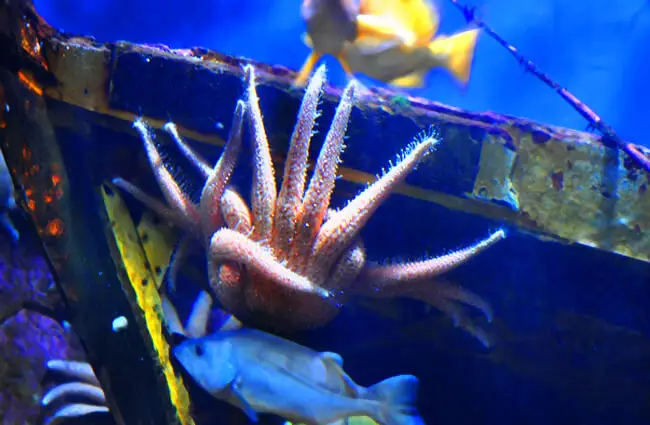
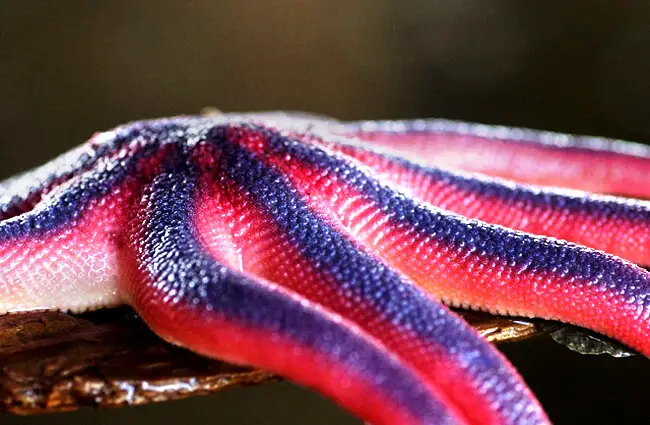
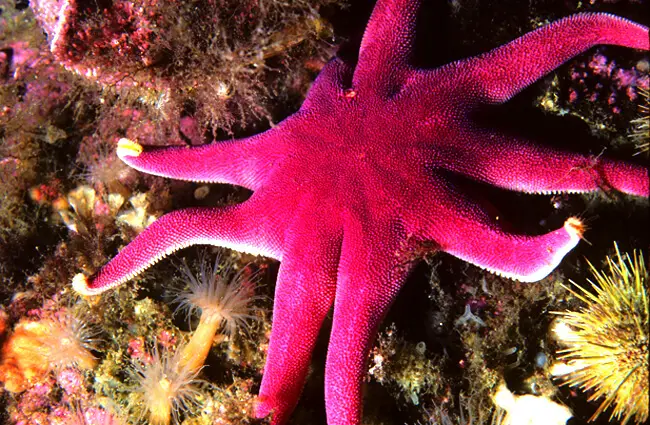
Sun Stars are a captivating group of sea stars belonging to the class Asteroidea, part of the phylum Echinodermata, which also includes sea urchins and sea cucumbers. What immediately distinguishes a Sun Star from many other sea stars is its impressive number of arms, typically ranging from 8 to 15 or even more, radiating from a central disc. These arms are often covered in spines or tubercles, giving them a textured, sometimes spiky appearance. Their coloration is remarkably diverse, spanning brilliant oranges, reds, purples, and yellows, often with intricate patterns or banding that make them truly eye-catching. Sizes can vary significantly between species, with some growing to an impressive diameter of over 50 centimeters, making them one of the larger inhabitants of their cold water habitats.
Where Do Sun Stars Live? Exploring Their Aquatic Homes
The Sun Star is primarily an inhabitant of the colder, temperate waters of the Northern Hemisphere. Their distribution spans across the North Atlantic and North Pacific Oceans, making them a common sight for divers and researchers in regions like the coasts of North America, Europe, and Asia. These resilient creatures thrive in a variety of marine environments:
- Habitat: Sun Stars prefer cold, oxygen-rich waters. They are commonly found in the sublittoral zone, which is the area below the low tide mark, extending down to considerable depths.
- Depth: While some species can be observed in shallow intertidal zones during extreme low tides, many Sun Stars prefer deeper waters, ranging from a few meters to several hundred meters below the surface.
- Substrate: Their preferred seafloor types are diverse, including rocky bottoms, gravel beds, and even sandy or muddy substrates where they can find ample prey. They are often associated with kelp forests and other dense algal growths, which provide both shelter and hunting grounds.
A Hunter’s Feast: The Sun Star’s Diet and Predatory Prowess
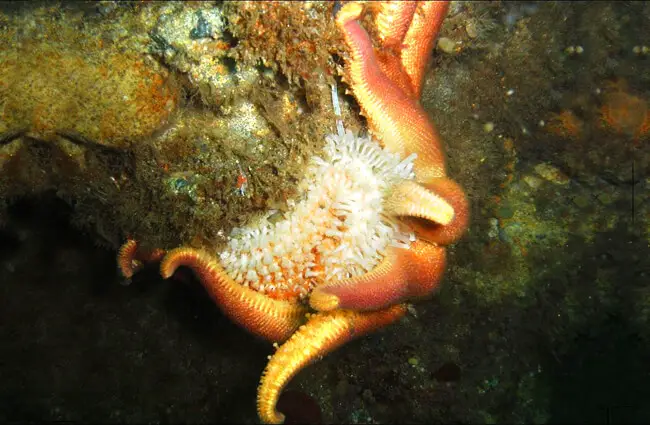
Sun Stars are not passive grazers; they are active and formidable predators within their ecosystems. Their diet primarily consists of other invertebrates, making them important regulators of benthic communities. They are particularly known for their appetite for other sea stars, including species like the Common Sea Star (*Asterias rubens*), which they can overpower despite their prey’s defensive capabilities. Beyond other echinoderms, their menu often includes:
- Mollusks such as clams, mussels, and snails.
- Crustaceans like crabs and barnacles.
- Sea cucumbers.
- Even small fish or carrion when available.
Their feeding strategy is truly remarkable. Like other sea stars, Sun Stars possess the ability to evert their stomach. When they encounter prey, they can extend their stomach out of their mouth, enveloping the prey item externally, and then digest it before retracting the stomach back into their body. This allows them to consume prey much larger than their mouth opening, a testament to their evolutionary success as predators.
Life Beneath the Waves: Reproduction and Life Cycle
The reproduction of Sun Stars follows a common pattern among many marine invertebrates, involving both sexual reproduction and a fascinating larval stage. Most Sun Star species are dioecious, meaning individuals are either male or female, though distinguishing them externally is often impossible. Reproduction typically involves broadcast spawning:
- Sexual Reproduction: During specific breeding seasons, often triggered by environmental cues like water temperature or lunar cycles, male and female Sun Stars release their gametes (sperm and eggs) directly into the water column. Fertilization occurs externally.
- Larval Stage: The fertilized eggs develop into free-swimming, planktonic larvae. These larvae are bilaterally symmetrical, a stark contrast to the radial symmetry of the adult. They drift with ocean currents, feeding on microscopic organisms and dispersing to new areas.
- Metamorphosis: After a period of development, the larvae undergo a dramatic metamorphosis, settling onto the seabed and transforming into a miniature, radially symmetrical juvenile Sun Star. This process involves significant reorganization of their body plan, marking their transition from a pelagic (open water) to a benthic (bottom-dwelling) lifestyle.
The Sun Star’s Role in the Marine Ecosystem
Sun Stars are not just beautiful creatures; they are crucial players in the delicate balance of their marine ecosystems. Their predatory habits have significant ecological implications:
- Predator: As voracious predators, Sun Stars help control the populations of various benthic invertebrates, including other sea stars, mollusks, and crustaceans. This regulation can prevent any single prey species from dominating an area, thereby promoting biodiversity. In some cases, they can be considered a keystone species, meaning their presence or absence has a disproportionately large effect on their ecosystem.
- Food Source: While formidable, Sun Stars are not entirely without predators. Larger fish, some crabs, and even other, larger sea stars might prey on juvenile or smaller adult Sun Stars. However, their spiny exterior and often unpalatable taste make them less desirable prey for many animals.
- Ecosystem Balance: By consuming other sea stars, Sun Stars can indirectly protect kelp forests and other algal beds from herbivorous sea stars that might otherwise overgraze them. Their role in maintaining the health and structure of cold-water communities is undeniable.
Evolutionary Journey: Tracing the Sun Star’s Ancient Lineage
The evolutionary history of Sun Stars is deeply intertwined with that of all echinoderms, a phylum with a fossil record stretching back over 500 million years to the Cambrian period. Early echinoderms were diverse, but the fundamental body plan of radial symmetry, a unique water vascular system, and a calcareous endoskeleton emerged early on. Sea stars, including the ancestors of modern Sun Stars, diversified significantly during the Paleozoic and Mesozoic eras. The multi-armed characteristic seen in Sun Stars is an ancient trait, with some early sea star fossils also exhibiting more than five arms. This suggests that the evolutionary path leading to the Sun Star’s distinctive morphology was established long ago, allowing them to adapt and thrive in various marine environments. Their specialized predatory adaptations, such as the eversible stomach, are further refinements that have allowed them to persist and flourish through geological time, making them living relics of ancient marine life.
![This orange Sun Star attacking a Spiny Red Sea Star Photo by: Ed Bowlby, NOAA [Public domain]](https://animals.net/wp-content/uploads/2020/01/Sun-Star-1-650x425.jpg)
Encountering Sun Stars: A Guide for Enthusiasts and Explorers
For the animal lover or aspiring zoologist hoping to observe a Sun Star in its natural habitat, careful planning and respect for the marine environment are key. These creatures are a true spectacle, but require a thoughtful approach:
- Where to Find:
- Tide Pools: During exceptionally low tides, especially in rocky intertidal zones of the North Atlantic and Pacific, smaller Sun Stars might be found in deeper pools.
- Diving and Snorkeling: The best way to observe larger specimens is through scuba diving or snorkeling in temperate coastal waters with rocky or gravelly bottoms, particularly around kelp forests or submerged structures.
- Geographic Hotspots: Look for them along the coasts of British Columbia, Alaska, the Pacific Northwest of the USA, and the North Atlantic coasts of Europe and North America.
- How to Find One: Look for their distinctive multi-armed shape and often vibrant colors against the seabed. They move slowly using their tube feet, so patience is essential. They might be partially hidden among rocks or algae.
- What to Do if Encountered:
- Observe from a Distance: Maintain a respectful distance. Sun Stars are not dangerous to humans, but disturbing them can cause stress or damage.
- Do Not Touch or Remove: Handling sea stars can damage their delicate tube feet and outer skin, potentially leading to infection or injury. Their spines, while not venomous, can be sharp.
- Leave No Trace: If you are in a tide pool, be mindful of your footing and avoid overturning rocks or disturbing the habitat.
Sun Stars and Humanity: From Culture to Conservation
Unlike some charismatic megafauna, Sun Stars have not historically played a prominent role in human culture or folklore. Their deep-water habitats and often cryptic nature mean they are less frequently encountered by the general public. However, their striking appearance makes them popular subjects for underwater photography and marine documentaries, contributing to a broader appreciation of marine biodiversity. From a human interaction perspective, the primary impact is often negative:
- Human Interaction:
- Pollution: Marine pollution, including plastics and chemical runoff, can degrade their habitats and directly harm Sun Stars.
- Climate Change: Ocean warming and acidification pose long-term threats to all marine life, including echinoderms, by affecting their physiology, food sources, and larval development.
- Habitat Destruction: Activities like bottom trawling and coastal development can destroy the rocky and gravelly substrates that Sun Stars rely on for shelter and hunting.
- Conservation Status: While many Sun Star species are not currently listed as endangered, some, like the Sunflower Sea Star (*Pycnopodia helianthoides*, often colloquially called a Sun Star due to its many arms), have faced severe population declines due to diseases such as Sea Star Wasting Syndrome. Monitoring these populations and understanding the threats they face is crucial for their continued survival and the health of their ecosystems.
Caring for Sun Stars in Captivity: A Zookeeper’s Handbook
Caring for Sun Stars in a captive environment, such as a public aquarium, requires specialized knowledge and meticulous attention to detail. These animals are sensitive to environmental changes and have specific needs:
- Habitat Requirements:
- Tank Size: Sun Stars require very large aquariums to accommodate their size and provide ample space for movement and hunting. Species-specific requirements are paramount.
- Water Parameters: Maintaining stable, cold water temperatures (typically below 15°C or 59°F), appropriate salinity, high oxygenation, and low nitrate levels is critical. Robust chilling systems are often necessary.
- Substrate: The tank should mimic their natural environment with a mix of rocky outcrops, gravel, and perhaps some sand, providing hiding spots and surfaces for their tube feet.
- Filtration: A powerful and efficient filtration system is essential to maintain pristine water quality, as Sun Stars are sensitive to pollutants.
- Diet: In captivity, Sun Stars must be provided with a diet of live or freshly killed invertebrates that mirror their natural prey. This includes various mollusks (clams, mussels), small crustaceans, and sometimes other sea stars, depending on the species. Feeding should be targeted to ensure each individual receives adequate nutrition.
- Avoid:
- Rapid Changes: Sudden fluctuations in water temperature, salinity, or pH can be highly detrimental.
- Overfeeding or Underfeeding: Both can lead to health issues. A balanced diet is key.
- Incompatible Tank Mates: Housing Sun Stars with their natural prey species or other sensitive invertebrates is not advisable.
- Handling: Direct handling with bare hands should be avoided. The oils and bacteria from human skin can be harmful, and their tube feet are easily damaged. If movement is necessary, use appropriate tools and techniques to support their entire body.
- Tasks:
- Water Quality Monitoring: Daily checks of temperature, salinity, pH, ammonia, nitrite, and nitrate levels.
- Observation: Regular observation for signs of stress, disease, or injury, such as lesions, loss of tube feet, or unusual behavior.
- Targeted Feeding: Ensuring each Sun Star receives its specific dietary needs, often by placing food directly near them.
- Tank Maintenance: Regular cleaning of the tank and equipment, performed carefully to minimize disturbance to the animals.
Fascinating Facts About Sun Stars
- Regeneration Masters: Like many sea stars, Sun Stars possess an incredible ability to regenerate lost or damaged arms, a vital survival mechanism against predators.
- Tube Feet Locomotion: They move across the seabed using thousands of tiny, suction-cup-tipped tube feet, part of their unique water vascular system, allowing for slow but powerful movement.
- Voracious Cannibals: Some Sun Star species are known to prey on other sea stars, including their own kind, showcasing their dominance in the food chain.
- Vibrant Camouflage: Their striking colors can serve as camouflage against similarly colored sponges or algae, or as a warning to potential predators.
- No Brain, Yet Complex: Despite lacking a centralized brain, Sun Stars possess a complex nervous system that allows them to coordinate their movements, detect prey, and respond to their environment.
- Ancient Lineage: Their evolutionary history stretches back hundreds of millions of years, making them ancient survivors of Earth’s oceans.
- Sensory Perception: While they do not have eyes in the conventional sense, many sea stars, including Sun Stars, have light-sensitive eyespots at the tip of each arm, allowing them to detect changes in light and shadow.
Conclusion: A Star in Our Oceans
The Sun Star, with its many arms and predatory prowess, is a true marvel of the marine world. From its ancient evolutionary roots to its vital role in maintaining ecosystem balance, this creature embodies the intricate beauty and resilience of life beneath the waves. Understanding and appreciating these magnificent echinoderms is not just an academic exercise; it is a call to action for conservation, ensuring that these radiant hunters continue to grace our oceans for generations to come. Whether you are a student, an aspiring zoologist, or simply an admirer of nature, the Sun Star offers endless opportunities for discovery and wonder.
![Closeup of a beautiful Red Angus cowPhoto by: U.S. Department of Agriculture [pubic domain]https://creativecommons.org/licenses/by/2.0/](https://animals.net/wp-content/uploads/2020/03/Red-Angus-4-100x75.jpg "Red Angus")