The Enigmatic Gray Fox: A Comprehensive Guide
The gray fox, Urocyon cinereoargenteus, is a captivating creature that is often overlooked despite its widespread presence across North America. This adaptable canid has a unique evolutionary history, complex behaviors, and plays a crucial role in its ecosystem. This guide delves into the world of the gray fox, exploring its biology, behavior, habitat, and interactions with the natural world and humankind.
Basic Biology and Identification
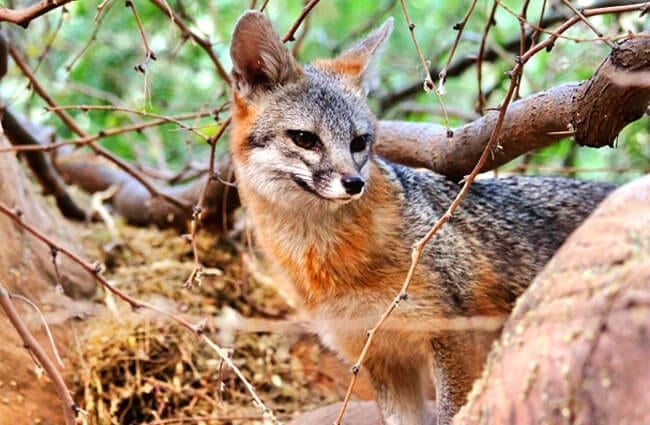
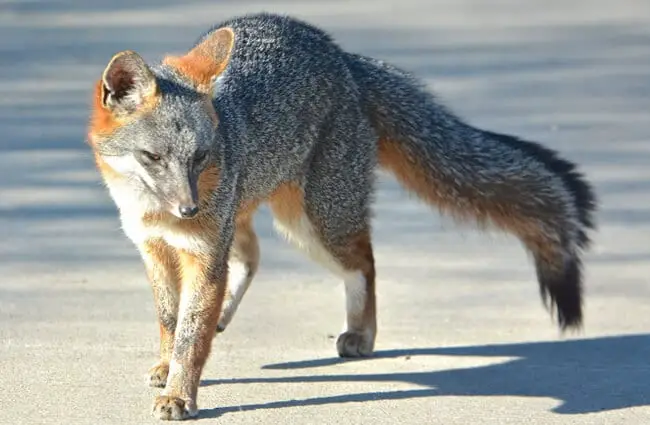
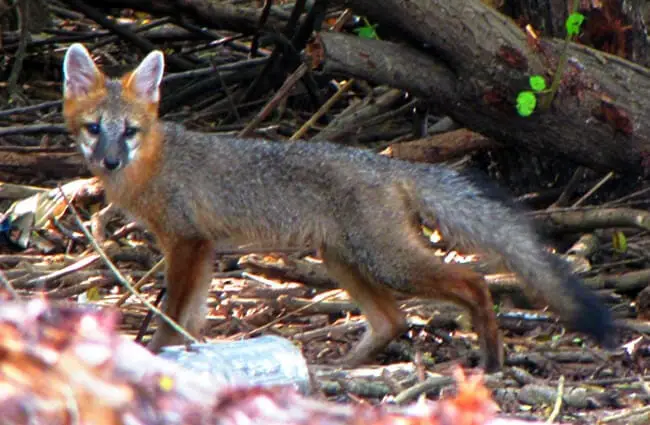
The gray fox is easily distinguished from other North American canids by its salt-and-pepper gray fur, reddish flanks, and a black stripe that runs along its back and down its tail. Unlike the red fox, whose coat is purely reddish, the gray fox’s coloration provides excellent camouflage in wooded areas. Adults typically weigh between 8 and 15 pounds and measure 32 to 45 inches in length, including the tail. A defining characteristic is its ability to climb trees – a skill uncommon among canids. Rough pads on the soles of its feet, combined with retractable claws, allow it to ascend trees with surprising agility.
Habitat and Distribution
Gray foxes exhibit a remarkable degree of habitat tolerance. They are found across a vast range, stretching from southern Canada through the United States and into northern Mexico. Their preferred habitat is a mix of woodlands, thickets, and brushy areas, providing ample cover for hunting and denning. However, they have also successfully adapted to suburban and even urban environments, demonstrating a surprising level of flexibility.
Historically, gray fox populations thrived in dense forests. Changes in land use and the proliferation of early successional habitats, such as abandoned farmland, have actually benefited them in many regions. They are less common in the Great Plains and the Rocky Mountains, where open terrain provides limited cover. They are notably absent from much of the Canadian Arctic.
Diet and Hunting Strategies
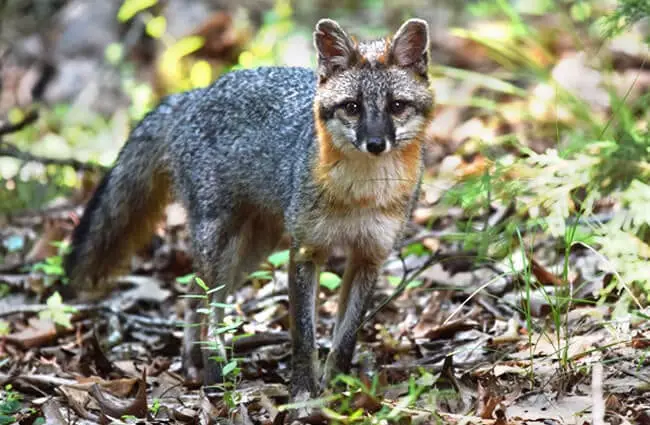
Gray foxes are opportunistic omnivores, meaning their diet is varied and depends on seasonal availability. Approximately two thirds of their diet consists of meat, including rabbits, rodents, birds, insects, and occasionally larger prey such as squirrels or opossums. The remaining portion consists of fruits, berries, and vegetation. They are known to consume a significant amount of persimmons and other fleshy fruits, particularly in the fall and winter.
Unlike many canids that rely on speed and endurance, gray foxes employ a more stealthy hunting style. They are adept at stalking prey and using their climbing ability to access food sources that are inaccessible to other predators. They are known to ambush prey from elevated positions, such as tree branches or rock outcrops. Their flexible paws allow them to dig for burrowing rodents or insects.
Reproduction and Life Cycle
Gray foxes typically breed in late winter or early spring. They are generally monogamous, forming pair bonds that may last for several years. After a gestation period of approximately 53 to 63 days, the female gives birth to a litter of three to six kits in a den. Dens are typically located in hollow logs, rock crevices, or abandoned burrows.
Kits are born blind and helpless, relying entirely on their mother for care. They begin to explore outside the den at around four to five weeks of age and are gradually introduced to solid food. By late summer or early fall, the kits are independent and disperse to establish their own territories. Gray foxes typically live for six to eight years in the wild, though some individuals may live longer.
Ecological Role and Interactions
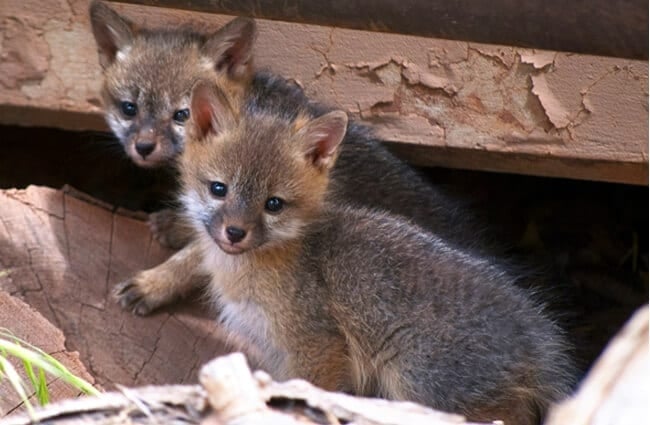
Gray foxes play a vital role in maintaining the health of their ecosystems. As predators, they help to regulate populations of rodents, rabbits, and other small mammals. They also contribute to seed dispersal by consuming fruits and berries. They often coexist with other predators, such as coyotes and bobcats, though competition for resources can occur. They are also preyed upon by larger predators, such as wolves and mountain lions, though this is less common.
Gray foxes engage in a variety of symbiotic relationships with other species. They often scavenge on carcasses left by larger predators, and they may share resources with other animals, such as deer and raccoons. They can also act as hosts for ticks, fleas, and other parasites, highlighting the complex web of interactions within their environment.
Evolutionary History
The gray fox is considered one of the earliest living canids. Fossil evidence suggests that it originated in North America during the Pliocene epoch, roughly four million years ago. It represents an early lineage within the canid family, retaining a primitive trait – the ability to climb trees – that is thought to have been inherited from its arboreal ancestors.
Unlike the red fox, which migrated to North America from Eurasia, the gray fox evolved entirely within the Americas. Its relatively primitive characteristics and limited genetic diversity suggest that it has experienced less selective pressure and genetic drift compared to other canid species.
Gray Foxes and Humans
Historically, gray foxes were hunted by Native Americans for their fur and meat. European settlers also hunted them for their pelts, though their fur is generally considered less valuable than that of the red fox. Today, gray foxes are still hunted and trapped in some areas, but their populations remain relatively stable. They are occasionally targeted by farmers and ranchers who perceive them as pests, particularly when they prey on poultry or livestock.
Gray foxes are increasingly adapting to human environments, and are commonly found in suburban and even urban areas. They may scavenge for food in garbage cans or pet food bowls, and they may den under decks or sheds. Encounters with humans are generally rare, and gray foxes are typically shy and elusive. However, it is important to avoid feeding them, as this can habituate them to human presence and lead to conflicts.
Encountering a Gray Fox in the Wild
If you encounter a gray fox in the wild, it is best to observe it from a distance. Avoid approaching or attempting to interact with the animal. If the fox appears sick or injured, contact a local wildlife rehabilitation center. Never feed a gray fox, as this can disrupt its natural foraging behavior and lead to dependence on humans. Keep pets on a leash and supervise them closely when outdoors, particularly in areas where gray foxes are known to frequent.
Gray Fox Care in Captivity
Caring for a gray fox in captivity requires specialized knowledge and resources. Enclosures should be spacious and provide a variety of enrichment features, such as climbing structures, digging areas, and hiding places. Diet should be balanced and consist of a mix of meat, fruits, and vegetables. Regular veterinary care is essential to monitor the animal’s health and prevent disease. Socialization with other gray foxes may be beneficial, but it is important to carefully introduce animals to avoid conflict. Zookeepers should be knowledgeable about the animal’s natural behaviors and provide opportunities for it to engage in those behaviors.
Fascinating Facts about Gray Foxes
- Gray foxes are the only canids known to routinely climb trees.
- Their diet can vary significantly depending on seasonal availability.
- They are more closely related to ancient canids than to modern foxes.
- They can live in a variety of habitats, from forests to suburban areas.
- Gray foxes are generally solitary animals, except during breeding season.
The gray fox is a remarkable creature that embodies resilience, adaptability, and the beauty of the natural world. By understanding its biology, behavior, and ecological role, we can appreciate its importance and contribute to its conservation for generations to come.
![Closeup of a beautiful Red Angus cowPhoto by: U.S. Department of Agriculture [pubic domain]https://creativecommons.org/licenses/by/2.0/](https://animals.net/wp-content/uploads/2020/03/Red-Angus-4-238x178.jpg "Red Angus")
![Closeup of a beautiful Red Angus cowPhoto by: U.S. Department of Agriculture [pubic domain]https://creativecommons.org/licenses/by/2.0/](https://animals.net/wp-content/uploads/2020/03/Red-Angus-4-100x75.jpg "Red Angus")