The Enchanting World of the Dumbo Octopus
The deep sea holds many secrets, and among the most charming is the Dumbo octopus. Named for its endearing resemblance to the Disney character, this gelatinous cephalopod captivates scientists and ocean enthusiasts alike. More than just a cute face, the Dumbo octopus represents a fascinating branch of evolution and plays a unique role in the deep sea ecosystem. This guide delves into the life of this remarkable creature, covering its habitat, behavior, reproduction, and ecological significance.
Habitat and Distribution
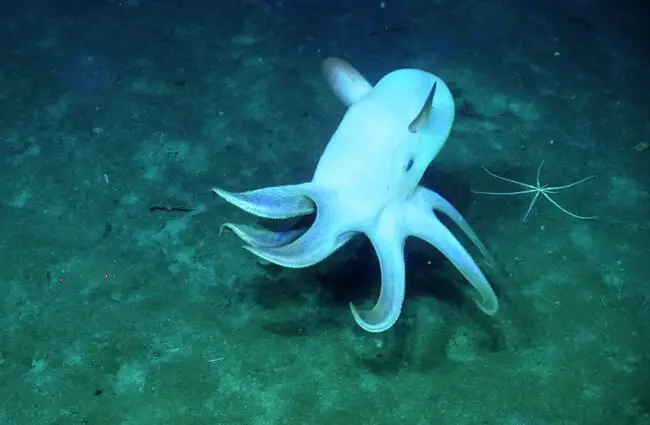
Dumbo octopuses (genus Grimpoteuthis) are deep sea dwellers, inhabiting the ocean depths from approximately 1,000 to 3,000 meters (3,300 to 10,000 feet) below the surface. They are found in all the world’s oceans, but are most commonly observed in the cold waters of the Pacific, Atlantic, and Indian Oceans. The specific species distribution remains a topic of ongoing research, but they seem to prefer benthic environments, meaning they live on or near the seafloor.
Their preferred habitat is characterized by soft sediments, allowing them to easily burrow and search for food. The immense pressure and perpetual darkness of the deep sea have sculpted their unique adaptations. They are typically found near seamounts, hydrothermal vents, and the abyssal plains, areas that offer specific geological features and potentially increased food availability.
Physical Characteristics and Adaptations
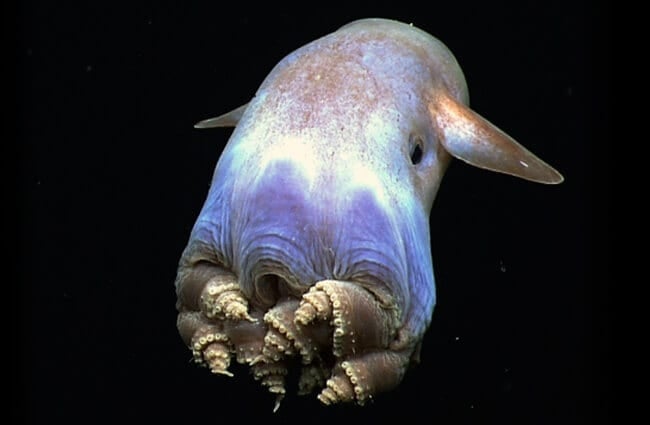
These octopuses are relatively small, with most species reaching a mantle length of around 20 to 30 centimeters (8 to 12 inches). Their body is gelatinous and bell-shaped, lacking the internal shell found in many other cephalopods. This gives them buoyancy that helps them conserve energy in the deep sea. The most distinctive feature, of course, is the ear-like fins that protrude from the sides of their mantle. These fins are not used for primary propulsion; instead, they assist with maneuvering and stabilization. The octopuses primarily propel themselves by pulsing their mantle and using their arms for steering.
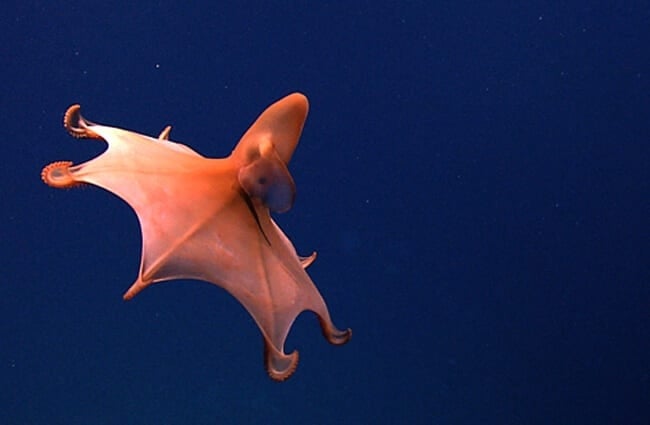
Their eyes are proportionally large, assisting in detecting faint bioluminescence, a common feature of deep sea life. They possess a complex nervous system, allowing them to respond to stimuli and navigate their surroundings. The suckers on their arms are often lined with cirri, small hair-like structures that enhance their grip on prey and the seafloor.
Evolutionary History
The evolutionary origins of the Dumbo octopus are still being investigated, but they are believed to have diverged from other octopuses relatively early in cephalopod evolution. Their unique morphology—the gelatinous body and prominent fins—suggests a specialization for the deep sea environment. Genetic studies are helping to clarify their phylogenetic relationships within the Octopoda order, revealing a complex history of adaptation and diversification. The absence of an ink sac is also a notable evolutionary trait, likely reflecting the limited utility of ink in the dark, expansive deep sea.
Diet and Feeding Behavior
Dumbo octopuses are opportunistic predators, feeding on a variety of benthic invertebrates. Their diet includes polychaete worms, amphipods, copepods, and other small crustaceans. They locate prey by sensing vibrations in the water and using their arms to probe the seafloor. Rather than actively chasing prey, they often engulf it by expanding their mantle and creating a suction effect. Although they lack an ink sac, they have a sharp beak that they use to bite and process their food.
Reproduction and Life Cycle
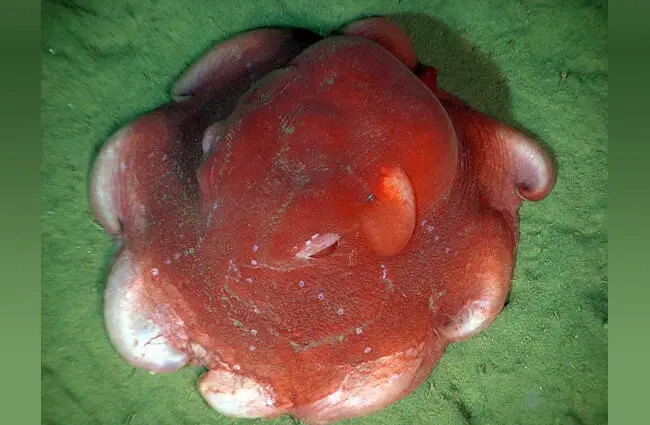
Reproduction in Dumbo octopuses is a fascinating but poorly understood process. Unlike many other cephalopods, they do not exhibit a distinct mating season. Females can store sperm for extended periods, fertilizing eggs as needed. They lay large, yolky eggs on the seafloor, often attaching them to rocks or shells. The incubation period can last several months. The young octopuses are miniature versions of the adults, immediately capable of independent feeding and locomotion. Their lifespan is estimated to be several years, but this remains an area of active research.
Ecological Role and Interactions
Dumbo octopuses play an important role in the deep sea ecosystem. As predators, they help regulate populations of benthic invertebrates. They also serve as prey for larger deep sea fish and sharks. Their gelatinous bodies contribute to marine snow, a shower of organic matter that sinks from the surface to the seafloor, providing nourishment for other deep sea organisms. They coexist with a variety of other deep sea creatures, including anglerfish, jellyfish, and various species of crustaceans. Interactions with human activities, such as deep sea mining and fishing, are a growing concern, and more research is needed to assess the potential impacts.
Encountering a Dumbo Octopus in the Wild
Due to their deep sea habitat, encountering a Dumbo octopus is extremely rare. However, if you are participating in deep sea submersible dives or remotely operated vehicle (ROV) explorations, you may have the opportunity to observe one. If you do encounter an octopus, it is crucial to maintain a respectful distance and avoid disturbing its natural behavior. Do not attempt to touch or capture the animal. Observe from a safe distance and allow it to continue its activities undisturbed.
Dumbo Octopus in Captivity
Keeping Dumbo octopuses in captivity is extremely challenging due to their specialized deep sea environment requirements. They need extremely cold temperatures, high pressure, and low light conditions to thrive. Only a few aquariums in the world have successfully maintained them for extended periods. Providing a suitable habitat requires specialized tanks, temperature control systems, and a constant supply of live food. Captive care should focus on replicating their natural environment as closely as possible and minimizing stress. Careful monitoring of water quality, temperature, and the animal’s behavior is essential.
Interesting Facts
- There are at least 13 recognized species of Dumbo octopus, and more are likely to be discovered.
- Their name comes from the Disney character Dumbo, due to the resemblance of their fins to the elephant’s ears.
- They can change color, though not as dramatically as some other octopuses.
- They do not have a centralized brain like humans; instead, they have a decentralized nervous system, with ganglia located in each arm.
- They are thought to be relatively slow moving, relying on their fins and mantle pulsations for propulsion.
The Dumbo octopus is a testament to the incredible biodiversity of the deep sea. As we continue to explore the ocean’s depths, we are sure to uncover even more secrets about these enchanting creatures and the unique ecosystem they inhabit. Continued research and conservation efforts are essential to protect these remarkable animals and the fragile deep sea environment they call home.
![Closeup of a beautiful Red Angus cowPhoto by: U.S. Department of Agriculture [pubic domain]https://creativecommons.org/licenses/by/2.0/](https://animals.net/wp-content/uploads/2020/03/Red-Angus-4-100x75.jpg "Red Angus")