The world of waterfowl is filled with fascinating creatures, and among the most charming is the Bufflehead. This small, striking duck is a North American native known for its distinctive appearance and energetic behavior. This comprehensive guide delves into the life history, ecology, and conservation of the Bufflehead, offering insights for researchers, nature enthusiasts, and anyone curious about this delightful bird.
An Introduction to the Bufflehead
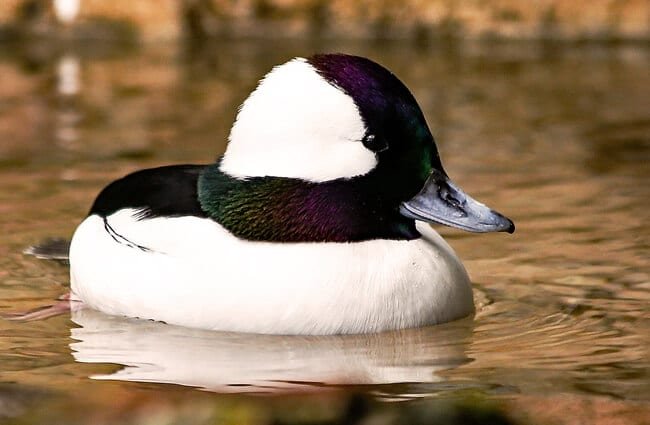
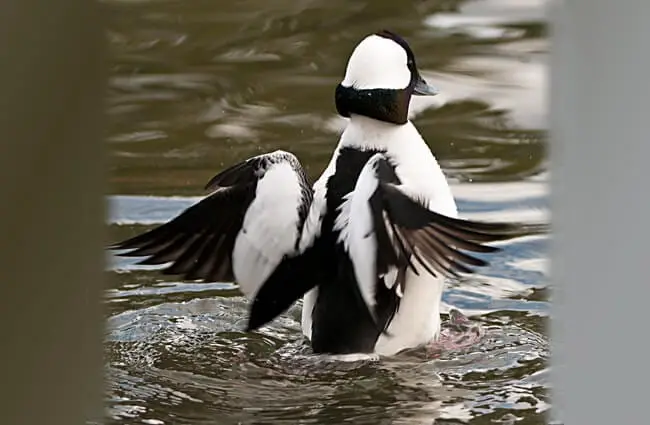
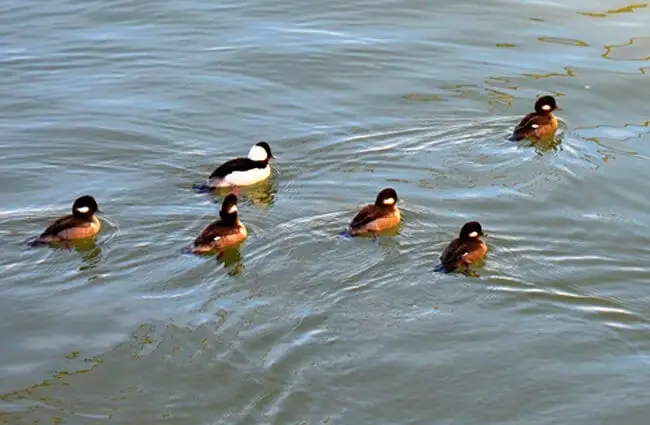
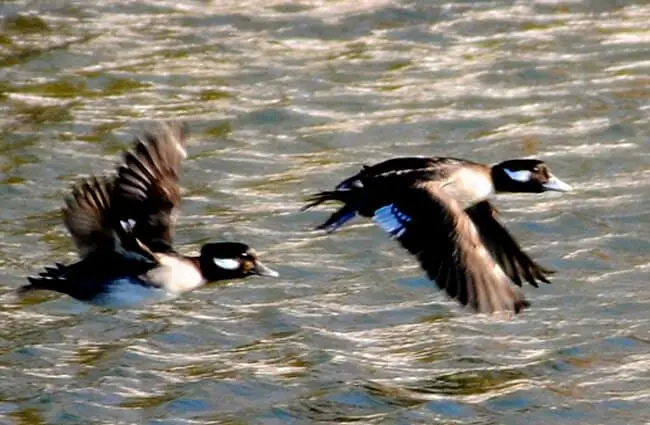
The Bufflehead, Bucephala albeola, is a small diving duck readily identified by its large head – hence the name, derived from “buffalo-head.” These birds are sexually dimorphic, meaning males and females exhibit different plumage. Males boast a striking black and white pattern, with an iridescent white patch on the head, a black back, and a white belly. Females are a more subdued gray‑brown overall, with a small white patch on the head. Both sexes share a distinctive white patch on the wing, visible during flight.
Physical Characteristics
Buffleheads are among the smallest North American diving ducks, typically measuring between 13 and 15 inches in length and weighing between 0.7 and 1.3 pounds. Their compact size and streamlined shape contribute to their agility in the water. They possess webbed feet perfectly adapted for paddling and diving, and a relatively short bill used for capturing small prey.
Habitat and Distribution
Buffleheads breed in forested wetlands near freshwater ponds, lakes, and rivers across northern North America. They require cavities, often natural tree hollows or abandoned woodpecker nests, for nesting. During the breeding season, they favor areas with mature trees and relatively undisturbed habitats. Outside of the breeding season, Buffleheads migrate to coastal areas, including the Pacific Coast, the Atlantic Coast, and the Gulf Coast. They are often found in sheltered bays, estuaries, and large lakes where they can find abundant food resources.
Migration Patterns
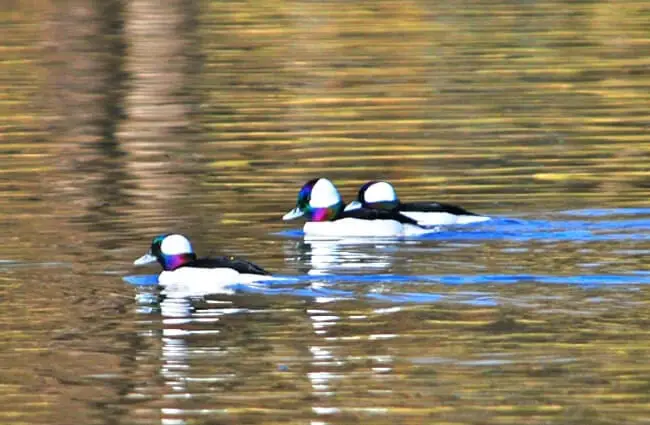
Buffleheads are long distance migrants. Birds breeding in western North America may winter as far south as Mexico and the southern United States. Those breeding in eastern Canada may winter along the Atlantic and Gulf Coasts. Migration routes are often determined by the availability of suitable stopover habitats and food resources. They generally migrate in small flocks.
Diet and Foraging Behavior
Buffleheads are primarily carnivores, feeding on aquatic invertebrates and small fish. Their diet consists of insect larvae, crustaceans, mollusks, and various small fish species. They are adept divers, often plunging underwater for 30 to 60 seconds to forage. They forage both on the surface of the water and at depths of several feet. They often feed in groups, actively pursuing prey. During the breeding season, their diet shifts toward more protein-rich invertebrates, essential for egg production and chick development.
Reproduction and Life Cycle
Buffleheads are typically monogamous, forming pair bonds that may last for several breeding seasons. Breeding begins in early spring. The female selects a suitable nesting cavity, often a pre-existing hole in a tree, and lines it with down feathers and plant material. She lays a clutch of six to ten eggs, which are incubated for approximately 28 to 32 days.
Raising the Young
Ducklings are precocial, meaning they are relatively mobile and capable of feeding themselves shortly after hatching. The mother leads them to suitable foraging areas and provides protection from predators. Ducklings primarily feed on aquatic invertebrates. They fledge, or gain the ability to fly, at around four to six weeks of age. Young Buffleheads typically reach sexual maturity in their second year.
Ecological Role and Interactions
Buffleheads play a vital role in aquatic ecosystems. As predators of aquatic invertebrates and small fish, they help regulate populations and maintain ecosystem balance. They are also prey for larger predators, including raptors, foxes, and coyotes. Buffleheads often compete with other waterfowl species for food and nesting sites. They also contribute to nutrient cycling through their foraging activities and waste products.
Bufflehead and Human Interaction
Historically, Buffleheads were targeted by hunters for their meat and feathers. While hunting regulations have helped stabilize populations, they remain vulnerable to habitat loss and pollution. Artificial nest boxes have been used to provide nesting cavities in areas where natural cavities are limited. Water quality is crucial for Bufflehead survival, as they are susceptible to contaminants in the water. Responsible recreational activities, such as boating and fishing, are important to minimize disturbance to Bufflehead habitats.
Conservation Status
Bufflehead populations are currently considered stable, but they are monitored closely. Habitat loss, particularly the decline of mature forests with suitable nesting cavities, is a major threat. Pollution, climate change, and collisions with boats also pose risks. Conservation efforts focus on protecting and restoring Bufflehead habitats, promoting sustainable forestry practices, and reducing pollution.
Delving Deeper: Advanced Topics
Evolutionary History
The Bufflehead belongs to the tribe Aythyini within the Anatidae family of ducks, geese, and swans. Fossil evidence suggests that the ancestors of modern diving ducks originated in North America during the Miocene epoch. The Bufflehead’s unique characteristics likely evolved in response to specific environmental pressures, such as the availability of tree cavities for nesting and the need for efficient diving and foraging.
Behavioral Ecology
Buffleheads exhibit complex social behaviors, including courtship displays, pair bonding, and cooperative foraging. They communicate through a variety of vocalizations and visual signals. Studies have revealed that Buffleheads exhibit site fidelity, returning to the same breeding areas year after year.
Spotting Buffleheads in the Wild
If you are hoping to observe Buffleheads in the wild, the best time is during the breeding season in spring or the winter months. Look for them on sheltered lakes, ponds, and coastal areas. Bring binoculars for a better view. Remember to observe them from a distance and avoid disturbing their habitat. Respect their space and appreciate these beautiful birds from afar.
The Bufflehead is a testament to the beauty and resilience of the natural world. By understanding and appreciating these remarkable birds, we can help ensure their survival for generations to come.
![Closeup of a beautiful Red Angus cowPhoto by: U.S. Department of Agriculture [pubic domain]https://creativecommons.org/licenses/by/2.0/](https://animals.net/wp-content/uploads/2020/03/Red-Angus-4-238x178.jpg "Red Angus")
![Closeup of a beautiful Red Angus cowPhoto by: U.S. Department of Agriculture [pubic domain]https://creativecommons.org/licenses/by/2.0/](https://animals.net/wp-content/uploads/2020/03/Red-Angus-4-100x75.jpg "Red Angus")